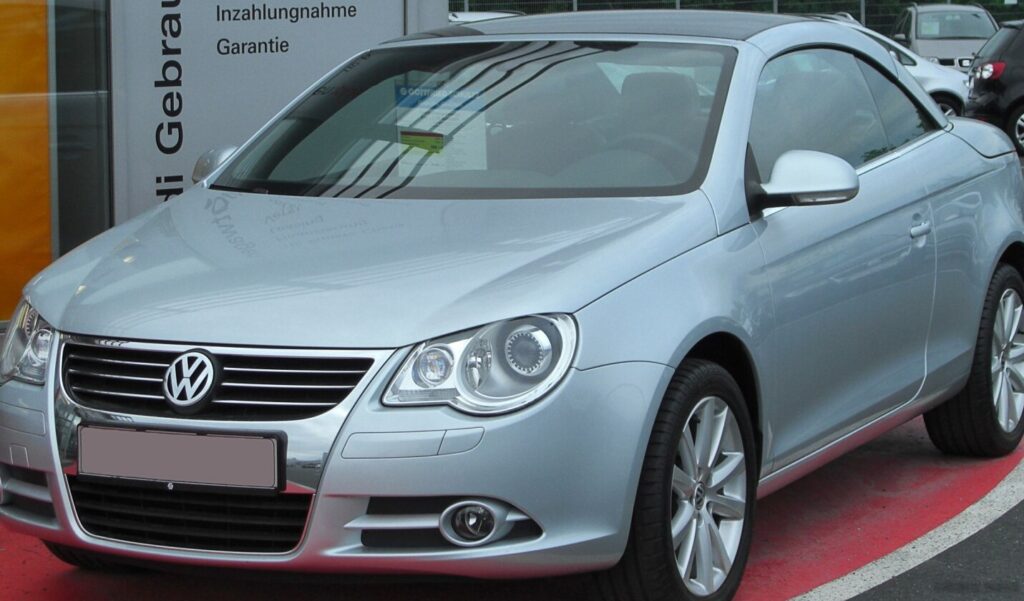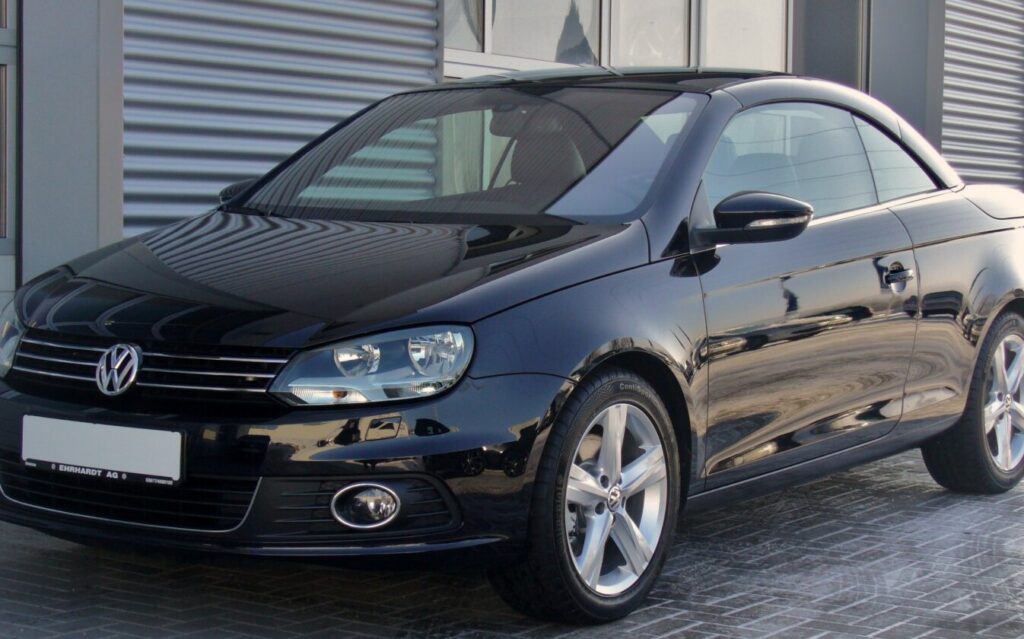
The Volkswagen Eos, specifically the 2.0 TDI variant produced from October 2010 to May 2015, represented a unique offering in Volkswagen’s lineup. Positioned as a premium compact coupe-convertible, the Eos aimed to blend the practicality of a hardtop convertible with the style and driving experience expected of a Volkswagen. This facelifted version, introduced in 2010, brought styling updates and refinements to the original Eos platform (based on the Golf Mk5/Mk6), and the 2.0 TDI 140 hp model served as a popular choice for European buyers seeking a balance of fuel efficiency and reasonable performance. It occupied a middle ground in the Eos range, offering a more economical alternative to the petrol-powered engines while providing more power than the base-level options.
Technical Specifications
| Brand | Volkswagen |
| Model | Eos |
| Generation | Eos (facelift 2010) |
| Type (Engine) | 2.0 TDI (140 Hp) |
| Start of production | October, 2010 |
| End of production | May, 2015 |
| Powertrain Architecture | Internal Combustion engine |
| Body type | Coupe – Cabriolet |
| Seats | 4 |
| Doors | 2 |
| Fuel consumption (urban) | 5.8 l/100 km (40.6 US mpg, 48.7 UK mpg, 17.2 km/l) |
| Fuel consumption (extra urban) | 4.2 l/100 km (56 US mpg, 67.3 UK mpg, 23.8 km/l) |
| Fuel consumption (combined) | 4.8 l/100 km (49 US mpg, 58.9 UK mpg, 20.8 km/l) |
| CO2 emissions | 125 g/km |
| Fuel Type | Diesel |
| Acceleration 0 – 100 km/h | 10.3 sec |
| Acceleration 0 – 62 mph | 10.3 sec |
| Acceleration 0 – 60 mph | 9.8 sec |
| Maximum speed | 207 km/h (128.62 mph) |
| Emission standard | Euro 5 |
| Weight-to-power ratio | 11.4 kg/Hp, 87.9 Hp/tonne |
| Weight-to-torque ratio | 5 kg/Nm, 201 Nm/tonne |
| Power | 140 Hp @ 4200 rpm |
| Power per litre | 71.1 Hp/l |
| Torque | 320 Nm @ 1750-2500 rpm (236.02 lb.-ft. @ 1750-2500 rpm) |
| Engine layout | Front, Transverse |
| Engine Model/Code | CBAB, CFFB |
| Engine displacement | 1968 cm3 (120.09 cu. in.) |
| Number of cylinders | 4 |
| Engine configuration | Inline |
| Number of valves per cylinder | 4 |
| Fuel injection system | Diesel Commonrail |
| Engine aspiration | Turbocharger, Intercooler |
| Engine oil capacity | 4 l (4.23 US qt | 3.52 UK qt) |
| Kerb Weight | 1592 kg (3509.76 lbs.) |
| Max. weight | 2000 kg (4409.25 lbs.) |
| Max load | 408 kg (899.49 lbs.) |
| Trunk (boot) space – minimum | 205 l (7.24 cu. ft.) |
| Fuel tank capacity | 55 l (14.53 US gal | 12.1 UK gal) |
| Length | 4423 mm (174.13 in.) |
| Width | 1791 mm (70.51 in.) |
| Height | 1444 mm (56.85 in.) |
| Wheelbase | 2578 mm (101.5 in.) |
| Front track | 1545 mm (60.83 in.) |
| Rear (Back) track | 1547 mm (60.91 in.) |
| Minimum turning circle | 10.9 m (35.76 ft.) |
| Drivetrain Architecture | The Internal combustion engine (ICE) drives the front wheels of the vehicle. |
| Drive wheel | Front wheel drive |
| Number of gears | 6 gears, manual transmission |
| Front brakes | Ventilated discs |
| Assisting systems | ABS (Anti-lock braking system) |
| Steering type | Steering rack and pinion |
| Tires size | 215/55 R16; 235/40 R18 |
| Wheel rims size | 7J x 16; 8J x 18 |
INTRODUCTION
The Volkswagen Eos 2.0 TDI (140 hp) facelift, produced between 2010 and 2015, was a key variant within the Eos range. Built on the A5 platform shared with the Golf Mk5 and Mk6, as well as the Audi TT and Scirocco, the Eos distinguished itself with its unique retractable hardtop. This feature allowed it to function as both a coupe and a convertible, offering versatility not found in many competitors. The 2.0 TDI engine, a mainstay of Volkswagen’s diesel offerings, provided a compelling blend of fuel economy and performance, making this variant particularly popular in European markets where diesel fuel was prevalent and often incentivized.
Powertrain & Engine Architecture
The heart of the Eos 2.0 TDI is the Volkswagen Group’s common rail diesel engine, specifically the CBAB or CFFB engine code depending on the exact production year and market. This 1968cc inline-four cylinder engine utilizes a turbocharger with an intercooler to boost power output. The common rail direct injection system, operating at extremely high pressures, ensures precise fuel delivery and efficient combustion. The engine features four valves per cylinder and a timing belt, requiring periodic replacement as part of scheduled maintenance. The 140 hp output is achieved at 4200 rpm, while the impressive 320 Nm (236 lb-ft) of torque is available from a low 1750 rpm, providing strong pulling power throughout the rev range. This particular variant was exclusively offered with a 6-speed manual transmission, designed to efficiently manage the engine’s torque and provide a responsive driving experience.
Driving Characteristics
The Eos 2.0 TDI with the manual transmission offered a surprisingly engaging driving experience. While not a sports car, the engine’s torque delivery made it feel quicker than its horsepower figure might suggest. Acceleration from 0-60 mph took around 9.8 seconds, and top speed was rated at 128.62 mph. The six-speed gearbox was well-matched to the engine, allowing drivers to keep the engine in its optimal power band. Compared to the petrol-powered Eos models, the TDI offered superior fuel economy and a more relaxed cruising experience. However, it lacked the higher-revving enthusiasm of the petrol engines. Against other diesel Eos variants, such as the 170 hp version, the 140 hp model offered a more affordable entry point, albeit with slightly less performance. The weight distribution, while not ideal, was manageable, and the Eos handled reasonably well for a front-wheel-drive convertible.
Equipment & Trim Levels
The Eos 2.0 TDI typically came well-equipped, reflecting its positioning as a premium offering. Standard features included air conditioning, alloy wheels, a multi-function steering wheel, and an infotainment system with a CD player and auxiliary input. Higher trim levels, such as Sport or Elegance, added features like leather upholstery, heated front seats, automatic climate control, and a more advanced infotainment system with navigation. Optional extras included a panoramic sunroof (a key feature of the Eos), bi-xenon headlights, and parking sensors. Interior upholstery was typically cloth on base models, with leather available as an upgrade. The dashboard layout was clean and functional, typical of Volkswagen’s design language at the time.
Chassis & Braking
The Eos utilized a MacPherson strut front suspension and a multi-link rear suspension, providing a comfortable and controlled ride. Stabilizer bars were fitted to both axles to reduce body roll during cornering. Braking duties were handled by ventilated discs on the front wheels and solid discs on the rear. ABS (Anti-lock Braking System) was standard. The chassis was reinforced to compensate for the loss of structural rigidity inherent in a convertible design, ensuring a safe and stable driving experience with the roof down. The Eos’s suspension tuning prioritized comfort over outright sportiness, making it a pleasant grand tourer.
Market Reception & Comparison
The Volkswagen Eos 2.0 TDI was generally well-received by automotive critics. It was praised for its stylish design, comfortable interior, and the practicality of its retractable hardtop. The 2.0 TDI engine was lauded for its fuel efficiency and strong torque output. However, some critics noted that the Eos was relatively expensive compared to some of its competitors, and the rear seats were somewhat cramped. In terms of fuel economy, the 2.0 TDI significantly outperformed the petrol-powered Eos models, achieving around 49 US mpg on the combined cycle. Reliability was generally good, although, like all modern diesel engines, the particulate filter could require occasional maintenance. Compared to other convertibles in its class, such as the Peugeot 308 CC and the Ford Focus CC, the Eos offered a more refined and upscale experience.
Legacy
The Volkswagen Eos, and particularly the 2.0 TDI variant, has proven to be a relatively reliable vehicle in the used car market. The 2.0 TDI engine is known for its durability, although regular maintenance, including oil changes and timing belt replacements, is crucial. The retractable hardtop mechanism can occasionally require attention, but is generally robust. Today, the Eos 2.0 TDI represents a good value proposition for buyers seeking a stylish and practical convertible with reasonable running costs. Its blend of comfort, fuel efficiency, and versatility continues to appeal to a wide range of drivers.