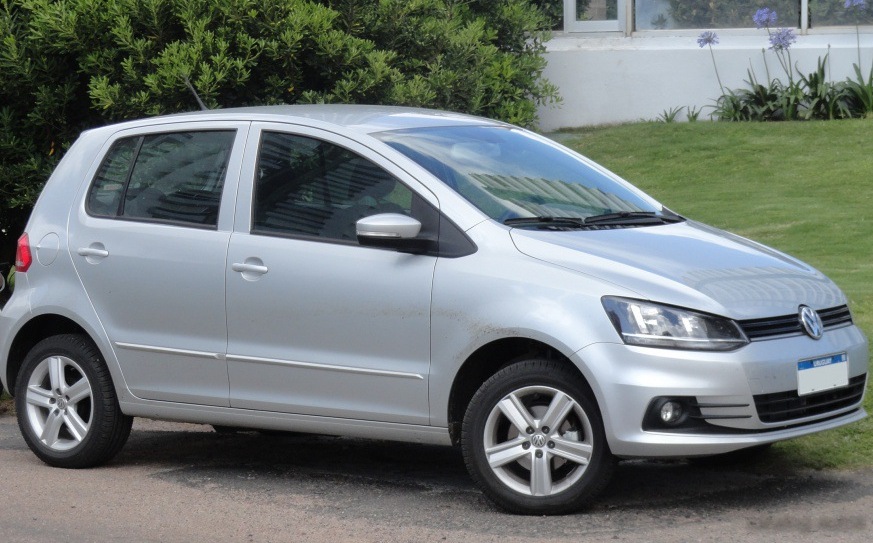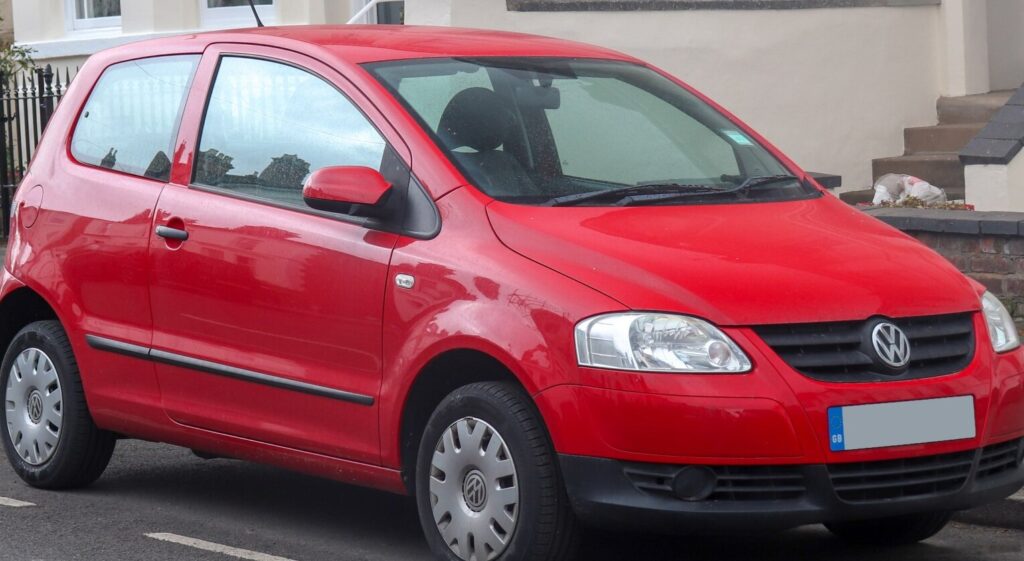
The Volkswagen Fox 1.2 i (55 hp) was a subcompact hatchback produced for the European market between 2005 and 2011. Representing the entry point into the Fox range, this variant was designed to offer affordable and economical transportation, particularly appealing to first-time car buyers and those seeking a practical city vehicle. It was part of the broader Fox lineup, which aimed to replace the Polo in several markets, offering a more spacious and versatile alternative. The Fox, internally designated as the 5Z model, was positioned below the Golf in Volkswagen’s model hierarchy.
Technical Specifications
| Brand | Volkswagen |
| Model | Fox |
| Generation | Fox 3Door Europe |
| Type (Engine) | 1.2 i (55 Hp) |
| Start of production | 2005 |
| End of production | 2011 |
| Powertrain Architecture | Internal Combustion engine |
| Body type | Hatchback |
| Seats | 4 |
| Doors | 3 |
| Fuel consumption (urban) | 7.8 l/100 km (30.2 US mpg) |
| Fuel consumption (extra urban) | 5.1 l/100 km (46.1 US mpg) |
| Fuel consumption (combined) | 6.1 l/100 km (38.6 US mpg) |
| Fuel Type | Petrol (Gasoline) |
| Acceleration 0 – 100 km/h | 17.5 sec |
| Acceleration 0 – 62 mph | 17.5 sec |
| Acceleration 0 – 60 mph | 16.6 sec |
| Maximum speed | 148 km/h (91.96 mph) |
| Weight-to-power ratio | 18.1 kg/Hp |
| Weight-to-torque ratio | 9.2 kg/Nm |
| Power | 55 Hp @ 4750 rpm |
| Torque | 108 Nm @ 3000 rpm (79.66 lb.-ft. @ 3000 rpm) |
| Engine layout | Front, Transverse |
| Engine Model/Code | BMD, CHFB |
| Engine displacement | 1198 cm3 (73.11 cu. in.) |
| Number of cylinders | 3 |
| Engine configuration | Inline |
| Cylinder Bore | 76.5 mm (3.01 in.) |
| Piston Stroke | 86.9 mm (3.42 in.) |
| Compression ratio | 10.3:1 |
| Number of valves per cylinder | 2 |
| Fuel injection system | Multi-port manifold injection |
| Engine aspiration | Naturally aspirated |
| Engine oil capacity | 3 l (3.17 US qt | 2.64 UK qt) |
| Coolant capacity | 5.6 l (5.92 US qt | 4.93 UK qt) |
| Kerb Weight | 998 kg (2200.21 lbs.) |
| Max. weight | 1480 kg (3262.84 lbs.) |
| Max load | 482 kg (1062.63 lbs.) |
| Trunk (boot) space – minimum | 260 l (9.18 cu. ft.) |
| Trunk (boot) space – maximum | 1016 l (35.88 cu. ft.) |
| Fuel tank capacity | 50 l (13.21 US gal | 11 UK gal) |
| Length | 3828 mm (150.71 in.) |
| Width | 1660 mm (65.35 in.) |
| Height | 1544 mm (60.79 in.) |
| Wheelbase | 2465 mm (97.05 in.) |
| Front track | 1428 mm (56.22 in.) |
| Rear track | 1424 mm (56.06 in.) |
| Drivetrain | Front wheel drive |
| Number of gears | 5 gears, manual transmission |
| Front suspension | Spring Strut |
| Rear suspension | Torsion |
| Front brakes | Ventilated discs |
| Rear brakes | Drum |
| Assisting systems | ABS (Anti-lock braking system) |
| Steering type | Steering rack and pinion |
| Tires size | 165/70 R14 T |
| Wheel rims size | 5J x 14 |
INTRODUCTION
The Volkswagen Fox 1.2 i (55 hp) was introduced in 2005 as part of the Fox range, a series intended to offer a more affordable and practical alternative to the Polo, particularly in markets where the Polo was becoming increasingly expensive. This three-door hatchback was aimed at budget-conscious buyers and those needing a compact vehicle for urban driving. The Fox was built on the A05 platform (also known as the PQ24), shared with the SEAT Ibiza and Škoda Fabia, but featured unique styling and interior appointments. The 1.2-liter engine and five-speed manual transmission combination represented the base level of the Fox lineup in many European countries.
Powertrain & Engine Architecture
The heart of the Fox 1.2 i is the BMD or CHFB engine code, a 1.2-liter inline three-cylinder petrol engine. This engine is a naturally aspirated unit featuring multi-point fuel injection. The three-cylinder configuration, while offering good fuel economy, inherently produces some vibration, which Volkswagen addressed through engine mounts and balancing shafts. The engine’s 10.3:1 compression ratio contributes to its efficiency. The 55 horsepower peak is reached at 4750 rpm, while the 108 Nm (79.66 lb-ft) of torque is available at 3000 rpm. The engine is transversely mounted at the front of the vehicle, driving the front wheels. The standard transmission was a five-speed manual gearbox, chosen for its simplicity and cost-effectiveness. This transmission was not known for particularly quick shifts, but it was durable and reliable.
Driving Characteristics
The Fox 1.2 i, with its modest 55 horsepower, was never intended to be a performance car. Acceleration was leisurely, taking around 17.5 seconds to reach 62 mph (100 km/h). In real-world driving, the engine felt strained when climbing hills or carrying a full load. The five-speed gearbox was geared for economy, with relatively tall ratios. This meant that frequent downshifts were necessary to maintain speed on inclines or when overtaking. Compared to higher-output versions of the Fox, such as those equipped with the 1.4-liter engine, the 1.2 i felt significantly underpowered. However, its light weight (approximately 998 kg or 2200 lbs) helped to mitigate some of the performance deficit. The steering was light and easy, making it well-suited for navigating city streets.
Equipment & Trim Levels
The Fox 1.2 i typically came with a basic level of equipment. Standard features generally included power steering, central locking, and front airbags. Interior upholstery was typically cloth, and the dashboard featured a simple, functional design. Optional extras included air conditioning, alloy wheels, and a CD player. Higher trim levels, such as the ‘Trend’ or ‘Comfort’ models, added features like electric windows, heated mirrors, and more sophisticated audio systems. The base model focused on providing essential transportation at an affordable price point, prioritizing practicality over luxury.
Chassis & Braking
The Fox 1.2 i utilized a relatively simple chassis setup. The front suspension consisted of MacPherson strut springs, while the rear suspension employed a torsion beam. This configuration provided a reasonable balance between ride comfort and handling. Brakes were ventilated discs at the front and drum brakes at the rear. ABS (Anti-lock Braking System) was standard, enhancing safety. The relatively light weight of the vehicle helped to reduce the strain on the braking system. Stabilizer bars were typically smaller in diameter on the base model compared to higher-spec versions, contributing to a slightly more pronounced body roll during cornering.
Market Reception & Comparison
The Fox 1.2 i was generally well-received as an affordable and economical city car. Critics praised its fuel efficiency and practicality, but noted its lack of performance. Compared to other vehicles in its class, such as the Renault Clio and Peugeot 206, the Fox offered a slightly more spacious interior and a more robust build quality. However, its engine was less powerful than many of its competitors. The 1.4-liter Fox offered a noticeable improvement in performance, but at a higher price point. The 1.9 TDI diesel version provided excellent fuel economy but was more expensive to purchase and maintain. The 1.2 i appealed to buyers who prioritized economy and practicality over driving excitement.
Legacy
The Volkswagen Fox 1.2 i has proven to be a relatively reliable vehicle, with the 1.2-liter engine generally exhibiting good durability. Common issues include occasional oil leaks and wear on the timing chain. The manual transmission is also known to be robust. On the used car market, the Fox 1.2 i remains an affordable option for those seeking a small, economical hatchback. Its simple mechanicals make it relatively easy and inexpensive to maintain. While it may not offer the performance or refinement of more modern vehicles, it continues to provide reliable transportation for budget-conscious buyers. The Fox, in general, helped Volkswagen maintain a presence in the subcompact segment, bridging the gap between the Polo and even smaller city cars.