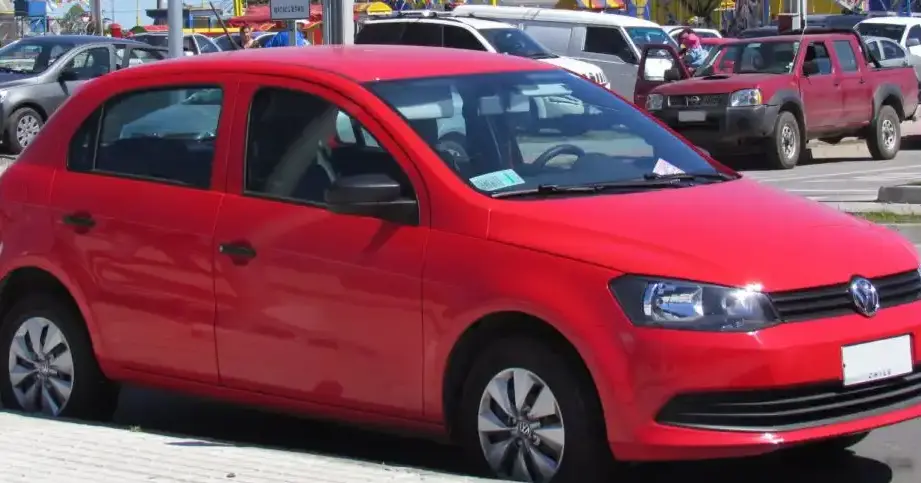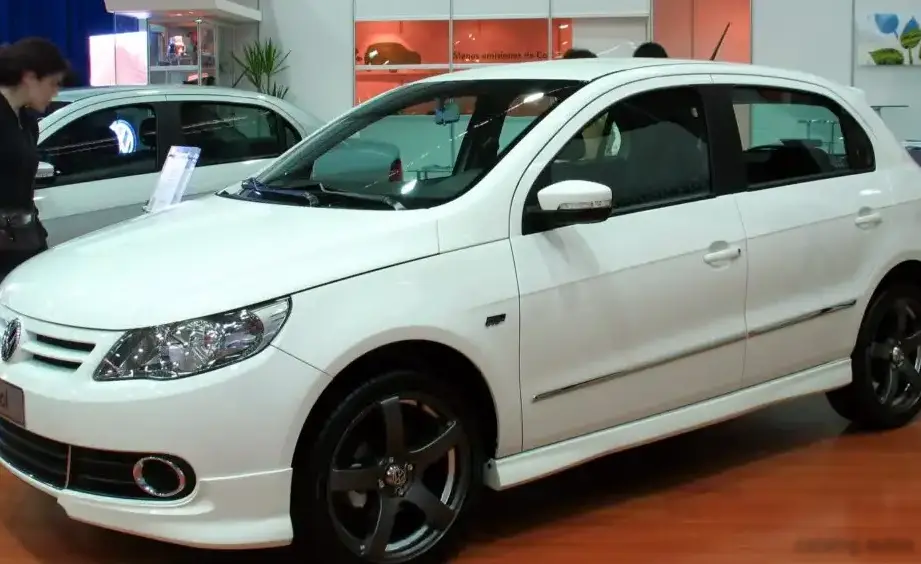
The Volkswagen Gol (G5), produced from 2008 to 2013, represented the third generation of Volkswagen’s popular subcompact car, primarily aimed at the South American market. While not officially sold in the United States, the Gol held a significant position as one of the best-selling cars in Brazil and Argentina. The 1.6-liter (110 hp) automatic variant occupied a mid-range position within the G5 lineup, offering a balance between affordability, fuel efficiency, and convenience. It catered to buyers seeking an easy-to-drive city car with the added comfort of an automatic transmission, a relatively uncommon feature in that segment in South America at the time. This version aimed to bridge the gap between the base, more spartan models and the higher-spec trims with more powerful engines.
Technical Specifications
| Brand | Volkswagen |
| Model | Gol |
| Generation | Gol (G5) III |
| Type (Engine) | 1.6 (110 Hp) Automatic |
| Start of production | 2008 |
| End of production | 2013 |
| Powertrain Architecture | Internal Combustion engine |
| Body type | Hatchback |
| Seats | 5 |
| Doors | 5 |
| Fuel Type | Petrol (Gasoline) |
| Power | 110 Hp |
| Power per litre | 68.8 Hp/l |
| Torque | 158 Nm @ 3000 rpm / 116.53 lb.-ft. @ 3000 rpm |
| Engine layout | Front, Transverse |
| Engine displacement | 1600 cm3 / 97.64 cu. in. |
| Number of cylinders | 4 |
| Engine configuration | Inline |
| Number of valves per cylinder | 4 |
| Fuel injection system | Multi-port manifold injection |
| Engine aspiration | Naturally aspirated engine |
| Trunk (boot) space – minimum | 283 l / 9.99 cu. ft. |
| Length | 3800 mm / 149.61 in. |
| Width | 1660 mm / 65.35 in. |
| Height | 1450 mm / 57.09 in. |
| Wheelbase | 2470 mm / 97.24 in. |
| Drivetrain Architecture | The Internal combustion engine (ICE) drives the front wheels of the vehicle. |
| Drive wheel | Front wheel drive |
| Number of gears and type of gearbox | 6 gears, automatic transmission |
| Front brakes | Ventilated discs |
| Rear brakes | Drum |
| Assisting systems | ABS (Anti-lock braking system) |
| Tires size | 175/70 R13 |
| Wheel rims size | 13 |
Powertrain & Engine Architecture
The heart of the Gol 1.6 Automatic is the EA111 family 1.6-liter inline-four cylinder engine. This engine, designated as the XRT code in many South American markets, is a naturally aspirated unit featuring multi-point fuel injection. The EA111 is known for its relative simplicity and durability, making it a cost-effective choice for mass-market vehicles. The engine utilizes a single overhead camshaft (SOHC) design with four valves per cylinder, contributing to reasonable power output for its displacement. The 110 horsepower peak is achieved at a relatively high engine speed, requiring the automatic transmission to work diligently to keep the engine within its optimal power band. The six-speed automatic transmission, sourced from IAV, was a key selling point for this variant. It offered smoother shifts compared to earlier automatic options available in the region and helped to improve fuel economy. While not a particularly sophisticated transmission by modern standards, it was considered reliable and well-suited to the engine’s characteristics.
Driving Characteristics
The Gol 1.6 Automatic delivers a comfortable, if not particularly exhilarating, driving experience. The automatic transmission prioritizes smooth operation over sporty responsiveness. Acceleration from a standstill is adequate for city driving, but overtaking maneuvers on highways require careful planning. The six-speed configuration helps to mitigate some of the power deficit, allowing the engine to operate more efficiently at cruising speeds. The gear ratios are tuned for fuel economy rather than outright performance. Compared to the manual transmission version of the 1.6, the automatic suffers a slight performance penalty due to the inherent losses in the torque converter. The higher-output 1.6-liter (often found in the Take version) and the 2.0-liter engines offered significantly more spirited performance, but at a higher price point. The suspension is tuned for comfort, absorbing bumps and imperfections in the road reasonably well. However, this comes at the expense of handling precision, with noticeable body roll during cornering.
Equipment & Trim Levels
The 1.6 Automatic trim typically included features such as air conditioning, power steering, and a basic audio system with CD player. Depending on the specific market and optional packages selected, additional features could include electric windows, central locking, and alloy wheels. Interior upholstery was typically cloth, with a relatively simple dashboard layout. Safety features were generally limited, with ABS being the most prominent inclusion. The Gol G5 offered a range of trim levels, with the 1.6 Automatic positioned as a mid-range option. It offered more comfort and convenience features than the base models but lacked the premium touches found in the higher-spec trims.
Chassis & Braking
The Gol G5 utilizes a MacPherson strut front suspension and a torsion beam rear suspension. This configuration is typical for vehicles in this class, offering a good balance between cost, weight, and ride comfort. The front brakes are ventilated discs, providing adequate stopping power for most driving situations. However, the rear brakes are drums, which are less effective than disc brakes and can be prone to fading under heavy use. The ABS system helps to prevent wheel lockup during emergency braking, improving stability and control. The 13-inch wheels are fitted with 175/70 R13 tires, which provide a reasonable level of grip on paved roads.
Market Reception & Comparison
The Gol 1.6 Automatic was generally well-received by consumers in South America. Critics praised its affordability, fuel efficiency, and the convenience of the automatic transmission. However, some reviewers noted its lack of power and its relatively basic interior. Compared to other vehicles in its class, such as the Fiat Palio and the Chevrolet Celta, the Gol 1.6 Automatic offered a competitive package. Its fuel economy was comparable to its rivals, and its automatic transmission gave it a unique selling point. Reliability was generally good, with the EA111 engine proving to be a durable and dependable unit. However, some owners reported issues with the automatic transmission, particularly with the torque converter.
Legacy
The Volkswagen Gol G5 1.6 Automatic remains a popular choice in the used car market in South America. Its affordability, reliability, and ease of maintenance make it an attractive option for budget-conscious buyers. The EA111 engine is well-known to mechanics in the region, and spare parts are readily available. While not a performance car, the Gol 1.6 Automatic provides a comfortable and practical transportation solution for everyday use. Its legacy lies in its contribution to Volkswagen’s dominance in the South American automotive market and its role in making automatic transmissions more accessible to a wider range of consumers.