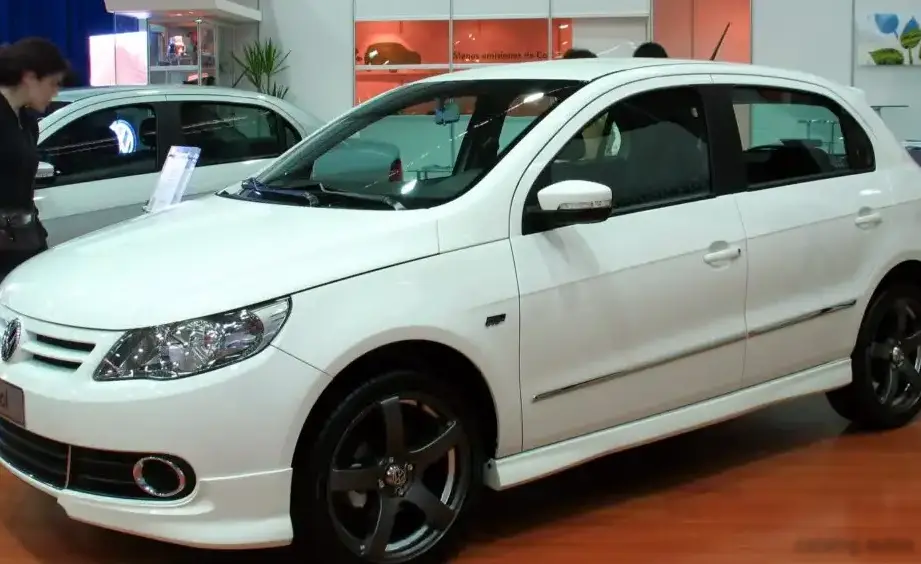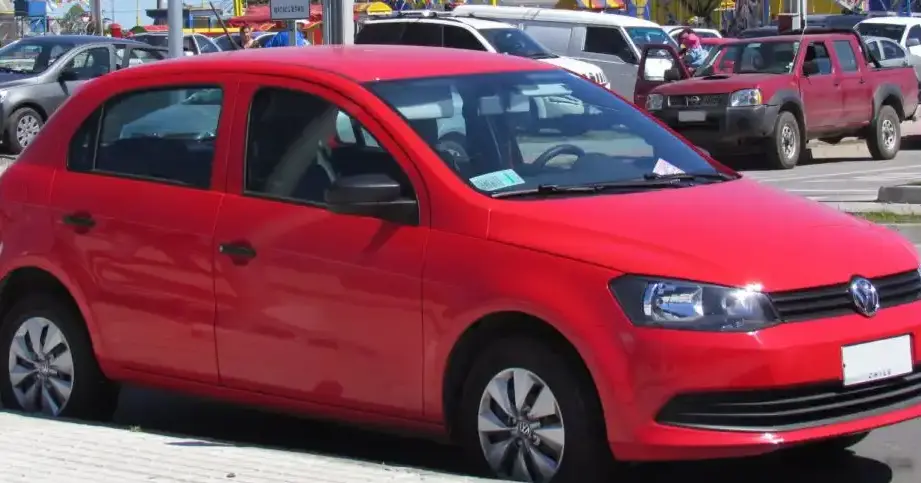
The Volkswagen Gol (G5) III, specifically the facelifted version introduced in 2013 with the 1.6 Total Flex engine producing 101 horsepower, represents a significant iteration of Volkswagen’s long-running Gol subcompact. Produced from 2013 to 2016, this variant was primarily aimed at the Brazilian and South American markets, where flexible-fuel vehicles capable of running on gasoline and ethanol (or any blend thereof) are highly prevalent. The G5 generation, built on the PQ24 platform, aimed to modernize the Gol while maintaining its reputation for affordability and practicality. This 1.6L Total Flex engine, paired with a five-speed manual transmission, occupied a mid-range position within the Gol lineup, offering a balance between performance and fuel efficiency, slotting below the more powerful 1.6 MPI versions and above the base 1.0L models.
Technical Specifications
| Brand | Volkswagen |
| Model | Gol |
| Generation | Gol (G5) III (facelift 2013) |
| Type (Engine) | 1.6 Total Flex (101 Hp) |
| Start of production | 2013 |
| End of production | 2016 |
| Powertrain Architecture | Internal Combustion engine |
| Body type | Hatchback |
| Seats | 5 |
| Doors | 5 |
| Fuel Type | Petrol (Gasoline) / Ethanol |
| Acceleration 0 – 100 km/h | 10.1 sec |
| Acceleration 0 – 62 mph | 10.1 sec |
| Acceleration 0 – 60 mph | 9.6 sec |
| Maximum speed | 188 km/h (116.82 mph) |
| Weight-to-power ratio | 9.5 kg/Hp, 105.1 Hp/tonne |
| Weight-to-torque ratio | 6.4 kg/Nm, 157.1 Nm/tonne |
| Power | 101 Hp @ 5250 rpm |
| Power per litre | 63.2 Hp/l |
| Torque | 151 Nm @ 2500 rpm (111.37 lb.-ft. @ 2500 rpm) |
| Engine layout | Front, Transverse |
| Engine Model/Code | CCRA |
| Engine displacement | 1598 cm3 (97.52 cu. in.) |
| Number of cylinders | 4 |
| Engine configuration | Inline |
| Cylinder Bore | 76.5 mm (3.01 in.) |
| Piston Stroke | 86.9 mm (3.42 in.) |
| Compression ratio | 12.1:1 |
| Number of valves per cylinder | 2 |
| Fuel injection system | Multi-port manifold injection |
| Engine aspiration | Naturally aspirated |
| Engine oil capacity | 4 l (4.23 US qt | 3.52 UK qt) |
| Kerb Weight | 961 kg (2118.64 lbs.) |
| Trunk (boot) space – minimum | 285 l (10.06 cu. ft.) |
| Fuel tank capacity | 55 l (14.53 US gal | 12.1 UK gal) |
| Permitted trailer load with brakes (12%) | 400 kg (881.85 lbs.) |
| Permitted trailer load without brakes | 400 kg (881.85 lbs.) |
| Length | 3895 mm (153.35 in.) |
| Width | 1656 mm (65.2 in.) |
| Width including mirrors | 1893 mm (74.53 in.) |
| Height | 1464 mm (57.64 in.) |
| Wheelbase | 2465 mm (97.05 in.) |
| Front track | 1429 mm (56.26 in.) |
| Rear (Back) track | 1417 mm (55.79 in.) |
| Ride height (ground clearance) | 163 mm (6.42 in.) |
| Drag coefficient (Cd) | 0.34 |
| Minimum turning circle (turning diameter) | 10.8 m (35.43 ft.) |
| Drivetrain Architecture | Front wheel drive |
| Number of gears and type of gearbox | 5 gears, manual transmission |
| Front suspension | Independent, type McPherson with coil spring and anti-roll bar |
| Rear suspension | Independent coil spring |
| Front brakes | Ventilated discs |
| Rear brakes | Drum |
| Assisting systems | ABS (Anti-lock braking system) |
| Steering type | Steering rack and pinion |
| Power steering | Electric Steering |
| Tires size | 175/70 R14; 185/60 R14; 195/55 R15; 195/50 R16 |
| Wheel rims size | 5J x 14; 6J x 14; 6J x 15; 6J x 16 |
Powertrain & Engine Architecture
The heart of this Gol variant is the EA111 family 1.6-liter inline-four cylinder engine, designated CCRA. This engine is notable for its “Total Flex” capability, meaning it’s designed to run efficiently on gasoline, ethanol, or any mixture of the two. The engine utilizes a multi-point fuel injection system, delivering fuel directly to the intake ports. The cylinder head features two valves per cylinder (eight valves total), operated by a single overhead camshaft. The 12.1:1 compression ratio is relatively high, optimized for both gasoline and ethanol combustion. The five-speed manual transmission provides a fairly standard gear ratio spread, prioritizing fuel economy over outright acceleration. The transmission’s ratios are tuned to keep the engine operating within its optimal torque band during everyday driving conditions.
Driving Characteristics
The 101 hp and 151 Nm (111 lb-ft) of torque produced by the 1.6 Total Flex engine translate to adequate, but not exhilarating, performance. Acceleration from 0-60 mph takes around 9.6 seconds, and top speed is approximately 117 mph. Compared to the higher-output 1.6 MPI versions, this variant feels noticeably less powerful, particularly when fully loaded or climbing hills. However, the lower power output also contributes to better fuel economy. The five-speed manual transmission allows for reasonable control over the engine’s power band, but the gear ratios aren’t particularly sporty. The focus is on smooth, predictable operation rather than aggressive acceleration. The Total Flex capability provides a noticeable difference in performance depending on the fuel used, with ethanol generally offering slightly less power but potentially better fuel economy in regions where it’s priced competitively.
Equipment & Trim Levels
The 1.6 Total Flex trim typically included basic features such as power steering, air conditioning, and a basic audio system. Interior upholstery was generally cloth, with a functional but spartan design. Higher trim levels, available as options, could add features like power windows, power door locks, and a more sophisticated audio system. Safety features were relatively basic, typically including dual front airbags and ABS brakes. The dashboard layout was typical of the G5 Gol, with a straightforward instrument cluster and easy-to-use controls. Optional extras included alloy wheels, fog lights, and a rear wiper.
Chassis & Braking
The Gol G5 utilizes a McPherson strut front suspension and an independent coil spring rear suspension. This setup provides a reasonable balance between ride comfort and handling. The front brakes are ventilated discs, offering adequate stopping power, while the rear brakes are drums, a cost-saving measure common in this segment. ABS (Anti-lock Braking System) was standard, enhancing safety during emergency braking situations. The steering is rack and pinion with electric power assistance, providing light and easy steering feel. Stabilizer bars were included on both axles to reduce body roll during cornering.
Market Reception & Comparison
The 1.6 Total Flex variant of the Gol G5 was well-received in the Brazilian market due to its affordability, fuel efficiency, and the flexibility of running on either gasoline or ethanol. Critics generally praised its practicality and ease of use, but noted its lack of outright performance compared to higher-spec models. Compared to the 1.6 MPI version, the Total Flex offered slightly lower power but comparable fuel economy when running on gasoline. The 1.0L models were even more fuel-efficient but significantly slower. The Total Flex engine’s ability to run on ethanol was a major selling point in Brazil, where ethanol is widely available and often cheaper than gasoline.
Legacy
The 1.6 Total Flex engine in the Gol G5 has proven to be a relatively reliable powertrain. The EA111 engine family is known for its durability, and the Total Flex system has been refined over years of use. Common maintenance items include regular oil changes, spark plug replacements, and fuel filter changes. In the used car market, these Gols are still relatively common and affordable, making them a popular choice for budget-conscious buyers. However, potential buyers should be aware of the importance of regular maintenance and the potential for ethanol-related fuel system issues if the vehicle has been primarily run on ethanol without proper care. The G5 Gol, and particularly this 1.6 Total Flex variant, remains a testament to Volkswagen’s ability to produce practical and affordable vehicles for emerging markets.