
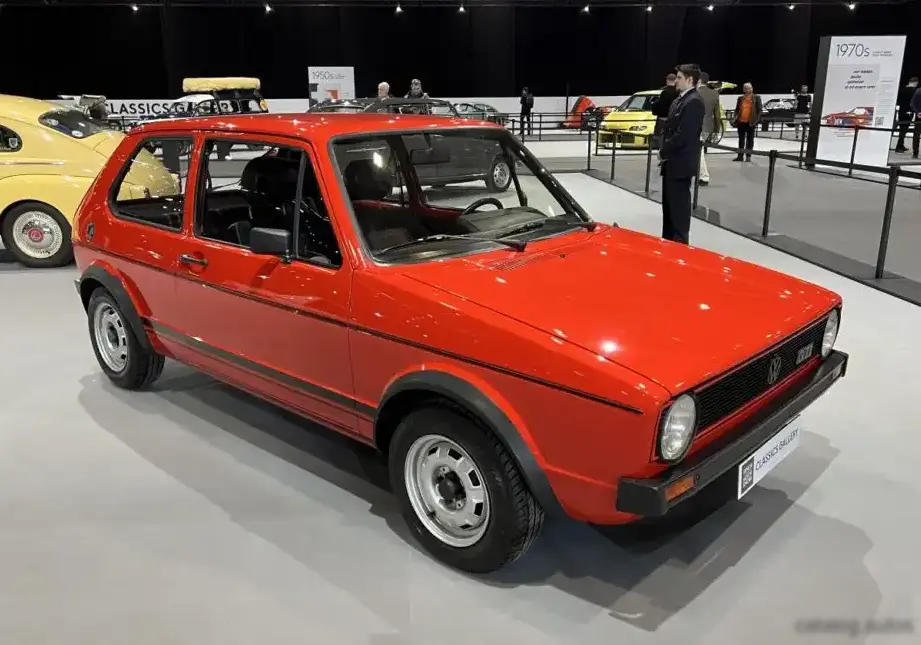
The Volkswagen Golf Mk1, produced between 1974 and 1983, marked a crucial turning point for Volkswagen, moving the company away from the rear-engined Beetle and towards a modern, front-wheel-drive hatchback design. The 1.1-liter (52 hp) 3-door variant, available from 1981 to 1983, served as the entry-level model within the Golf Mk1 lineup. It was engineered to provide affordable and economical transportation, appealing to first-time car buyers and those needing a practical vehicle for city use. This model played a key role in solidifying the Golf’s position as a leading compact car in Europe, and it began to gain traction in the North American market as well.
Technical Specifications
| Brand | Volkswagen |
| Model | Golf |
| Generation | Golf I (3-door) |
| Engine Type | 1.1 (52 Hp) |
| Start of production | 1981 |
| End of production | 1983 |
| Powertrain Architecture | Internal Combustion engine |
| Body type | Hatchback |
| Seats | 5 |
| Doors | 3 |
| Fuel Type | Petrol (Gasoline) |
| Weight-to-power ratio | 14.4 kg/Hp, 69.3 Hp/tonne |
| Power | 52 Hp |
| Engine Model/Code | GG |
| Engine aspiration | Naturally aspirated engine |
| Engine oil capacity | 4 l (4.23 US qt | 3.52 UK qt) |
| Coolant capacity | 4.5 l (4.76 US qt | 3.96 UK qt) |
| Kerb Weight | 750 kg (1653.47 lbs.) |
| Max. weight | 1170 kg (2579.41 lbs.) |
| Max load | 420 kg (925.94 lbs.) |
| Trunk (boot) space – minimum | 368 l (13 cu. ft.) |
| Trunk (boot) space – maximum | 1102 l (38.92 cu. ft.) |
| Fuel tank capacity | 40 l (10.57 US gal | 8.8 UK gal) |
| Length | 3723 mm (146.57 in.) |
| Width | 1610 mm (63.39 in.) |
| Height | 1410 mm (55.51 in.) |
| Wheelbase | 2400 mm (94.49 in.) |
Powertrain & Engine Architecture
The 1.1-liter GG engine was a straightforward, naturally aspirated inline-four cylinder unit. It employed a single overhead camshaft (SOHC) operating two valves per cylinder. Fuel delivery was handled by a single carburetor, a common feature in vehicles of this era designed for affordability. The engine generated 52 horsepower at around 6,000 rpm and approximately 68 lb-ft of torque at 3,200 rpm. While not particularly powerful, the engine was known for its reliability. The transmission typically paired with this engine was a four-speed automatic, intended to provide ease of use, especially in urban environments. This automatic transmission, while convenient, did result in slower acceleration and slightly reduced fuel economy compared to the available five-speed manual gearbox.
Driving Characteristics
The Golf 1.1 Automatic offered a comfortable, though unhurried, driving experience. Acceleration was noticeably slower than the 1.5 or 1.6-liter versions, and significantly slower than the GTI models. The four-speed automatic transmission featured relatively wide gear ratios, which sometimes caused the engine to feel strained during overtaking. However, for city driving and maintaining highway speeds, the 1.1L engine provided sufficient power. The automatic transmission ensured smooth gear changes, making it a popular choice for drivers who prioritized convenience over performance. The car’s relatively light weight (750 kg) helped to offset the low horsepower, providing reasonable handling and maneuverability.
Equipment & Trim Levels
As the base model, the 1.1-liter Golf came with a relatively basic equipment list. Standard features generally included cloth upholstery, fundamental instrumentation (speedometer, fuel gauge, temperature gauge), and manually operated windows and door locks. The interior was functional and durable, emphasizing practicality over luxury. Optional extras included a radio, upgraded upholstery choices, and a sunroof. The dashboard layout was simple and intuitive, with all controls easily accessible to the driver. The 3-door configuration further highlighted the car’s focus on affordability and compactness.
Chassis & Braking
The Golf Mk1 utilized a MacPherson strut front suspension and a twist-beam rear suspension. This setup provided a good compromise between ride comfort and handling. The 1.1-liter models typically had drum brakes on the rear wheels and disc brakes on the front. While adequate for the car’s performance level, the braking system wasn’t exceptionally powerful. Steering was rack-and-pinion, offering precise and responsive handling. The relatively narrow tires (typically 165/80 R13) contributed to a comfortable ride but limited grip during cornering.
Market Reception & Comparison
The 1.1-liter Golf Automatic was generally well-received as an affordable and practical city car. Critics acknowledged its modest performance but praised its fuel efficiency and ease of driving. Compared to competitors like the Ford Fiesta and Opel Corsa, the Golf offered a more spacious interior and a more refined driving experience. However, the 1.5 and 1.6-liter Golf models offered considerably better performance for a relatively small price increase, making them a more appealing option for drivers who valued power and responsiveness. The 1.1L was often selected by drivers who primarily used the car for short commutes and urban driving, where its fuel economy and ease of use were highly valued.
Legacy
The Volkswagen Golf Mk1 1.1 Automatic, while not the most powerful or exciting variant, holds a significant place in automotive history. It helped establish the Golf as a benchmark for compact hatchbacks and demonstrated Volkswagen’s ability to produce a modern, front-wheel-drive car that could compete effectively in Europe. The GG engine, despite its simplicity, proved to be remarkably durable, and many examples remain on the road today. In the used car market, these models are often sought after by enthusiasts looking for a classic Volkswagen that is relatively affordable to maintain. The 1.1L automatic represents a charming and practical piece of automotive history, embodying the spirit of accessible and reliable transportation.
