
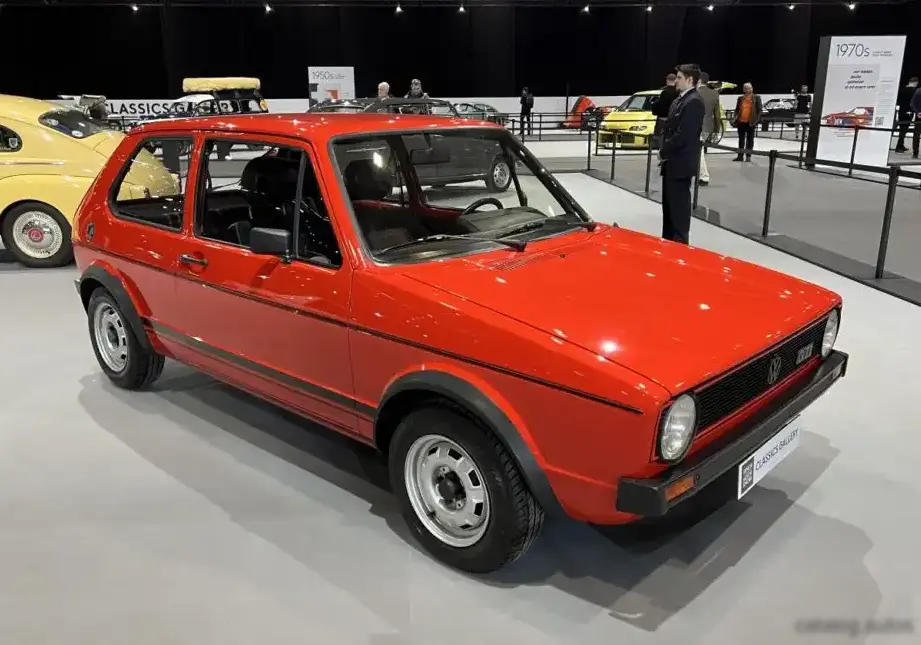
The Volkswagen Golf Mk1, produced from 1974 to 1983, represented a pivotal moment in automotive history. Replacing the long-running Beetle, it was Volkswagen’s attempt to create a modern, front-wheel-drive hatchback that appealed to a broader audience. The 1.6-liter, 75 horsepower variant, available primarily between 1975 and 1977, occupied an important position in the early Golf lineup. It served as a practical and affordable entry point into the new model range, offering a balance between fuel economy and usability. This 3-door configuration was particularly popular in Europe, where compact hatchbacks were gaining significant traction.
Technical Specifications
| Brand | Volkswagen |
| Model | Golf |
| Generation | Golf I (3-door) |
| Type (Engine) | 1.6 (75 Hp) |
| Start of production | 1975 |
| End of production | 1977 |
| Powertrain Architecture | Internal Combustion engine |
| Body type | Hatchback |
| Seats | 5 |
| Doors | 3 |
| Fuel Type | Petrol (Gasoline) |
| Acceleration 0 – 60 mph | 12.3 sec |
| Maximum speed | 164 km/h (101.9 mph) |
| Weight-to-power ratio | 10 kg/Hp, 100 Hp/tonne |
| Weight-to-torque ratio | 6.3 kg/Nm, 158.7 Nm/tonne |
| Power | 75 Hp @ 5600 rpm |
| Power per litre | 47.2 Hp/l |
| Torque | 119 Nm @ 3200 rpm (87.77 lb.-ft. @ 3200 rpm) |
| Engine layout | Front, Transverse |
| Engine Model/Code | FP |
| Engine displacement | 1588 cm3 (96.91 cu. in.) |
| Number of cylinders | 4 |
| Engine configuration | Inline |
| Cylinder Bore | 79.5 mm (3.13 in.) |
| Piston Stroke | 80 mm (3.15 in.) |
| Compression ratio | 8.2:1 |
| Number of valves per cylinder | 2 |
| Fuel injection system | Carburettor |
| Engine aspiration | Naturally aspirated engine |
| Valvetrain | SOHC |
| Engine oil capacity | 4 l (4.23 US qt | 3.52 UK qt) |
| Coolant | 4.5 l (4.76 US qt | 3.96 UK qt) |
| Kerb Weight | 750 kg (1653.47 lbs.) |
| Max. weight | 1170 kg (2579.41 lbs.) |
| Max load | 420 kg (925.94 lbs.) |
| Trunk (boot) space – minimum | 368 l (13 cu. ft.) |
| Trunk (boot) space – maximum | 1102 l (38.92 cu. ft.) |
| Fuel tank capacity | 45 l (11.89 US gal | 9.9 UK gal) |
| Length | 3723 mm (146.57 in.) |
| Width | 1610 mm (63.39 in.) |
| Height | 1410 mm (55.51 in.) |
| Wheelbase | 2400 mm (94.49 in.) |
| Front track | 1390 mm (54.72 in.) |
| Rear (Back) track | 1350 mm (53.15 in.) |
| Ride height (ground clearance) | 125 mm (4.92 in.) |
| Minimum turning circle (turning diameter) | 10.5 m (34.45 ft.) |
| Drivetrain Architecture | The Internal combustion engine (ICE) drives the front wheels of the vehicle. |
| Drive wheel | Front wheel drive |
| Number of gears and type of gearbox | 4 gears, manual transmission |
| Front suspension | Independent, type McPherson with coil spring and anti-roll bar |
| Rear suspension | Coil spring, Torsion |
| Steering type | Steering rack and pinion |
| Tires size | 175/70 R13 |
| Wheel rims size | 13 |
INTRODUCTION
The Volkswagen Golf Mk1 1.6 (75 hp) was a crucial model in establishing the Golf’s reputation for practicality and reliability. Introduced as a replacement for the iconic Beetle, the Golf represented a shift towards modern automotive engineering. The 1.6-liter engine, while not the most powerful option in the range, provided a good balance of performance and fuel efficiency, making it a popular choice for everyday drivers. This variant was primarily sold in Europe, where it competed with other small family hatchbacks like the Ford Escort and Opel Kadett.
Powertrain & Engine Architecture
The heart of this Golf variant was the FP engine, a 1.6-liter inline-four cylinder petrol engine. This engine utilized a single overhead camshaft (SOHC) valvetrain with two valves per cylinder. Fuel delivery was managed by a Solex carburetor, a common setup for the time. The engine produced 75 horsepower at 5600 rpm and 119 Nm (87.77 lb-ft) of torque at 3200 rpm. The engine’s transverse mounting and front-wheel-drive configuration were relatively new for Volkswagen, representing a significant departure from the rear-engined, rear-wheel-drive layout of the Beetle. The engine was paired with a four-speed manual transmission, which was the standard offering for this trim level. The transmission was chosen for its simplicity and durability, contributing to the Golf’s overall reliability.
Driving Characteristics
The Golf 1.6 (75 hp) offered a modest but adequate driving experience. Acceleration from 0 to 60 mph took around 12.3 seconds, and the top speed was approximately 101.9 mph. While not particularly sporty, the car was responsive enough for everyday driving. The four-speed manual transmission provided reasonable control, although the gear ratios were spaced to prioritize fuel economy over outright performance. Compared to the more powerful Golf variants, such as those equipped with the 1.8-liter engine or the later GTI models, the 1.6 felt noticeably slower. However, it offered a smoother and more relaxed driving experience, making it well-suited for commuting and long journeys. The front-wheel-drive layout provided good traction in most conditions, although it could exhibit some understeer when pushed hard.
Equipment & Trim Levels
The 1.6-liter Golf typically came with a fairly basic level of equipment. Standard features included cloth upholstery, a simple dashboard layout, and manually operated windows and door locks. The interior was functional and durable, prioritizing practicality over luxury. Optional extras included a sunroof, upgraded stereo system, and more comfortable seats. The trim level was generally considered entry-level, appealing to buyers seeking an affordable and reliable hatchback. The exterior styling was understated, with simple steel wheels and basic chrome trim. The 3-door configuration further emphasized the car’s compact dimensions and practicality.
Chassis & Braking
The Golf Mk1 featured an independent McPherson strut suspension at the front and a torsion beam suspension at the rear. This setup provided a comfortable ride and decent handling characteristics. The front suspension incorporated an anti-roll bar to reduce body roll during cornering. Braking was initially accomplished with drum brakes on all four wheels, although some later models were equipped with front disc brakes. The braking system was adequate for the car’s weight and performance, but it lacked the stopping power of more modern systems. The steering was a rack-and-pinion system, providing precise and responsive steering feel.
Market Reception & Comparison
The Golf 1.6 (75 hp) was generally well-received by critics and buyers alike. It was praised for its practicality, reliability, and fuel efficiency. However, some critics noted that the engine lacked power, particularly when fully loaded or driving uphill. Compared to the more expensive Golf variants, the 1.6 offered a more affordable entry point into the range. The 1.8-liter Golf provided noticeably more performance, while the GTI models offered a significantly sportier driving experience. In terms of fuel economy, the 1.6-liter engine was competitive with other small hatchbacks of the time. Its simple design and robust construction contributed to its long-term reliability.
Legacy
The Volkswagen Golf Mk1 1.6 (75 hp) remains a popular classic car today. Its simple mechanicals and readily available parts make it relatively easy to maintain and repair. The engine, while not particularly powerful, is known for its durability and reliability. The car’s iconic design and historical significance have also contributed to its enduring appeal. In the used car market, well-maintained examples of the 1.6-liter Golf can fetch reasonable prices, particularly among enthusiasts and collectors. The Golf Mk1 paved the way for subsequent generations of Golf models, establishing the car as a benchmark for compact hatchbacks worldwide.
