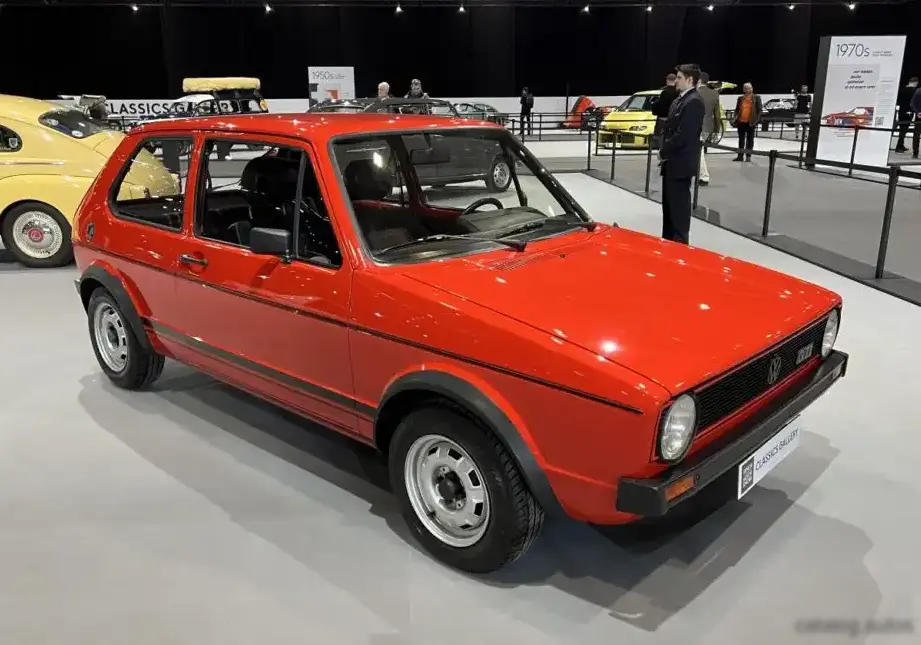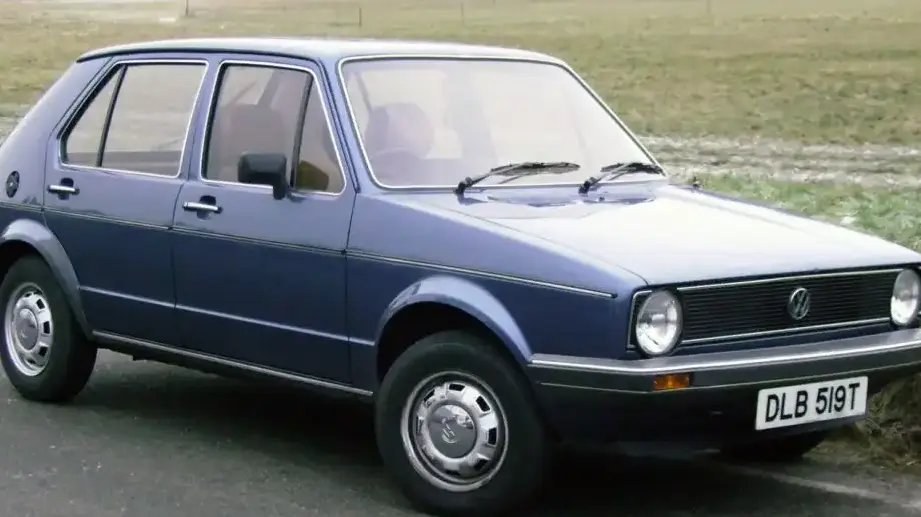
The Volkswagen Golf I (5-door) 1.1, producing 50 horsepower, was a foundational model within the first generation Golf range, manufactured between 1979 and 1981. Positioned as the entry-level offering in the five-door body style, it represented an accessible and economical option for buyers seeking a practical family hatchback. This variant played a crucial role in establishing the Golf’s reputation for affordability and usability in the European market, and later, as imports began to appear in North America. It was built on the 1HX0 platform, shared with the Audi Polo and SEAT Ronda.
Technical Specifications
| Brand | Volkswagen |
| Model | Golf |
| Generation | Golf I (5-door) |
| Type (Engine) | 1.1 (50 Hp) |
| Start of production | 1979 |
| End of production | 1981 |
| Powertrain Architecture | Internal Combustion engine |
| Body type | Hatchback |
| Seats | 5 |
| Doors | 5 |
| Fuel consumption (urban) | 8.5 l/100 km (27.7 US mpg) |
| Fuel consumption (extra urban) | 6.6 l/100 km (35.6 US mpg) |
| Fuel Type | Petrol (Gasoline) |
| Acceleration 0 – 60 mph | 15.8 sec |
| Maximum speed | 140 km/h (86.99 mph) |
| Weight-to-power ratio | 15.5 kg/Hp |
| Weight-to-torque ratio | 9.8 kg/Nm |
| Power | 50 Hp @ 6000 rpm |
| Power per litre | 45.7 Hp/l |
| Torque | 79 Nm @ 3000 rpm (58.27 lb.-ft. @ 3000 rpm) |
| Engine layout | Front, Transverse |
| Engine Model/Code | FA |
| Engine displacement | 1093 cm3 (66.7 cu. in.) |
| Number of cylinders | 4 |
| Engine configuration | Inline |
| Cylinder Bore | 69.5 mm (2.74 in.) |
| Piston Stroke | 72 mm (2.83 in.) |
| Compression ratio | 8:1 |
| Number of valves per cylinder | 2 |
| Fuel injection system | Carburettor |
| Engine aspiration | Naturally aspirated |
| Valvetrain | SOHC |
| Engine oil capacity | 3.25 l (3.43 US qt | 2.86 UK qt) |
| Coolant capacity | 4.5 l (4.76 US qt | 3.96 UK qt) |
| Kerb Weight | 775 kg (1708.58 lbs.) |
| Max. weight | 1200 kg (2645.55 lbs.) |
| Max load | 425 kg (936.96 lbs.) |
| Trunk (boot) space – minimum | 368 l (13 cu. ft.) |
| Trunk (boot) space – maximum | 1102 l (38.92 cu. ft.) |
| Fuel tank capacity | 40 l (10.57 US gal | 8.8 UK gal) |
| Permitted trailer load with brakes (12%) | 800 kg (1763.7 lbs.) |
| Permitted trailer load without brakes | 400 kg (881.85 lbs.) |
| Length | 3723 mm (146.57 in.) |
| Width | 1610 mm (63.39 in.) |
| Height | 1410 mm (55.51 in.) |
| Wheelbase | 2400 mm (94.49 in.) |
| Front track | 1389 mm (54.69 in.) |
| Rear track | 1356 mm (53.39 in.) |
| Ride height (ground clearance) | 124 mm (4.88 in.) |
| Minimum turning circle | 10 m (32.81 ft.) |
| Drivetrain | Front wheel drive |
| Number of gears | 4 |
| Gearbox type | Manual transmission |
| Front suspension | Wishbone |
| Rear suspension | Trailing arm, Torsion |
| Front brakes | Disc, 238.76 mm |
| Rear brakes | Drum, 180.34 mm |
| Steering type | Steering rack and pinion |
| Wheel rims size | 4.5J x 13 |
INTRODUCTION
The Volkswagen Golf I 1.1 (50 hp) represented the most accessible entry point into the first-generation Golf lineup. Introduced in 1979 and continuing through 1981, this five-door hatchback was designed to provide affordable and reliable transportation for families and commuters. It was a direct replacement for the Volkswagen Beetle and Type 2 (Bus) as Volkswagen’s mainstream offering. The Golf I, and this 1.1 variant specifically, was a pivotal model for Volkswagen, establishing the Golf as a benchmark in the compact hatchback segment. Its front-wheel-drive layout, transverse engine, and relatively modern design were a significant departure from the rear-engined, air-cooled Beetle.
Powertrain & Engine Architecture
The heart of the Golf I 1.1 was the FA engine, a 1093cc inline-four cylinder petrol engine. This engine featured a simple SOHC (Single Overhead Camshaft) valvetrain with two valves per cylinder. Fuel delivery was managed by a single carburetor, a common setup for engines of this era aiming for economy. The engine produced 50 horsepower at 6000 rpm and 79 Nm (58.27 lb-ft) of torque at 3000 rpm. The engine’s relatively low compression ratio of 8:1 was a factor in its ability to run on lower octane fuel, common in many markets. The engine was transversely mounted, a key element of the Golf’s front-wheel-drive configuration. The transmission was a four-speed manual gearbox, chosen for its simplicity and cost-effectiveness. This configuration was a departure from the rear-engine, rear-wheel-drive layout of the Beetle, offering improved handling and packaging.
Driving Characteristics
The Golf I 1.1, with its modest 50 horsepower, was not designed for performance. Acceleration from 0 to 60 mph took approximately 15.8 seconds, and its top speed was around 87 mph. The four-speed manual transmission offered relatively widely spaced gear ratios, prioritizing fuel economy over rapid acceleration. In real-world driving, the 1.1L engine felt adequate for city driving and cruising on flat roads, but struggled on inclines or when fully loaded. Compared to the more powerful Golf variants, such as the 1.5 or 1.6, the 1.1 felt noticeably slower. However, its lighter weight and simpler mechanicals contributed to a nimble and predictable handling experience. The steering, a rack and pinion system, was relatively precise for its time, providing decent feedback to the driver.
Equipment & Trim Levels
The Golf I 1.1 was typically equipped with basic, functional features. Standard equipment included cloth upholstery, vinyl floor covering, and basic instrumentation. The dashboard was relatively simple, featuring a speedometer, fuel gauge, and temperature gauge. Optional extras included a radio, heated rear window, and upgraded upholstery. The trim level was generally quite spartan, reflecting its position as the entry-level model. The focus was on providing a practical and affordable vehicle rather than luxury or advanced features.
Chassis & Braking
The Golf I 1.1 featured a front independent suspension with wishbones and a rear trailing arm torsion beam suspension. This suspension setup provided a reasonable balance between ride comfort and handling. Brakes were disc brakes on the front wheels and drum brakes on the rear wheels. The braking system was adequate for the vehicle’s weight and performance, but lacked the stopping power of more advanced systems found on higher-end models. The Golf I 1.1 had a curb weight of 775 kg (1708.58 lbs), which contributed to its relatively nimble handling.
Market Reception & Comparison
The Golf I 1.1 was generally well-received as an affordable and practical family car. Critics praised its fuel economy, reliability, and spacious interior. However, its modest performance was often noted. Compared to the more powerful Golf variants, the 1.1 offered a lower price point but sacrificed performance. The 1.5 and 1.6 liter models provided significantly more power and were popular choices for drivers who prioritized performance. The 1.1’s fuel economy was competitive with other small hatchbacks of the era, making it an attractive option for budget-conscious buyers. Reliability was generally good, although the carburetor required periodic adjustment and maintenance.
Legacy
The Volkswagen Golf I 1.1, while not the most powerful or glamorous variant, played a vital role in establishing the Golf as a successful and enduring model. The FA engine, while simple, proved to be relatively reliable and durable. Today, the Golf I 1.1 is a sought-after classic car, particularly among enthusiasts who appreciate its simplicity and affordability. Parts availability can be a challenge, but the Golf I’s widespread popularity means that many components are still available. Well-maintained examples of the Golf I 1.1 are increasingly valuable, representing a piece of automotive history and a testament to Volkswagen’s engineering prowess.