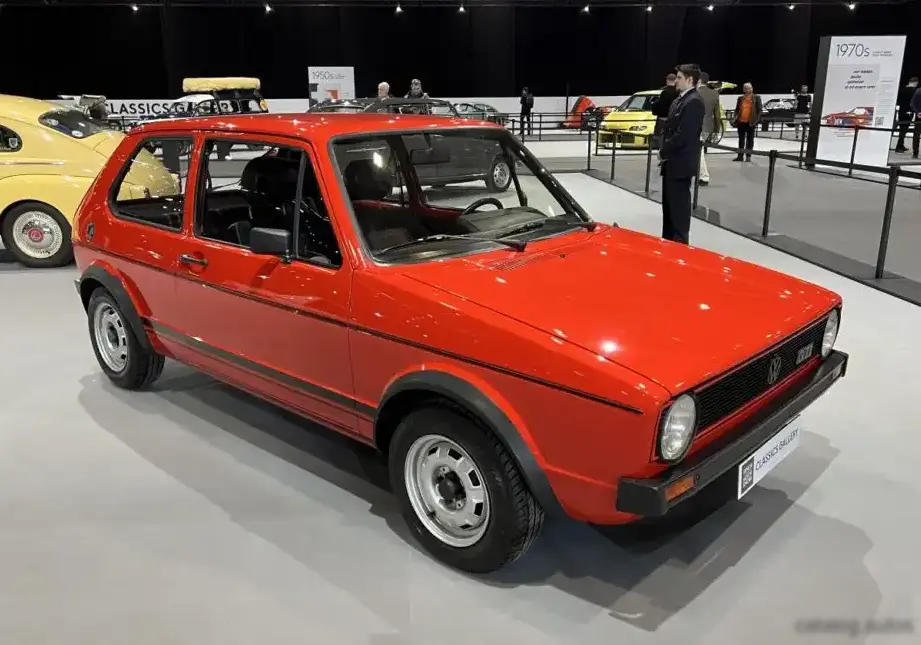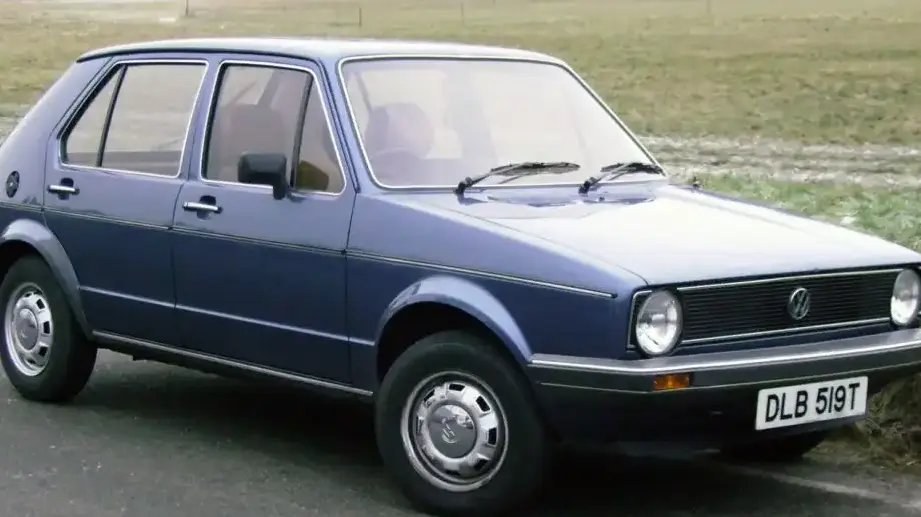
The Volkswagen Golf I (5-door) 1.5, producing 70 horsepower, was a foundational model in the Golf lineup, manufactured between 1974 and 1975. It represented an entry point into the first generation Golf (Type 17, internally designated as the 1HX0), a car designed to replace the long-running Beetle and offer a more modern, practical, and front-wheel-drive alternative. This 5-door variant, powered by the 1.5-liter engine, aimed to provide affordable family transportation within the burgeoning hatchback market, primarily in Europe. While the Golf I was eventually sold in the United States in later iterations, the initial models like this 1.5 were largely focused on the European automotive landscape.
Technical Specifications
| Brand | Volkswagen |
| Model | Golf |
| Generation | Golf I (5-door) |
| Type (Engine) | 1.5 (70 Hp) |
| Start of production | 1974 |
| End of production | 1975 |
| Powertrain Architecture | Internal Combustion engine |
| Body type | Hatchback |
| Seats | 5 |
| Doors | 5 |
| Fuel Type | Petrol (Gasoline) |
| Acceleration 0 – 100 km/h | 12.5 sec |
| Acceleration 0 – 62 mph | 12.5 sec |
| Acceleration 0 – 60 mph | 11.9 sec |
| Maximum speed | 160 km/h (99.42 mph) |
| Weight-to-power ratio | 11.1 kg/Hp, 90.3 Hp/tonne |
| Weight-to-torque ratio | 6.8 kg/Nm, 147.1 Nm/tonne |
| Power | 70 Hp @ 5200 rpm |
| Power per litre | 47.6 Hp/l |
| Torque | 114 Nm @ 3000 rpm (84.08 lb.-ft. @ 3000 rpm) |
| Engine layout | Front, Transverse |
| Engine Model/Code | FH, FD |
| Engine displacement | 1471 cm3 (89.77 cu. in.) |
| Number of cylinders | 4 |
| Engine configuration | Inline |
| Cylinder Bore | 76.5 mm (3.01 in.) |
| Piston Stroke | 80 mm (3.15 in.) |
| Compression ratio | 8.2:1 |
| Number of valves per cylinder | 2 |
| Fuel injection system | Carburettor |
| Engine aspiration | Naturally aspirated engine |
| Valvetrain | SOHC |
| Engine oil capacity | 3.5 l (3.7 US qt | 3.08 UK qt) |
| Coolant | 4.5 l (4.76 US qt | 3.96 UK qt) |
| Kerb Weight | 775 kg (1708.58 lbs.) |
| Max. weight | 1200 kg (2645.55 lbs.) |
| Max load | 425 kg (936.96 lbs.) |
| Trunk (boot) space – minimum | 368 l (13 cu. ft.) |
| Trunk (boot) space – maximum | 1102 l (38.92 cu. ft.) |
| Fuel tank capacity | 40 l (10.57 US gal | 8.8 UK gal) |
| Length | 3723 mm (146.57 in.) |
| Width | 1610 mm (63.39 in.) |
| Height | 1410 mm (55.51 in.) |
| Wheelbase | 2400 mm (94.49 in.) |
| Front track | 1390 mm (54.72 in.) |
| Rear (Back) track | 1350 mm (53.15 in.) |
| Ride height (ground clearance) | 125 mm (4.92 in.) |
| Minimum turning circle | 10.5 m (34.45 ft.) |
| Drivetrain Architecture | Front wheel drive |
| Number of gears and type of gearbox | 4 gears, manual transmission |
| Front suspension | Independent, type McPherson with coil spring and anti-roll bar |
| Rear suspension | Coil spring, Torsion |
| Front brakes | Disc |
| Rear brakes | Drum |
| Steering type | Steering rack and pinion |
| Tires size | 175/50 R13 |
| Wheel rims size | 5J x 13 |
Powertrain & Engine Architecture
The heart of this Golf variant was the Volkswagen Type FH engine, a 1.5-liter inline-four cylinder gasoline engine. The FH engine, and its closely related FD variant, was a relatively simple design, utilizing a single overhead camshaft (SOHC) valvetrain with two valves per cylinder. Fuel delivery was managed by a single carburetor, a common setup for the time, prioritizing affordability over outright performance. The engine produced 70 horsepower at 5200 rpm and 84 lb-ft of torque at 3000 rpm. This power was then sent to the front wheels through a four-speed manual transmission. The transverse engine layout, a key feature of the Golf, contributed to its compact size and efficient packaging.
Driving Characteristics
The 1.5-liter, 70 hp Golf I was not a performance car. Acceleration was modest, taking around 12.5 seconds to reach 60 mph. The four-speed manual transmission offered reasonable control, but the engine lacked the low-end torque found in larger displacement models. Compared to later Golf variants, such as those equipped with the 1.6-liter engine or the GTI’s 1.8-liter, this version felt noticeably slower. However, it provided adequate power for everyday driving and was relatively fuel-efficient for its time. The front-wheel-drive configuration provided predictable handling, although it lacked the sophistication of more modern traction control systems.
Equipment & Trim Levels
The 1.5-liter Golf I was typically considered the base model. Standard equipment was fairly basic, reflecting its position as an affordable family car. It generally included cloth upholstery, vinyl floor covering, and simple steel wheels. Optional extras included a radio, upgraded upholstery, and a sunroof. Trim levels were relatively limited; the focus was on providing a functional and reliable vehicle at a competitive price. The 5-door configuration offered increased practicality compared to the 3-door model, making it more appealing to families.
Chassis & Braking
The Golf I utilized a McPherson strut front suspension with coil springs and an anti-roll bar, providing a comfortable ride and reasonable handling. The rear suspension employed a torsion beam setup, which was cost-effective and space-efficient. Braking consisted of disc brakes on the front wheels and drum brakes on the rear. This configuration was typical for cars in this class during the 1970s. Steering was via a rack and pinion system, offering precise control. The relatively light weight of the vehicle (approximately 1709 lbs) helped to compensate for the modest braking power.
Market Reception & Comparison
The Golf I 1.5 was generally well-received as a practical and affordable family car. Critics praised its spacious interior, good fuel economy, and comfortable ride. However, the 70 hp engine was often criticized for being underpowered, particularly when the car was fully loaded. Compared to other cars in its class, such as the Ford Escort and the Opel Kadett, the Golf offered a more modern design and a more refined driving experience. The 1.5-liter version was often seen as a sensible choice for buyers who prioritized fuel efficiency and practicality over performance. More powerful Golf variants, like the GL and GTI, catered to drivers seeking a more engaging driving experience.
Legacy
The Volkswagen Golf I 1.5, while not the most powerful or exciting variant, played a crucial role in establishing the Golf as a successful and enduring model. The FH engine proved to be relatively reliable, and many examples are still on the road today. In the used car market, these early Golfs are increasingly sought after by enthusiasts and collectors. The 1.5-liter engine, while simple, is relatively easy to maintain and repair. The Golf I’s impact on automotive design and engineering is undeniable, paving the way for generations of successful hatchbacks. It represented a significant departure from the Beetle, embracing front-wheel drive and a more modern approach to automotive engineering.