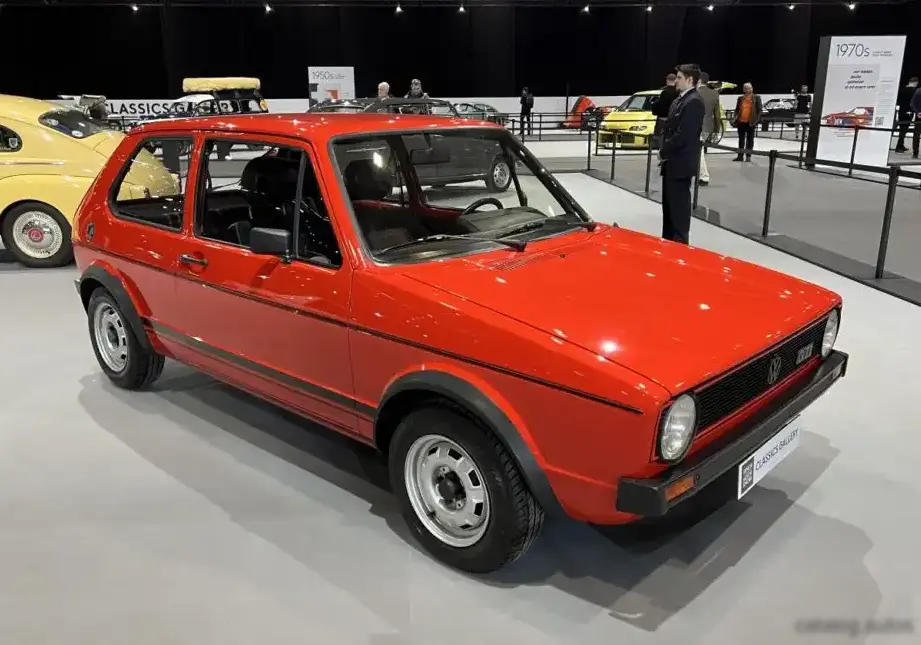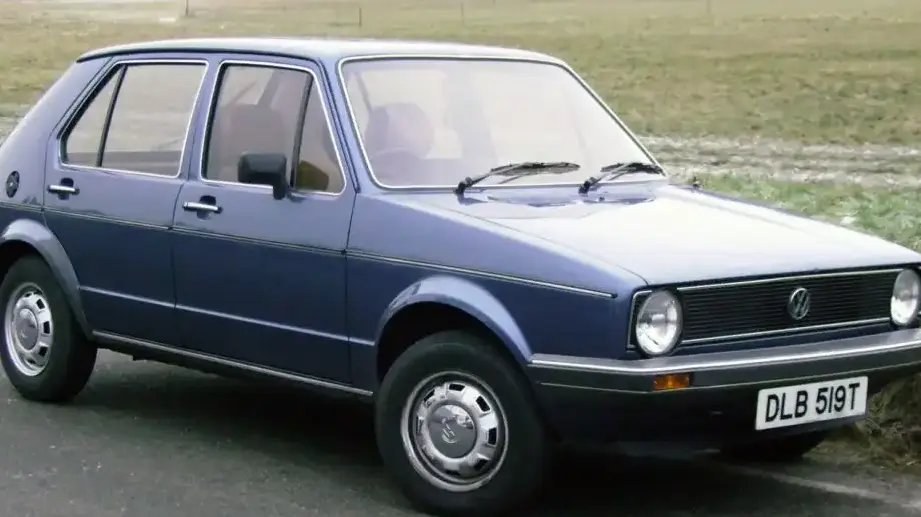
The Volkswagen Golf I (5-door) 1.5 Automatic, produced between 1977 and 1983, represents an important entry point into the first generation Golf lineup. Positioned as a more accessible and comfort-oriented option, this variant utilized a 1.5-liter engine paired with a three-speed automatic transmission. It was designed to appeal to buyers prioritizing ease of use over outright performance, particularly in markets where automatic transmissions were gaining popularity. This model played a significant role in establishing the Golf as a versatile and practical family car, building upon the success of the original Golf launched in 1974.
Technical Specifications
| Brand | Volkswagen |
| Model | Golf |
| Generation | Golf I (5-door) |
| Type (Engine) | 1.5 (70 Hp) Automatic |
| Start of production | 1977 |
| End of production | 1983 |
| Powertrain Architecture | Internal Combustion engine |
| Body type | Hatchback |
| Seats | 5 |
| Doors | 5 |
| Fuel consumption (urban) | 10.1 l/100 km (23.3 US mpg, 28 UK mpg, 9.9 km/l) |
| Fuel consumption (extra urban) | 7.3 l/100 km (32.2 US mpg, 38.7 UK mpg, 13.7 km/l) |
| Fuel Type | Petrol (Gasoline) |
| Acceleration 0 – 60 mph | 14.7 sec |
| Maximum speed | 153 km/h (95.07 mph) |
| Weight-to-power ratio | 12.1 kg/Hp, 82.4 Hp/tonne |
| Weight-to-torque ratio | 7.7 kg/Nm, 129.4 Nm/tonne |
| Power | 70 Hp @ 5600 rpm |
| Power per litre | 48 Hp/l |
| Torque | 110 Nm @ 2500 rpm (81.13 lb.-ft. @ 2500 rpm) |
| Engine layout | Front, Transverse |
| Engine Model/Code | FH, FD |
| Engine displacement | 1457 cm3 (88.91 cu. in.) |
| Number of cylinders | 4 |
| Engine configuration | Inline |
| Cylinder Bore | 79.5 mm (3.13 in.) |
| Piston Stroke | 73.4 mm (2.89 in.) |
| Compression ratio | 8.2:1 |
| Number of valves per cylinder | 2 |
| Fuel injection system | Carburettor |
| Engine aspiration | Naturally aspirated engine |
| Valvetrain | SOHC |
| Engine oil capacity | 3.5 l (3.7 US qt | 3.08 UK qt) |
| Coolant | 4.5 l (4.76 US qt | 3.96 UK qt) |
| Kerb Weight | 850 kg (1873.93 lbs.) |
| Max. weight | 1300 kg (2866.01 lbs.) |
| Max load | 450 kg (992.08 lbs.) |
| Trunk (boot) space – minimum | 368 l (13 cu. ft.) |
| Trunk (boot) space – maximum | 1102 l (38.92 cu. ft.) |
| Fuel tank capacity | 40 l (10.57 US gal | 8.8 UK gal) |
| Permitted trailer load with brakes (12%) | 1000 kg (2204.62 lbs.) |
| Permitted trailer load without brakes | 400 kg (881.85 lbs.) |
| Length | 3723 mm (146.57 in.) |
| Width | 1610 mm (63.39 in.) |
| Height | 1410 mm (55.51 in.) |
| Wheelbase | 2400 mm (94.49 in.) |
| Front track | 1389 mm (54.69 in.) |
| Rear (Back) track | 1356 mm (53.39 in.) |
| Ride height (ground clearance) | 125 mm (4.92 in.) |
| Minimum turning circle (turning diameter) | 10.5 m (34.45 ft.) |
| Drivetrain Architecture | The Internal combustion engine (ICE) drives the front wheels of the vehicle. |
| Drive wheel | Front wheel drive |
| Number of gears and type of gearbox | 3 gears, automatic transmission |
| Front suspension | Independent, type McPherson with coil spring and anti-roll bar |
| Rear suspension | Trailing arm, Coil spring, Torsion |
| Front brakes | Disc, 238.76 mm |
| Rear brakes | Drum, 180.34 mm |
| Steering type | Steering rack and pinion |
| Tires size | 175/70 R13 |
| Wheel rims size | 5J x 13 |
INTRODUCTION
The Volkswagen Golf I 1.5 Automatic, produced from 1977 to 1983, was a key variant within the first generation Golf (Type 17) range. Built on the 1HX0/A3 platform, this five-door hatchback offered a more relaxed driving experience compared to its manual transmission counterparts. It was positioned as an entry-level to mid-range offering, appealing to buyers who valued convenience and ease of driving over sporty performance. The Golf I, as a whole, was a revolutionary vehicle for Volkswagen, replacing the long-running Beetle and ushering in a new era of front-wheel-drive, water-cooled vehicles for the company.
Powertrain & Engine Architecture
At the heart of the Golf I 1.5 Automatic lies the FH or FD engine code, a 1.5-liter inline four-cylinder petrol engine. This engine featured a single overhead camshaft (SOHC) valvetrain and utilized a carburetor for fuel delivery. The carburetor system, while common for the era, was less efficient and precise than later fuel injection systems. The engine produced 70 horsepower at 5600 rpm and 110 Nm (81.13 lb-ft) of torque at 2500 rpm. The engine’s transverse mounting and front-wheel-drive configuration were significant departures from the rear-engined, rear-wheel-drive Beetle. Paired with the engine was a three-speed automatic transmission. This transmission, while providing convenience, was relatively simple in design and contributed to the car’s slower acceleration compared to manual versions. The automatic transmission was not known for its responsiveness or fuel efficiency, but it provided a smooth and comfortable driving experience.
Driving Characteristics
The 1.5-liter engine and three-speed automatic transmission combination resulted in a driving experience focused on practicality rather than performance. Acceleration from 0 to 60 mph took approximately 14.7 seconds, and the top speed was around 95 mph. The automatic transmission’s gear ratios were optimized for fuel economy and smooth cruising, rather than quick acceleration. Compared to the manual transmission versions of the Golf I, or those equipped with larger engines like the 1.6 or 1.8, the 1.5 Automatic felt noticeably slower and less engaging. However, the automatic transmission made it a more comfortable choice for city driving and commuting, eliminating the need for constant gear changes. The power delivery was relatively linear, but the engine lacked the punch of higher-output variants.
Equipment & Trim Levels
The Golf I 1.5 Automatic typically came with a fairly basic level of equipment, reflecting its position in the lineup. Standard features included cloth upholstery, a basic instrument cluster, and manually operated windows and door locks. The interior was functional and durable, prioritizing practicality over luxury. Optional extras included a sunroof, upgraded audio systems, and more comfortable seats. Trim levels varied slightly depending on the market, but generally, the 1.5 Automatic was positioned as a step up from the most basic Golf models, offering a slightly more refined interior and a more comfortable driving experience. The five-door body style provided increased practicality and easier access to the rear seats compared to the three-door version.
Chassis & Braking
The Golf I featured an independent McPherson strut front suspension and a trailing arm rear suspension with coil springs and a torsion beam. This suspension setup provided a comfortable ride and decent handling characteristics for a car of its era. The 1.5 Automatic variant typically used disc brakes on the front wheels and drum brakes on the rear wheels. The braking system was adequate for everyday driving, but lacked the stopping power of more modern systems. The car’s relatively light weight (around 850 kg or 1874 lbs) helped to offset the limitations of the braking system. A stabilizer bar was included at the front to reduce body roll during cornering.
Market Reception & Comparison
The Golf I 1.5 Automatic received mixed reviews from automotive critics. While praised for its practicality, comfort, and ease of use, it was often criticized for its lack of performance and relatively high fuel consumption compared to manual transmission models. Compared to the 1.6-liter and 1.8-liter Golf variants, the 1.5 Automatic offered less power and a slower driving experience. However, it was often more affordable and appealed to buyers who prioritized convenience over performance. The 1.5 Automatic also offered a more refined driving experience than the diesel-powered Golf models, which were known for their agricultural engines and limited performance. In terms of reliability, the 1.5-liter engine was generally considered to be robust and durable, but the automatic transmission could be prone to issues if not properly maintained.
Legacy
The Volkswagen Golf I 1.5 Automatic, while not the most sought-after variant today, holds a significant place in automotive history. It represents a pivotal moment in Volkswagen’s transition from the Beetle to a more modern and versatile lineup. The powertrain, while relatively simple by today’s standards, proved to be reasonably reliable and durable. In the used car market, these models are becoming increasingly collectible, particularly those in good condition. However, finding well-maintained examples can be challenging, as many have suffered from neglect or have been modified over the years. The Golf I 1.5 Automatic remains a testament to Volkswagen’s commitment to building practical, affordable, and reliable vehicles.