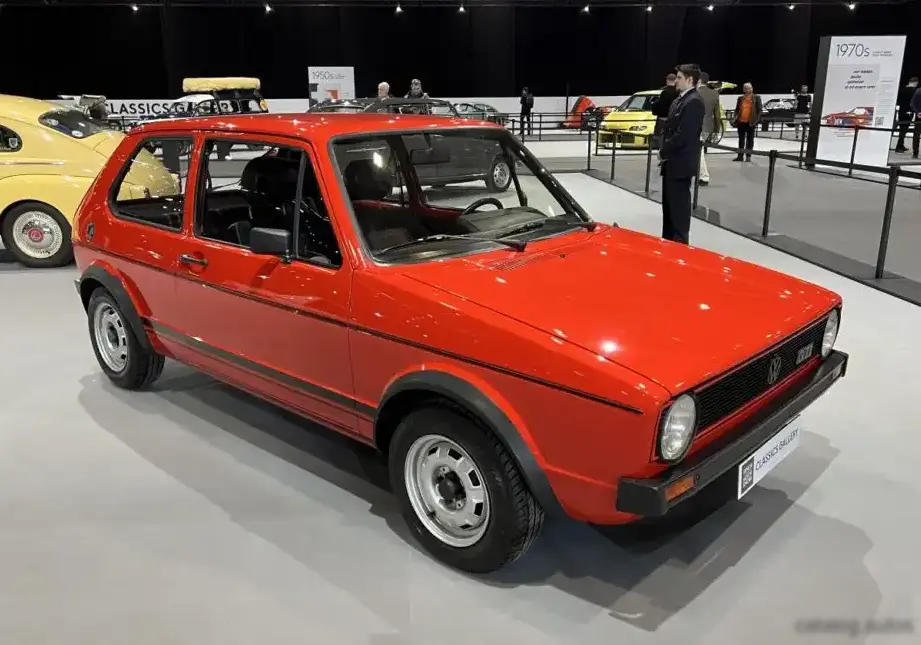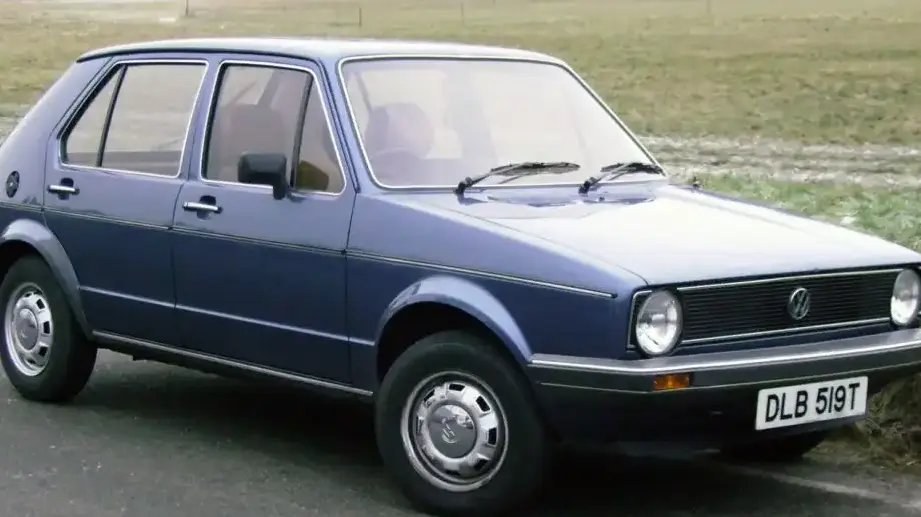
The Volkswagen Golf Mk1 1.6, producing 75 horsepower, was a mainstay of the initial Golf lineup produced between 1975 and 1977. Positioned as a practical and affordable entry point into the new Golf range, it represented Volkswagen’s attempt to replace the aging Beetle with a modern, front-wheel-drive hatchback. This 5-door variant offered increased practicality for families, becoming a common sight on European roads. The 1.6L engine, designated the FP engine code, was a key component in establishing the Golf as a versatile and economical vehicle, and it played a significant role in the model’s early success.
Technical Specifications
| Brand | Volkswagen |
| Model | Golf |
| Generation | Golf I (5-door) |
| Type (Engine) | 1.6 (75 Hp) |
| Start of production | 1975 |
| End of production | 1977 |
| Powertrain Architecture | Internal Combustion engine |
| Body type | Hatchback |
| Seats | 5 |
| Doors | 5 |
| Fuel Type | Petrol (Gasoline) |
| Acceleration 0 – 60 mph | 12.3 sec |
| Maximum speed | 164 km/h (101.9 mph) |
| Weight-to-power ratio | 10.3 kg/Hp, 96.8 Hp/tonne |
| Weight-to-torque ratio | 6.5 kg/Nm, 153.5 Nm/tonne |
| Power | 75 Hp @ 5600 rpm |
| Power per litre | 47.2 Hp/l |
| Torque | 119 Nm @ 3200 rpm (87.77 lb.-ft. @ 3200 rpm) |
| Engine layout | Front, Transverse |
| Engine Model/Code | FP |
| Engine displacement | 1588 cm3 (96.91 cu. in.) |
| Number of cylinders | 4 |
| Engine configuration | Inline |
| Cylinder Bore | 79.5 mm (3.13 in.) |
| Piston Stroke | 80 mm (3.15 in.) |
| Compression ratio | 8.2:1 |
| Number of valves per cylinder | 2 |
| Fuel injection system | Carburettor |
| Engine aspiration | Naturally aspirated engine |
| Valvetrain | SOHC |
| Engine oil capacity | 4 l (4.23 US qt | 3.52 UK qt) |
| Coolant | 4.5 l (4.76 US qt | 3.96 UK qt) |
| Kerb Weight | 775 kg (1708.58 lbs.) |
| Max. weight | 1200 kg (2645.55 lbs.) |
| Max load | 425 kg (936.96 lbs.) |
| Trunk (boot) space – minimum | 368 l (13 cu. ft.) |
| Trunk (boot) space – maximum | 1102 l (38.92 cu. ft.) |
| Fuel tank capacity | 45 l (11.89 US gal | 9.9 UK gal) |
| Length | 3723 mm (146.57 in.) |
| Width | 1610 mm (63.39 in.) |
| Height | 1410 mm (55.51 in.) |
| Wheelbase | 2400 mm (94.49 in.) |
| Front track | 1390 mm (54.72 in.) |
| Rear (Back) track | 1350 mm (53.15 in.) |
| Ride height (ground clearance) | 125 mm (4.92 in.) |
| Minimum turning circle (turning diameter) | 10.5 m (34.45 ft.) |
| Drivetrain Architecture | The Internal combustion engine (ICE) drives the front wheels of the vehicle. |
| Drive wheel | Front wheel drive |
| Number of gears and type of gearbox | 4 gears, manual transmission |
| Front suspension | Independent, type McPherson with coil spring and anti-roll bar |
| Rear suspension | Coil spring, Torsion |
| Steering type | Steering rack and pinion |
| Tires size | 175/70 R13 |
| Wheel rims size | 13 |
INTRODUCTION
The Volkswagen Golf Mk1 1.6 (75 hp) was introduced in 1975 as a crucial part of the first-generation Golf (Type 17), internally designated the 1HX0/A3 platform. It was designed to be a modern replacement for the iconic but increasingly outdated Volkswagen Beetle. The 5-door body style offered increased practicality compared to the 3-door version, appealing to families and those needing more passenger space. This variant occupied the lower-mid range of the Golf Mk1 lineup, offering a balance between affordability and usability. It sat below the more powerful GTI and diesel models, and above any potential base-level, lower-specification trims.
Powertrain & Engine Architecture
The heart of the Golf 1.6 was the FP engine, a 1588cc inline-four cylinder petrol engine. This engine utilized a single overhead camshaft (SOHC) valvetrain with two valves per cylinder. Fuel delivery was managed by a Solex carburetor, a common setup for the time, prioritizing simplicity and cost-effectiveness. The engine produced 75 horsepower at 5600 rpm and 119 Nm (87.77 lb-ft) of torque at 3200 rpm. The engine was transversely mounted, a key feature of the Golf’s front-wheel-drive layout, contributing to efficient space utilization. The engine was paired with a four-speed manual transmission, which was the standard offering for this trim level. The transmission was chosen for its durability and relatively simple maintenance.
Driving Characteristics
The Golf 1.6 75 hp, while not a performance-oriented model, provided adequate power for everyday driving. Acceleration from 0 to 60 mph took approximately 12.3 seconds, and it reached a top speed of around 101.9 mph. The four-speed gearbox offered reasonable gear ratios, but the engine’s limited torque meant that frequent downshifts were often necessary, particularly when overtaking or climbing hills. Compared to the later Golf GTI, the 1.6 felt noticeably slower and less responsive. However, it offered a smoother and more relaxed driving experience than the more powerful GTI, and was more forgiving for less experienced drivers. The front-wheel-drive configuration provided predictable handling, although it lacked the dynamic finesse of rear-wheel-drive cars.
Equipment & Trim Levels
The Golf 1.6 5-door typically came with a relatively basic level of equipment. Standard features included cloth upholstery, basic instrumentation (speedometer, fuel gauge, temperature gauge), and manually operated windows and door locks. The interior was functional and durable, prioritizing practicality over luxury. Optional extras included a radio, upgraded upholstery, and a sunroof. The trim level was generally consistent across the 1.6 models, with minor variations depending on the market. The 5-door configuration itself was a significant feature, offering easier access to the rear seats and increased passenger comfort.
Chassis & Braking
The Golf Mk1 utilized an independent McPherson strut suspension at the front, providing a comfortable ride and decent handling. The rear suspension employed a torsion beam setup, which was a cost-effective solution that offered reasonable stability. Braking was initially provided by drum brakes on all four wheels, although some later models were upgraded with front disc brakes. The braking system was adequate for the car’s performance, but lacked the stopping power of more modern systems. The steering was a rack and pinion system, providing precise and responsive steering feel. The 175/70 R13 tires offered a good balance between grip and ride comfort.
Market Reception & Comparison
The Golf 1.6 75 hp was generally well-received by critics as a practical and affordable family car. It was praised for its spacious interior, comfortable ride, and fuel efficiency. However, some critics noted its lack of performance compared to rivals like the Ford Escort and Opel Kadett. Compared to the Golf GTI, the 1.6 offered significantly lower running costs and insurance premiums, making it a more attractive option for budget-conscious buyers. The 1.6 also proved to be more reliable than the GTI, which was prone to occasional mechanical issues. Fuel economy was a strong point, averaging around 30-35 mpg in real-world driving.
Legacy
The Volkswagen Golf Mk1 1.6 75 hp powertrain proved to be remarkably durable and reliable. Many examples are still on the road today, testament to the quality of engineering and construction. The FP engine is relatively simple to maintain, and spare parts are still readily available. In the used car market, the Golf Mk1 1.6 is valued as a classic car, particularly by enthusiasts who appreciate its simplicity and charm. While not as sought-after as the GTI, it represents an affordable entry point into the world of classic Volkswagen ownership. The 1.6 engine, while not powerful, is known for its longevity and relatively low maintenance costs, making it a popular choice for restoration projects and everyday driving.