Technical Specifications
| Brand | Volkswagen |
| Model | Golf |
| Generation | Golf I (5-door) |
| Type (Engine) | 1.6 GTI (110 Hp) |
| Start of production | 1976 |
| End of production | 1982 |
| Powertrain Architecture | Internal Combustion engine |
| Body type | Hatchback |
| Seats | 5 |
| Doors | 5 |
| Fuel consumption (urban) | 12.1 l/100 km (19.4 US mpg) |
| Fuel consumption (extra urban) | 7.4 l/100 km (31.8 US mpg) |
| Fuel Type | Petrol (Gasoline) |
| Acceleration 0 – 100 km/h | 9 sec |
| Acceleration 0 – 62 mph | 9 sec |
| Acceleration 0 – 60 mph | 8.8 sec |
| Maximum speed | 180 km/h (111.85 mph) |
| Weight-to-power ratio | 7.5 kg/Hp |
| Weight-to-torque ratio | 5.9 kg/Nm |
| Power | 110 Hp @ 6100 rpm |
| Power per litre | 69.3 Hp/l |
| Torque | 140 Nm @ 5000 rpm (103.26 lb.-ft. @ 5000 rpm) |
| Engine layout | Front, Transverse |
| Engine Model/Code | EG |
| Engine displacement | 1588 cm3 (96.91 cu. in.) |
| Number of cylinders | 4 |
| Engine configuration | Inline |
| Cylinder Bore | 79.5 mm (3.13 in.) |
| Piston Stroke | 80 mm (3.15 in.) |
| Compression ratio | 9.5:1 |
| Number of valves per cylinder | 2 |
| Fuel injection system | Multi-port manifold injection |
| Engine aspiration | Naturally aspirated engine |
| Valvetrain | SOHC |
| Engine oil capacity | 4 l (4.23 US qt | 3.52 UK qt) |
| Coolant | 4.5 l (4.76 US qt | 3.96 UK qt) |
| Kerb Weight | 830 kg (1829.84 lbs.) |
| Max. weight | 1250 kg (2755.78 lbs.) |
| Max load | 420 kg (925.94 lbs.) |
| Trunk (boot) space – minimum | 368 l (13 cu. ft.) |
| Trunk (boot) space – maximum | 1102 l (38.92 cu. ft.) |
| Fuel tank capacity | 40 l (10.57 US gal | 8.8 UK gal) |
| Permitted trailer load with brakes (12%) | 1200 kg (2645.55 lbs.) |
| Permitted trailer load without brakes | 400 kg (881.85 lbs.) |
| Length | 3723 mm (146.57 in.) |
| Width | 1610 mm (63.39 in.) |
| Height | 1410 mm (55.51 in.) |
| Wheelbase | 2400 mm (94.49 in.) |
| Front track | 1405 mm (55.31 in.) |
| Rear (Back) track | 1372 mm (54.02 in.) |
| Ride height (ground clearance) | 125 mm (4.92 in.) |
| Minimum turning circle (turning diameter) | 10.5 m (34.45 ft.) |
| Drivetrain Architecture | Front wheel drive |
| Number of gears and type of gearbox | 5 gears, manual transmission |
| Front suspension | Independent, type McPherson with coil spring and anti-roll bar |
| Rear suspension | Transverse stabilizer, Trailing arm, Coil spring, Torsion |
| Front brakes | Ventilated discs, 238.76 mm |
| Rear brakes | Disc, 180.34 mm |
| Steering type | Steering rack and pinion |
| Tires size | Front wheel tires: 175/70 R13Rear wheel tires: 175/70 R13 |
| Wheel rims size | Front wheel rims: 5.5J x 13Rear wheel rims: 5.5J x 13 |
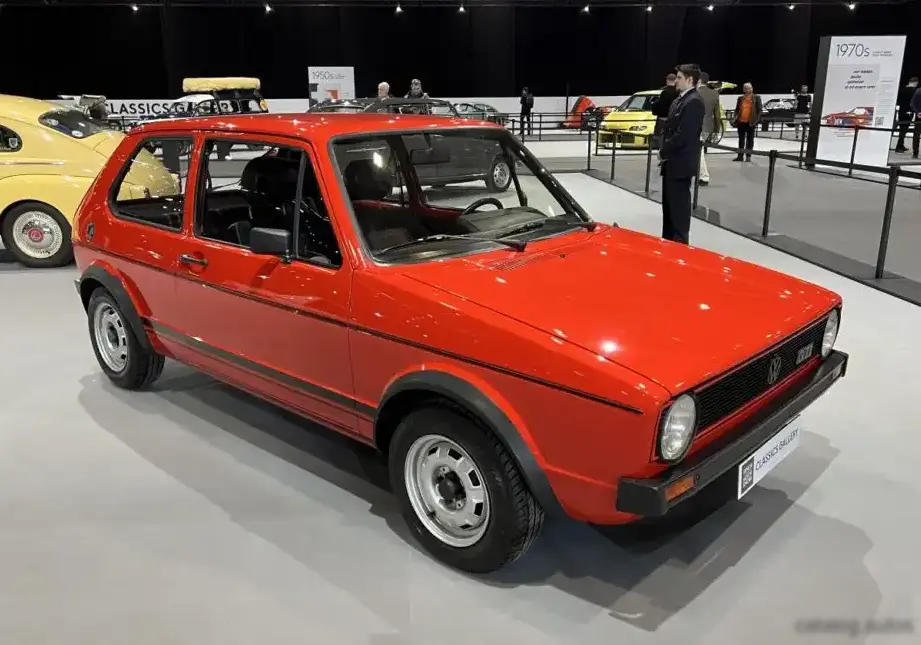
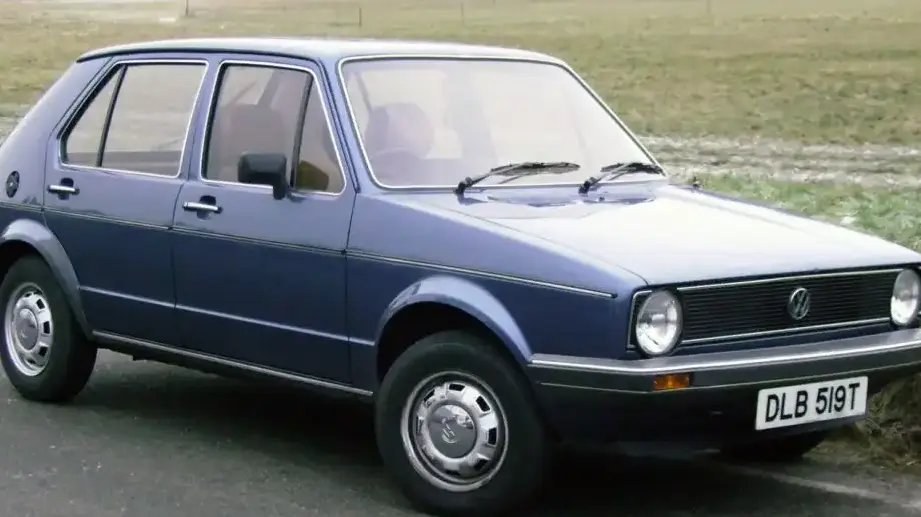
The Volkswagen Golf Mk1 1.6 GTI, launched in 1976, was a direct response to the growing demand for a sporty, yet practical, hatchback. Building upon the success of the standard Golf, the GTI variant aimed to deliver a more engaging driving experience. The 5-door configuration offered increased practicality for families, making it a popular choice in European markets. This model was a key component of Volkswagen’s strategy to appeal to a younger, more performance-oriented demographic. It quickly became a benchmark in its class, praised for its nimble handling, responsive engine, and relatively affordable price point.
Powertrain & Engine Architecture
The heart of the Golf 1.6 GTI is the EG engine code, a 1588cc inline-four cylinder engine. This engine featured a single overhead camshaft (SOHC) valvetrain operating two valves per cylinder. Crucially, it employed Bosch K-Jetronic multi-port fuel injection, a sophisticated system for its time that contributed to improved fuel efficiency and power delivery compared to carbureted engines. The engine produced 110 horsepower at 6100 rpm and 140 Nm (103.26 lb-ft) of torque at 5000 rpm. The engine’s transverse mounting and front-wheel-drive configuration were hallmarks of the Golf’s design, optimizing space utilization and contributing to its balanced handling. The standard transmission was a five-speed manual gearbox, known for its precise shift action.
Driving Characteristics
The 1.6 GTI offered a noticeable step up in performance compared to the base Golf models. While not as potent as the later 1.8 GTI or the diesel variants, the 1.6 GTI provided a lively and engaging driving experience. Acceleration from 0 to 60 mph took approximately 8.8 seconds, and it could reach a top speed of 180 km/h (111.85 mph). The five-speed manual transmission allowed drivers to keep the engine in its optimal power band. The relatively light weight of the Mk1 Golf (around 830 kg or 1829.84 lbs) contributed to its nimble handling and responsive steering. Compared to the later, more powerful GTI models, the 1.6 GTI offered a more accessible and forgiving driving experience, making it a good choice for drivers who wanted a sporty car without being intimidated by excessive power.
Equipment & Trim Levels
The 1.6 GTI came reasonably well-equipped for its time. Standard features included a sports steering wheel, upgraded seats with tartan upholstery, and a more comprehensive instrument cluster. Exterior features included distinctive GTI badging, a black grille with a red trim, and often, additional driving lights. Optional extras included a sunroof, upgraded audio systems, and alloy wheels. The interior was functional and focused on the driving experience, with a clear and straightforward layout. The tartan upholstery became a signature element of the GTI, adding a touch of sportiness to the cabin.
Chassis & Braking
The Golf Mk1 GTI utilized an independent McPherson strut front suspension with coil springs and an anti-roll bar, providing responsive steering and good handling. The rear suspension employed a torsion beam setup with coil springs, offering a balance between comfort and stability. Braking duties were handled by ventilated discs at the front and discs at the rear, providing adequate stopping power for the car’s performance capabilities. The relatively simple suspension setup contributed to the car’s affordability and ease of maintenance.
Market Reception & Comparison
The Golf 1.6 GTI was widely praised by automotive journalists for its blend of performance, practicality, and affordability. It was often compared favorably to rivals such as the Ford Escort XR3 and the Vauxhall Astra SR. Critics noted its responsive engine, nimble handling, and well-balanced chassis. Fuel economy was reasonable for a performance car of the era, and reliability was generally good. Compared to the later 1.8 GTI, the 1.6 GTI offered a more accessible price point and a slightly more forgiving driving experience, making it a popular choice for first-time hot hatch buyers.
Legacy
The Volkswagen Golf Mk1 1.6 GTI holds a significant place in automotive history as a pioneering hot hatch. Its success paved the way for future generations of GTI models and helped establish the Golf as a global icon. Today, well-maintained examples of the 1.6 GTI are highly sought after by collectors and enthusiasts. The EG engine is known for its durability, but like any classic car, regular maintenance is essential to keep it running reliably. Parts availability is generally good, although some specific components may be difficult to find. The Golf Mk1 1.6 GTI remains a testament to Volkswagen’s engineering prowess and its ability to create cars that are both fun to drive and practical for everyday use.