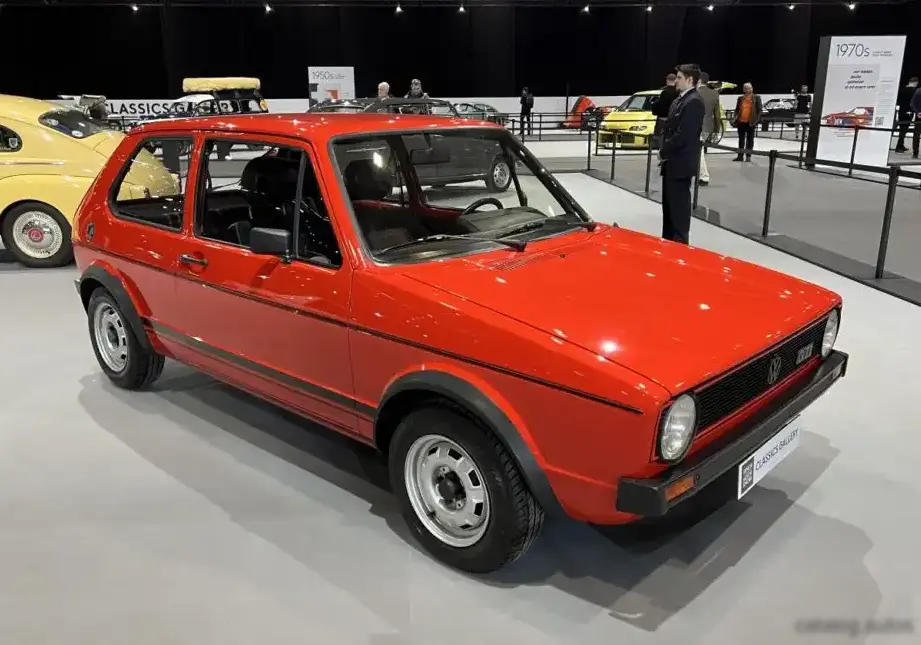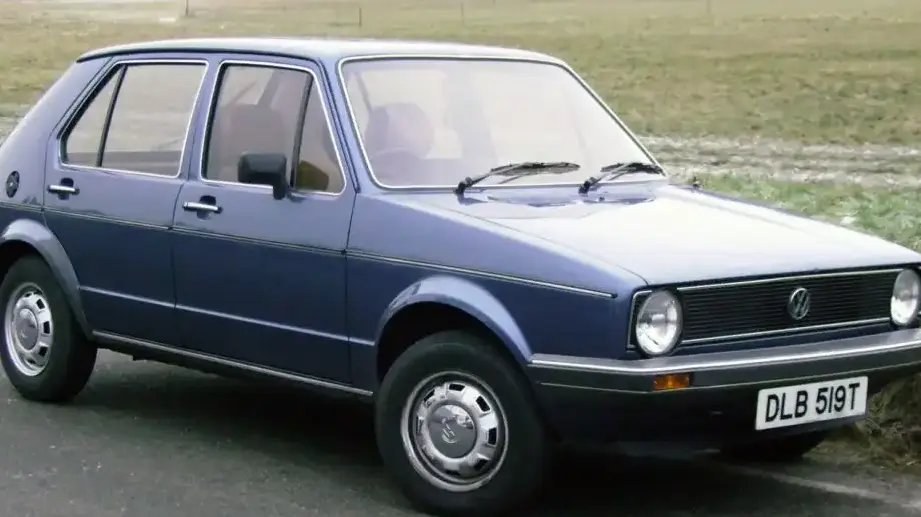
The Volkswagen Golf Mk1 5-door 1.8 GTI, produced between 1982 and 1983, represented a significant evolution of the original Golf, launched in 1974. Positioned as a performance-oriented variant within the first-generation Golf lineup, the 1.8 GTI aimed to deliver a more engaging driving experience than the standard models while maintaining the Golf’s practicality and affordability. This model was part of the 1HX0/A3 platform family, and it served as a bridge between the earlier, smaller-displacement GTI models and the later, more powerful iterations. It was primarily marketed in Europe, where the Golf had quickly become a dominant force in the compact hatchback segment.
Technical Specifications
| Brand | Volkswagen |
| Model | Golf |
| Generation | Golf I (5-door) |
| Type (Engine) | 1.8 GTI (112 Hp) |
| Start of production | 1982 |
| End of production | 1983 |
| Powertrain Architecture | Internal Combustion engine |
| Body type | Hatchback |
| Seats | 5 |
| Doors | 5 |
| Fuel consumption (urban) | 10.9 l/100 km (21.6 US mpg, 25.9 UK mpg, 9.2 km/l) |
| Fuel consumption (extra urban) | 6.4 l/100 km (36.8 US mpg, 44.1 UK mpg, 15.6 km/l) |
| Fuel Type | Petrol (Gasoline) |
| Acceleration 0 – 100 km/h | 9.2 sec |
| Acceleration 0 – 62 mph | 9.2 sec |
| Acceleration 0 – 60 mph | 8.7 sec |
| Maximum speed | 183 km/h (113.71 mph) |
| Power | 112 Hp @ 5800 rpm |
| Power per litre | 62.9 Hp/l |
| Torque | 153 Nm @ 3500 rpm (112.85 lb.-ft. @ 3500 rpm) |
| Engine layout | Front, Transverse |
| Engine Model/Code | DX |
| Engine displacement | 1781 cm3 (108.68 cu. in.) |
| Number of cylinders | 4 |
| Engine configuration | Inline |
| Cylinder Bore | 81 mm (3.19 in.) |
| Piston Stroke | 86.4 mm (3.4 in.) |
| Compression ratio | 10:1 |
| Number of valves per cylinder | 2 |
| Fuel injection system | Multi-port manifold injection |
| Engine aspiration | Naturally aspirated engine |
| Valvetrain | SOHC |
| Engine oil capacity | 4 l (4.23 US qt | 3.52 UK qt) |
| Coolant capacity | 4.5 l (4.76 US qt | 3.96 UK qt) |
| Trunk (boot) space – minimum | 368 l (13 cu. ft.) |
| Trunk (boot) space – maximum | 1102 l (38.92 cu. ft.) |
| Fuel tank capacity | 40 l (10.57 US gal | 8.8 UK gal) |
| Length | 3723 mm (146.57 in.) |
| Width | 1610 mm (63.39 in.) |
| Height | 1410 mm (55.51 in.) |
| Wheelbase | 2400 mm (94.49 in.) |
| Drivetrain Architecture | The Internal combustion engine (ICE) drives the front wheels of the vehicle. |
| Drive wheel | Front wheel drive |
| Number of gears and type of gearbox | 5 gears, manual transmission |
| Front suspension | Independent, type McPherson with coil spring and anti-roll bar |
| Rear suspension | Transverse stabilizer, Coil spring, Torsion |
| Front brakes | Ventilated discs |
| Rear brakes | Drum |
| Steering type | Steering rack and pinion |
| Tires size | 185/60 R14 |
| Wheel rims size | 6J x 14 |
Powertrain & Engine Architecture
The heart of the Golf 1.8 GTI was the DX engine, a 1781cc inline-four cylinder gasoline engine. This engine featured a single overhead camshaft (SOHC) valvetrain operating two valves per cylinder. Crucially, it employed Bosch K-Jetronic multi-port fuel injection, a sophisticated system for its time that improved fuel efficiency and responsiveness compared to carbureted engines. The DX engine produced 112 horsepower at 5800 rpm and 153 Nm (113 lb-ft) of torque at 3500 rpm. The engine’s transverse mounting and front-wheel drive configuration were hallmarks of the Golf’s design, contributing to its compact size and efficient packaging. The five-speed manual transmission was standard, providing precise gear changes and allowing drivers to fully exploit the engine’s power band.
Driving Characteristics
The 1.8 GTI offered a noticeable step up in performance compared to the base Golf models. While not as potent as the later 16-valve GTI variants, the 1.8L engine provided brisk acceleration, reaching 60 mph in approximately 8.7 seconds and a top speed of 113.71 mph. The five-speed manual transmission allowed for good control over the engine’s power, and the gear ratios were well-suited for both city driving and highway cruising. Compared to the more powerful GTI models, the 1.8L version felt more accessible and less demanding to drive, making it a good choice for drivers who wanted a sporty experience without the raw power of the larger engines. The handling was typical of the Mk1 Golf – nimble and responsive, with a slight tendency towards understeer when pushed hard.
Equipment & Trim Levels
The 1.8 GTI typically came with a relatively well-equipped interior for its time. Standard features included cloth upholstery, a basic instrument cluster, and a four-spoke steering wheel. Optional extras included a sunroof, upgraded audio systems, and power windows. The GTI trim also featured some unique styling cues, such as a red-trimmed grille and distinctive alloy wheels. The interior was functional and durable, prioritizing practicality over luxury. The 5-door configuration offered increased passenger space and ease of access to the rear seats, making it a more family-friendly option than the 3-door model.
Chassis & Braking
The Golf Mk1 utilized a McPherson strut front suspension with coil springs and an anti-roll bar, providing a comfortable yet controlled ride. The rear suspension employed a torsion beam setup, which was simple, reliable, and space-efficient. Braking duties were handled by ventilated discs at the front and drum brakes at the rear. While adequate for everyday driving, the braking system wasn’t as powerful as those found on some contemporary sports cars. The steering was a rack-and-pinion system, offering precise and responsive steering feel.
Market Reception & Comparison
The Golf 1.8 GTI was generally well-received by automotive critics. It was praised for its blend of performance, practicality, and affordability. Compared to other cars in its class, such as the Ford Escort XR3, the Golf offered a more refined driving experience and a higher-quality interior. However, some critics noted that the 1.8L engine lacked the outright punch of the larger GTI variants. Fuel economy was reasonable for the time, averaging around 36.8 US mpg on the highway. Reliability was generally good, although the K-Jetronic fuel injection system could be prone to issues if not properly maintained.
Legacy
The Volkswagen Golf Mk1 1.8 GTI holds a special place in automotive history as a pioneering example of a hot hatchback. The DX engine proved to be a durable and reliable unit, and many examples are still on the road today. In the used car market, well-maintained 1.8 GTI models are sought after by enthusiasts and collectors. While not as highly valued as the 16-valve GTI variants, the 1.8L version offers a more affordable entry point into the world of classic Golf ownership. Its enduring popularity is a testament to the Golf’s timeless design and its ability to deliver a fun and engaging driving experience.