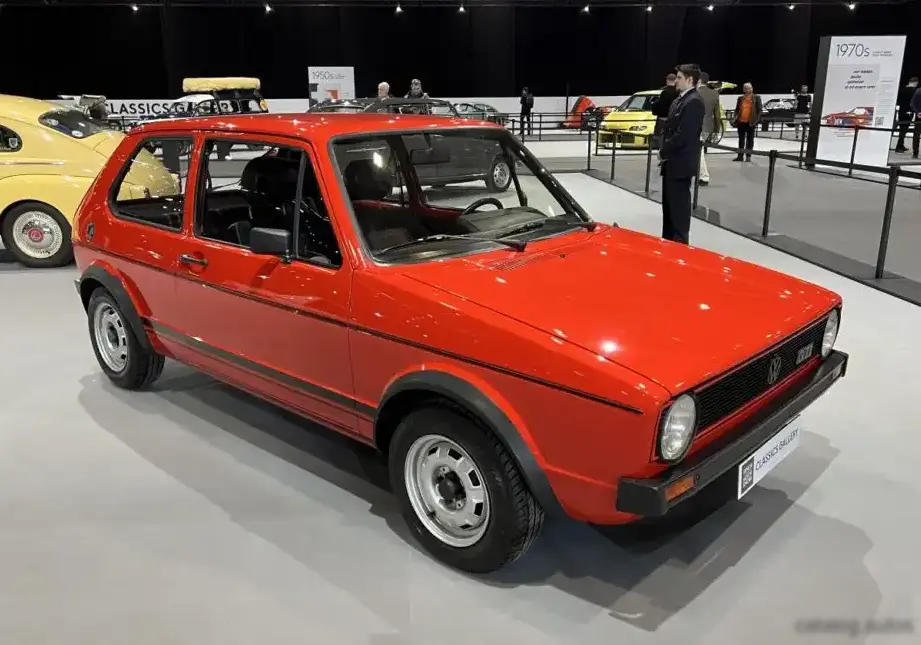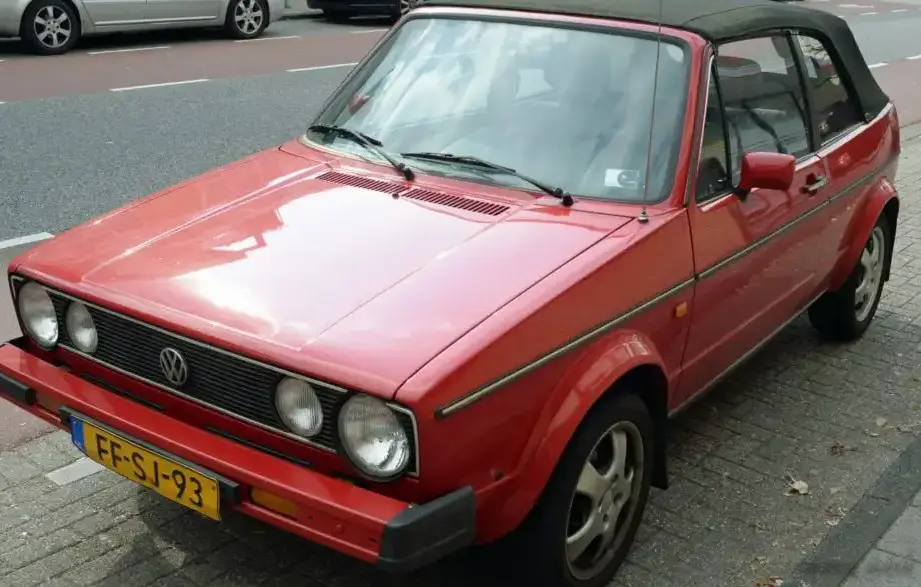
The Volkswagen Golf I Cabrio 1.6, producing 72 horsepower, was a mainstay of the first-generation Golf Cabriolet lineup from 1986 to 1990. Positioned as the entry-level engine option, it offered an affordable and accessible open-top motoring experience within the Golf range. This variant played a significant role in popularizing the Golf Cabriolet, particularly in markets where smaller displacement engines were favored due to taxation or fuel economy concerns. It was a key component of Volkswagen’s strategy to offer a diverse range of Golf Cabriolet models, catering to a broad spectrum of buyers.
Technical Specifications
| Brand | Volkswagen |
| Model | Golf |
| Generation | Golf I Cabrio |
| Type (Engine) | 1.6 (72 Hp) |
| Start of production | 1986 |
| End of production | 1990 |
| Powertrain Architecture | Internal Combustion engine |
| Body type | Cabriolet |
| Fuel Type | Petrol (Gasoline) |
| Power | 72 Hp |
| Engine Model/Code | EW |
| Engine aspiration | Naturally aspirated engine |
| Engine oil capacity | 4 l (4.23 US qt | 3.52 UK qt) |
| Coolant capacity | 6.3 l (6.66 US qt | 5.54 UK qt) |
Powertrain & Engine Architecture
The Golf I Cabrio 1.6 utilized the Volkswagen EW engine code, a naturally aspirated, inline-four cylinder petrol engine displacing 1598cc (approximately 1.6 liters). This engine was a single overhead camshaft (SOHC) design, featuring two valves per cylinder. Fuel delivery was managed by a Bosch mechanical fuel injection system, a relatively simple but reliable setup for the time. The EW engine was known for its durability and ease of maintenance, though it wasn’t particularly powerful. The engine’s block was constructed from cast iron, while the cylinder head was made of aluminum alloy. The compression ratio was typically around 8.5:1.
The 72 horsepower output was achieved at approximately 5,000 rpm, with peak torque of around 109 lb-ft (148 Nm) at 3,200 rpm. The engine was typically paired with a three-speed automatic transmission, although a five-speed manual transmission was also available as an option. The automatic transmission, while providing convenience, did impact acceleration and fuel economy compared to the manual version. The automatic transmission was a traditional hydraulic control unit, lacking the electronic controls found in later automatic gearboxes.
Driving Characteristics
The Golf I Cabrio 1.6 with the automatic transmission offered a relaxed and comfortable driving experience. Acceleration was modest, taking approximately 13-14 seconds to reach 60 mph (97 km/h). The automatic transmission’s gear ratios were geared towards fuel efficiency rather than outright performance. The car felt most comfortable cruising at highway speeds, where the engine didn’t need to be strained. Compared to the more powerful 1.8 liter versions or the GTI models, the 1.6 felt noticeably slower, particularly when attempting to overtake or climb hills. The manual transmission version offered a slightly more engaging driving experience and improved acceleration, but the automatic was favored by buyers prioritizing ease of use.
The Cabriolet’s open-top nature added to the driving experience, but also introduced some compromises. Body flex was noticeable, particularly on uneven road surfaces, and wind noise was significant at higher speeds. The suspension, while adequate, wasn’t particularly sporty, prioritizing ride comfort over handling precision.
Equipment & Trim Levels
The 1.6-liter Golf Cabriolet typically represented the base trim level. Standard equipment included cloth upholstery, basic instrumentation (speedometer, fuel gauge, temperature gauge), and a four-spoke steering wheel. Power steering and central locking were often optional extras. The interior was relatively spartan, reflecting the car’s entry-level positioning.
Optional extras included upgraded stereo systems, alloy wheels, and a more luxurious interior trim. A heated rear window was a common option, as were electric front windows. The exterior trim was typically minimal, with black plastic bumpers and side moldings. The available color palette was fairly extensive, offering a range of solid and metallic paint options.
Chassis & Braking
The Golf I Cabriolet utilized a MacPherson strut front suspension and a twist-beam rear suspension. The front suspension incorporated coil springs and a stabilizer bar, while the rear suspension relied on leaf springs and shock absorbers. The braking system consisted of disc brakes on the front wheels and drum brakes on the rear wheels. The brakes were adequate for the car’s weight and performance, but lacked the stopping power of more modern braking systems.
The steering was a recirculating ball system, providing a relatively heavy but direct feel. The car’s unladen weight was around 2,200 lbs (1,000 kg), contributing to its relatively nimble handling. The chassis was reinforced compared to the standard Golf hatchback to compensate for the lack of a fixed roof, but some body flex was still present.
Market Reception & Comparison
The Golf I Cabrio 1.6 was generally well-received as an affordable and practical open-top car. Critics praised its reliability and ease of maintenance, but noted its lack of performance. Compared to the more powerful 1.8-liter versions, the 1.6 offered significantly less power and acceleration. However, it also offered better fuel economy, making it a popular choice for buyers on a budget. The 1.8 liter models, while more expensive, provided a noticeable performance boost and were favored by drivers who enjoyed a more spirited driving experience. The GTI models, with their larger engines and sport-tuned suspensions, were aimed at a different segment of the market altogether.
Fuel economy for the 1.6-liter automatic was typically around 25-30 mpg (9.4-7.8 l/100km) in mixed driving conditions. This was a competitive figure for the time, particularly compared to larger or more powerful convertibles.
Legacy
The Golf I Cabrio 1.6 remains a popular classic car today, particularly among enthusiasts who appreciate its simplicity and affordability. The EW engine is known for its durability, and many examples are still on the road after decades of use. However, parts availability can be a challenge, and maintenance requires a degree of mechanical skill. The automatic transmission, while reliable, can be prone to wear and tear over time.
The Golf I Cabrio 1.6 represents a significant chapter in Volkswagen’s history, demonstrating the company’s ability to produce affordable and accessible open-top cars. It helped establish the Golf Cabriolet as a popular alternative to more expensive convertibles, and its legacy continues to be felt in the used car market today. Well-maintained examples are increasingly sought after by collectors and enthusiasts, and prices have been steadily rising in recent years.