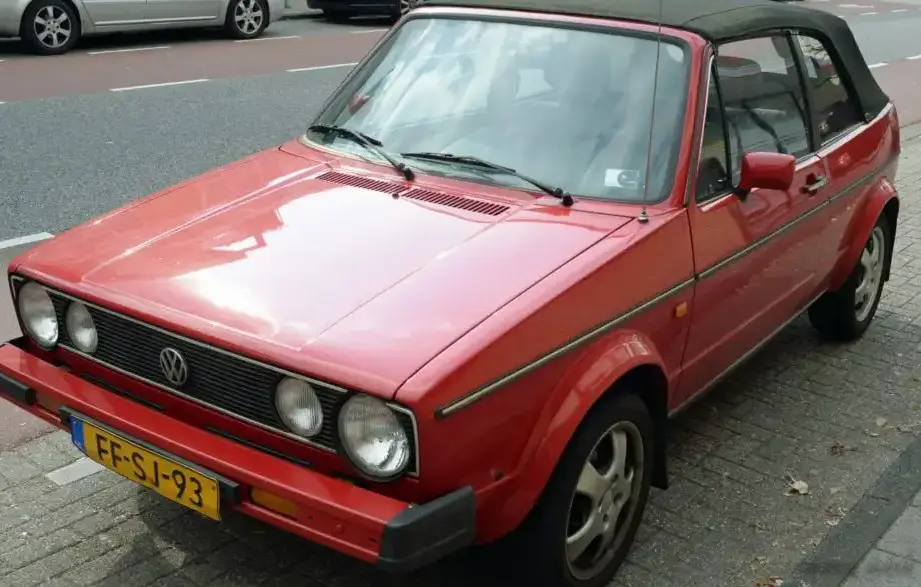
The Volkswagen Golf I Cabrio 1.8, producing 98 horsepower, was a mainstay of the first-generation Golf Cabriolet lineup from 1989 to 1994. Positioned as a mid-range offering, it provided a balance between affordability and reasonable performance within the Golf Cabriolet range, which also included lower-powered base models and the more potent GTI variants. This model played a significant role in popularizing open-top motoring for Volkswagen, particularly in Europe and North America, offering a stylish and accessible entry point into the convertible market.
Technical Specifications
| Brand | Volkswagen |
| Model | Golf |
| Generation | Golf I Cabrio |
| Type (Engine) | 1.8 (98 Hp) |
| Start of production | 1989 |
| End of production | 1994 |
| Powertrain Architecture | Internal Combustion Engine |
| Body type | Cabriolet |
| Fuel Type | Petrol (Gasoline) |
| Power | 98 Hp |
| Engine Model/Code | 2H |
| Number of cylinders | 4 |
| Engine configuration | Inline |
| Number of valves per cylinder | 2 |
| Engine aspiration | Naturally aspirated |
| Engine oil capacity | 4 l (4.23 US qt | 3.52 UK qt) |
| Coolant capacity | 6.3 l (6.66 US qt | 5.54 UK qt) |
Powertrain & Engine Architecture
The Golf I Cabrio 1.8 utilized the Volkswagen 2H engine, an inline four-cylinder, naturally aspirated gasoline engine. This engine was a common sight in various Volkswagen and Audi models of the era. The 2H featured a cast iron block and an aluminum cylinder head, with a single overhead camshaft operating two valves per cylinder. Fuel delivery was managed by Bosch mechanical fuel injection, a system known for its reliability, though less sophisticated than later multi-point injection systems. The 1.8-liter engine produced 98 horsepower at approximately 5,200 rpm and 109 lb-ft of torque at 3,200 rpm. While not a powerhouse, it provided adequate performance for comfortable cruising and everyday driving. The engine’s relatively simple design contributed to its durability and ease of maintenance.
Driving Characteristics
The 1.8-liter engine in the Golf I Cabrio, while not particularly quick, offered a smooth and predictable driving experience. Acceleration from 0 to 60 mph took around 11-12 seconds, which was competitive for its class in the early 1990s. The engine’s torque curve was relatively flat, providing usable power across a broad range of engine speeds. Compared to the more powerful GTI models, the 1.8 felt noticeably less responsive, especially when fully loaded or climbing hills. However, this difference came with benefits in fuel economy and reduced stress on the drivetrain. The five-speed manual transmission offered precise shifts and allowed drivers to keep the engine in its optimal power band. The Cabriolet’s relatively light weight helped to mitigate the engine’s modest output, making it feel more nimble than some of its competitors.
Equipment & Trim Levels
The Golf I Cabrio 1.8 typically came equipped with a reasonable level of standard features. Interior upholstery was usually cloth, with options for upgraded velour or leather available. The dashboard featured a straightforward layout with analog gauges for speed, tachometer, fuel level, and coolant temperature. Power steering was often included, though air conditioning was typically an optional extra. Other available options included a sunroof, upgraded stereo systems, and alloy wheels. The trim level sat between the base models and the GTI, offering a step up in comfort and features without the higher price tag of the performance-oriented GTI. The Golf I Cabrio 1.8 was often seen as a stylish and well-equipped entry-level convertible.
Chassis & Braking
The Golf I Cabriolet utilized a MacPherson strut front suspension and a twist-beam rear suspension. This setup provided a comfortable ride, though it wasn’t particularly sporty. The front brakes were typically disc brakes, while the rear brakes were drum brakes. This configuration was common for vehicles in this price range during the late 1980s and early 1990s. Stabilizer bars were fitted to both the front and rear axles to reduce body roll during cornering. The steering was rack-and-pinion, providing reasonably precise control. The chassis was reinforced compared to the standard Golf hatchback to compensate for the loss of structural rigidity due to the open-top design.
Market Reception & Comparison
The Golf I Cabrio 1.8 was generally well-received by automotive critics. It was praised for its stylish design, comfortable ride, and reasonable price. However, some critics noted that the engine lacked the punch of the GTI models. Compared to other convertibles on the market at the time, such as the Mazda MX-5 Miata, the Golf I Cabrio offered more interior space and practicality. Fuel economy was respectable for a convertible, averaging around 25-30 mpg in mixed driving. Reliability was generally good, though the mechanical fuel injection system could require occasional maintenance. The 1.8-liter engine proved to be durable and long-lasting, making the Golf I Cabrio 1.8 a popular choice for buyers seeking a reliable and affordable convertible.
Legacy
The Volkswagen Golf I Cabrio 1.8 remains a popular choice among classic car enthusiasts today. Its simple design, reliable engine, and affordable price make it an attractive option for those looking for a classic convertible. Parts availability is generally good, and the engine is relatively easy to maintain. While not a high-performance vehicle, the Golf I Cabrio 1.8 offers a charming and enjoyable driving experience. The 2H engine, in particular, is known for its longevity and ability to withstand years of use. In the used car market, well-maintained examples of the Golf I Cabrio 1.8 can command reasonable prices, reflecting their enduring appeal and classic status. The Golf I Cabrio, in all its trims, helped establish Volkswagen as a major player in the convertible market, paving the way for future generations of open-top Volkswagens.