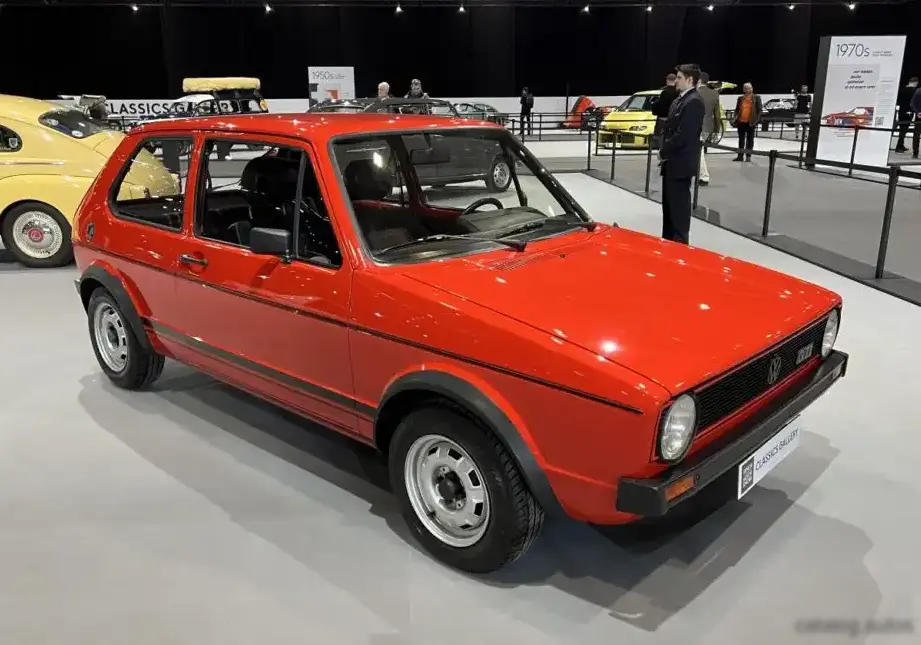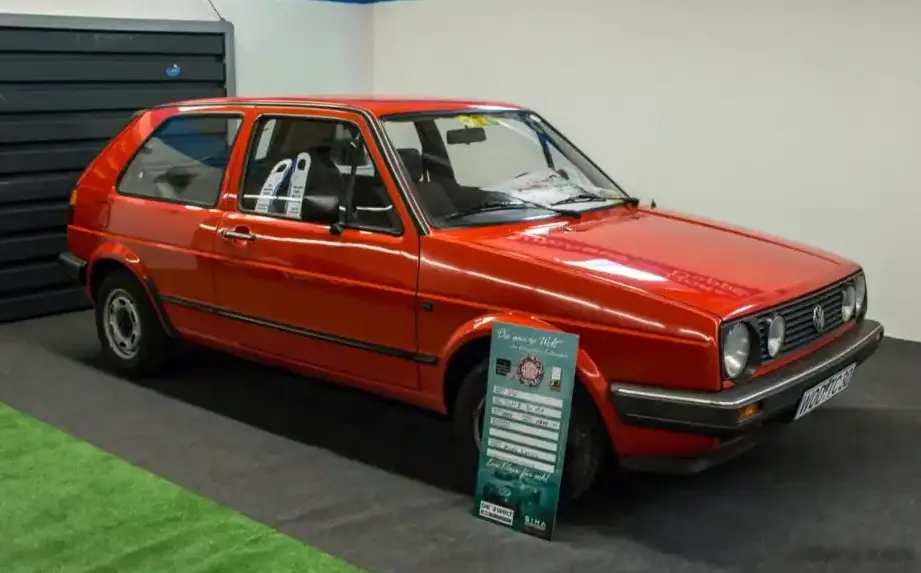
The Volkswagen Golf Mk2, produced from 1983 to 1992, represented a significant evolution of the original Golf, offering improved aerodynamics, a more spacious interior, and a wider range of engine options. The 3-door 1.6-liter (72 hp) variant, available from 1986 to 1987, served as an entry-level offering within the Mk2 lineup. Positioned below the more powerful GTI and diesel models, it aimed to provide affordable and practical transportation for a broad customer base, particularly in European markets where smaller displacement engines were favored due to tax regulations and fuel economy considerations. This model was a mainstay of the Golf II range, offering a balance between cost and usability.
Technical Specifications
| Brand | Volkswagen |
| Model | Golf |
| Generation | Golf II (3-door) |
| Type (Engine) | 1.6 (72 Hp) |
| Start of production | 1986 |
| End of production | 1987 |
| Powertrain Architecture | Internal Combustion engine |
| Body type | Hatchback |
| Seats | 5 |
| Doors | 3 |
| Fuel Type | Petrol (Gasoline) |
| Acceleration 0 – 100 km/h | 14.1 sec |
| Acceleration 0 – 62 mph | 14.1 sec |
| Acceleration 0 – 60 mph | 13.4 sec |
| Maximum speed | 162 km/h (100.66 mph) |
| Weight-to-power ratio | 12.2 kg/Hp, 81.8 Hp/tonne |
| Weight-to-torque ratio | 6.9 kg/Nm, 145.5 Nm/tonne |
| Power | 72 Hp @ 5200 rpm |
| Power per litre | 45.1 Hp/l |
| Torque | 128 Nm @ 2800 rpm (94.41 lb.-ft. @ 2800 rpm) |
| Engine layout | Front, Transverse |
| Engine Model/Code | EZ, EW |
| Engine displacement | 1595 cm3 (97.33 cu. in.) |
| Number of cylinders | 4 |
| Engine configuration | Inline |
| Cylinder Bore | 76.5 mm (3.01 in.) |
| Piston Stroke | 86.9 mm (3.42 in.) |
| Compression ratio | 9.3:1 |
| Number of valves per cylinder | 2 |
| Fuel injection system | Carburettor |
| Engine aspiration | Naturally aspirated engine |
| Valvetrain | OHC |
| Engine oil capacity | 3 l (3.17 US qt | 2.64 UK qt) |
| Coolant | 6.3 l (6.66 US qt | 5.54 UK qt) |
| Kerb Weight | 880 kg (1940.07 lbs) |
| Max. weight | 1400 kg (3086.47 lbs) |
| Max load | 520 kg (1146.4 lbs) |
| Trunk (boot) space – minimum | 345 l (12.18 cu. ft.) |
| Trunk (boot) space – maximum | 1145 l (40.44 cu. ft.) |
| Fuel tank capacity | 55 l (14.53 US gal | 12.1 UK gal) |
| Length | 3985 mm (156.89 in.) |
| Width | 1665 mm (65.55 in.) |
| Height | 1415 mm (55.71 in.) |
| Wheelbase | 2475 mm (97.44 in.) |
| Front overhang | 810 mm (31.89 in.) |
| Rear overhang | 700 mm (27.56 in.) |
| Drag coefficient (Cd) | 0.34 |
| Drivetrain Architecture | The Internal combustion engine (ICE) drives the front wheels of the vehicle. |
| Drive wheel | Front wheel drive |
| Number of gears and type of gearbox | 5 gears, manual transmission |
| Front suspension | Independent type McPherson |
| Front brakes | Disc |
| Rear brakes | Drum |
Powertrain & Engine Architecture
The 1.6-liter engine, designated with engine codes EZ and EW depending on minor variations, was a naturally aspirated, inline-four cylinder unit. It featured a single overhead camshaft (OHC) operating two valves per cylinder. Fuel delivery was managed by a carburetor, a relatively simple and cost-effective system for the time, but less precise than fuel injection. The carburetor setup contributed to the engine’s relatively modest power output. The engine’s 9.3:1 compression ratio was a compromise between performance and the ability to run on lower octane fuel, common in many markets. The engine was transversely mounted at the front of the vehicle, driving the front wheels. The five-speed manual transmission was the standard offering, providing a reasonable spread of gears for everyday driving.
Driving Characteristics
The 72 hp output of the 1.6-liter engine resulted in a 0-60 mph time of around 13.4 seconds, and a top speed of approximately 101 mph. While not particularly quick, the engine provided adequate power for typical commuting and highway driving when unladen. The carburetor’s response could be somewhat sluggish compared to fuel-injected engines, requiring more throttle input for brisk acceleration. The manual transmission’s gear ratios were geared towards fuel efficiency and drivability rather than outright performance. Compared to the Golf GTI, which boasted significantly more power, the 1.6-liter felt considerably slower. However, it offered a smoother, more relaxed driving experience, and better fuel economy. The 1.6L was also a more forgiving engine for new drivers.
Equipment & Trim Levels
The 1.6-liter Golf Mk2 typically came with a fairly basic level of equipment. Standard features included cloth upholstery, a simple dashboard layout, and manual windows and door locks. Power steering and central locking were often optional extras. The interior trim was generally functional and durable, prioritizing practicality over luxury. Depending on the market, options could include a sunroof, upgraded stereo systems, and alloy wheels. The base trim level focused on providing essential transportation at an affordable price point.
Chassis & Braking
The Golf Mk2 utilized an independent McPherson strut suspension at the front, providing a comfortable ride and decent handling. The rear suspension employed a twist beam setup, which was simpler and more cost-effective. Braking was handled by disc brakes at the front and drum brakes at the rear. While adequate for the vehicle’s weight and performance, the drum brakes on the rear offered less stopping power and fade resistance compared to disc brakes. Stabilizer bars were typically fitted to improve handling and reduce body roll.
Market Reception & Comparison
The 1.6-liter Golf Mk2 was generally well-received as a practical and affordable family car. Critics praised its fuel efficiency, comfortable ride, and spacious interior. However, its modest performance was often noted. Compared to the more expensive GTI and diesel models, the 1.6-liter offered a lower entry price, making it accessible to a wider range of buyers. The diesel models offered superior fuel economy, while the GTI provided significantly more performance. The 1.6L was often seen as a sensible choice for those prioritizing economy and reliability over outright speed.
Legacy
The 1.6-liter Golf Mk2 has proven to be a relatively reliable and durable vehicle. The engine, while not particularly powerful, is known for its longevity when properly maintained. Carburetor maintenance is required, but parts are readily available. Today, these cars are increasingly sought after by classic car enthusiasts and collectors. While not as highly valued as the GTI models, well-maintained examples of the 1.6-liter Golf Mk2 are becoming increasingly rare and represent a piece of automotive history. The simplicity of the engine and mechanical components makes it a relatively easy car to work on for DIY mechanics, contributing to its continued appeal.