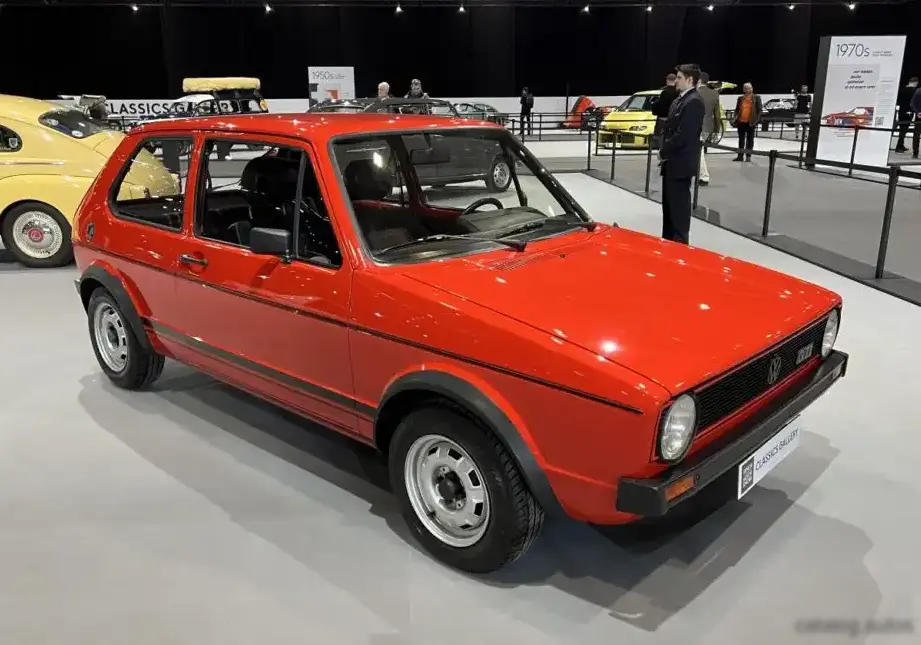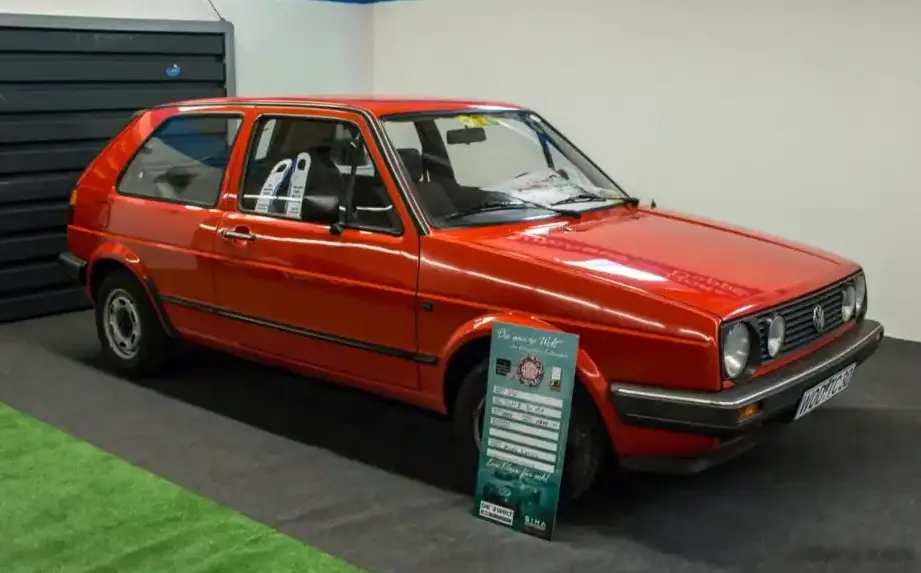
The Volkswagen Golf Mk2, produced between 1983 and 1992, marked a significant advancement over its predecessor, the original Golf. It boasted increased dimensions, improved aerodynamics, and a more refined driving experience. Within the Mk2 lineup, the 1.6-liter, 75 horsepower, 3-door model served as the entry point, appealing to buyers seeking economical and affordable transportation. Production of this specific variant ran from 1983 to 1987, finding considerable popularity in European markets where smaller, fuel-efficient vehicles were highly valued. While not a performance-oriented model, the 1.6 Golf Mk2 provided a practical and dependable option for everyday use.
Technical Specifications
| Brand | Volkswagen |
| Model | Golf |
| Generation | Golf II (3-door) |
| Type (Engine) | 1.6 (75 Hp) |
| Start of production | 1983 |
| End of production | 1987 |
| Powertrain Architecture | Internal Combustion engine |
| Body type | Hatchback |
| Seats | 5 |
| Doors | 3 |
| Fuel consumption (urban) | 8.7 l/100 km (27 US mpg, 32.5 UK mpg, 11.5 km/l) |
| Fuel consumption (extra urban) | 5.8 l/100 km (40.6 US mpg, 48.7 UK mpg, 17.2 km/l) |
| Fuel Type | Petrol (Gasoline) |
| Acceleration 0 – 100 km/h | 13 sec |
| Acceleration 0 – 62 mph | 13 sec |
| Acceleration 0 – 60 mph | 12.4 sec |
| Maximum speed | 167 km/h (103.77 mph) |
| Weight-to-power ratio | 11.6 kg/Hp, 86.2 Hp/tonne |
| Weight-to-torque ratio | 7 kg/Nm, 143.7 Nm/tonne |
| Power | 75 Hp @ 5000 rpm |
| Power per litre | 47 Hp/l |
| Torque | 125 Nm @ 2500 rpm (92.2 lb.-ft. @ 2500 rpm) |
| Engine layout | Front, Transverse |
| Engine Model/Code | EZ |
| Engine displacement | 1595 cm3 (97.33 cu. in.) |
| Number of cylinders | 4 |
| Engine configuration | Inline |
| Cylinder Bore | 81 mm (3.19 in.) |
| Piston Stroke | 77.4 mm (3.05 in.) |
| Compression ratio | 9:1 |
| Number of valves per cylinder | 2 |
| Fuel injection system | Carburettor |
| Engine aspiration | Naturally aspirated engine |
| Valvetrain | SOHC |
| Engine oil capacity | 3 l (3.17 US qt | 2.64 UK qt) |
| Coolant | 6.5 l (6.87 US qt | 5.72 UK qt) |
| Kerb Weight | 870 kg (1918.02 lbs.) |
| Max. weight | 1400 kg (3086.47 lbs.) |
| Max load | 530 kg (1168.45 lbs.) |
| Trunk (boot) space – minimum | 345 l (12.18 cu. ft.) |
| Trunk (boot) space – maximum | 1145 l (40.44 cu. ft.) |
| Fuel tank capacity | 55 l (14.53 US gal | 12.1 UK gal) |
| Permitted trailer load with brakes (12%) | 1000 kg (2204.62 lbs.) |
| Permitted trailer load without brakes | 470 kg (1036.17 lbs.) |
| Length | 3985 mm (156.89 in.) |
| Width | 1665 mm (65.55 in.) |
| Height | 1415 mm (55.71 in.) |
| Wheelbase | 2475 mm (97.44 in.) |
| Front track | 1427 mm (56.18 in.) |
| Rear (Back) track | 1422 mm (55.98 in.) |
| Front overhang | 810 mm (31.89 in.) |
| Rear overhang | 700 mm (27.56 in.) |
| Drag coefficient (Cd) | 0.34 |
| Minimum turning circle (turning diameter) | 10.5 m (34.45 ft.) |
| Drivetrain Architecture | The Internal combustion engine (ICE) drives the front wheels of the vehicle. |
| Drive wheel | Front wheel drive |
| Number of gears and type of gearbox | 4 gears, manual transmission |
| Front suspension | Independent type McPherson |
| Rear suspension | Elastic beam |
| Front brakes | Disc |
| Rear brakes | Drum |
| Steering type | Steering rack and pinion |
| Tires size | 175/70 R13 |
| Wheel rims size | 5.5J x 13 |
Powertrain & Engine Architecture
The Golf II 1.6’s engine was the EZ, a 1595cc inline four-cylinder unit. This engine featured a single overhead camshaft (SOHC) valvetrain with two valves per cylinder. Fuel delivery was handled by a carburetor, a common choice for engines of this period, prioritizing simplicity and affordability over the more sophisticated fuel injection systems found in higher-end Golf models. The EZ engine generated 75 horsepower at 5000 rpm and 125 Nm (92.2 lb-ft) of torque at 2500 rpm. The engine was mounted transversely, a design that maximized interior space and supported the Golf’s front-wheel-drive layout. A four-speed manual transmission was standard, providing a relatively straightforward and durable drivetrain.
Driving Characteristics
The 1.6-liter Golf Mk2 with the manual transmission offered modest performance. Acceleration from 0 to 60 mph took approximately 12.4 seconds, and the top speed reached around 103.77 mph. While not particularly fast, the engine provided sufficient power for everyday driving, particularly in city and suburban settings. The four-speed gearbox offered reasonable gear spacing, but the engine lacked the low-end torque of larger displacement engines, often requiring downshifts when climbing hills or overtaking. Compared to the more powerful GTI models or the diesel variants, the 1.6 felt noticeably slower, but it prioritized fuel economy and affordability.
Equipment & Trim Levels
The 1.6-liter Golf Mk2 typically came equipped with basic, yet functional, features. Standard equipment included cloth upholstery, a simple dashboard layout, and manual windows and door locks. Optional extras, such as a sunroof, upgraded stereo systems, and central locking, were available, but generally reserved for higher trim levels. The interior was designed with practicality in mind, offering a comfortable and reasonably spacious cabin for its class. The 3-door body style offered a sportier aesthetic and a slight weight reduction compared to the 5-door version.
Chassis & Braking
The Golf Mk2 utilized an independent McPherson strut front suspension and a torsion beam rear suspension. This configuration provided a good compromise between ride comfort and handling. The front brakes were disc brakes, offering adequate stopping power, while the rear brakes were drum brakes, a cost-saving measure common in entry-level models. Steering was accomplished via a rack-and-pinion system, delivering precise and responsive steering feel. The 175/70 R13 tires provided reasonable grip in most driving conditions.
Market Reception & Comparison
The Golf II 1.6 was well-received as an affordable and reliable family car. Reviewers praised its practicality, fuel efficiency, and comfortable ride. However, its modest performance was often noted, especially when contrasted with the more potent Golf GTI or the fuel-efficient diesel models. The 1.6 offered a compelling value proposition for buyers who prioritized economy and practicality over outright performance. It proved a popular choice for first-time car buyers and those seeking a dependable daily driver.
Legacy
The EZ engine, while not renowned for its high performance, proved to be a durable and reliable powerplant. Numerous examples of the Golf II 1.6 remain on the road today, a testament to its robust construction. In the used car market, these models are often sought after by enthusiasts looking for a classic and affordable Volkswagen. While maintenance costs can increase with age, the engine and drivetrain’s relative simplicity makes it relatively easy to maintain for those with some mechanical skill. The Golf II 1.6 continues to be a popular choice for classic car enthusiasts and serves as a reminder of a simpler era in automotive design.