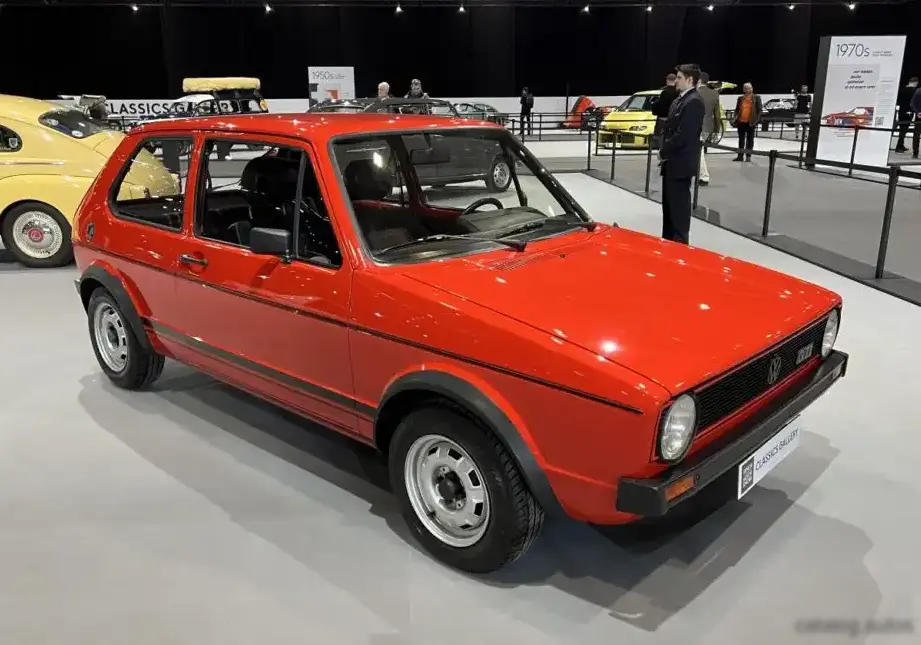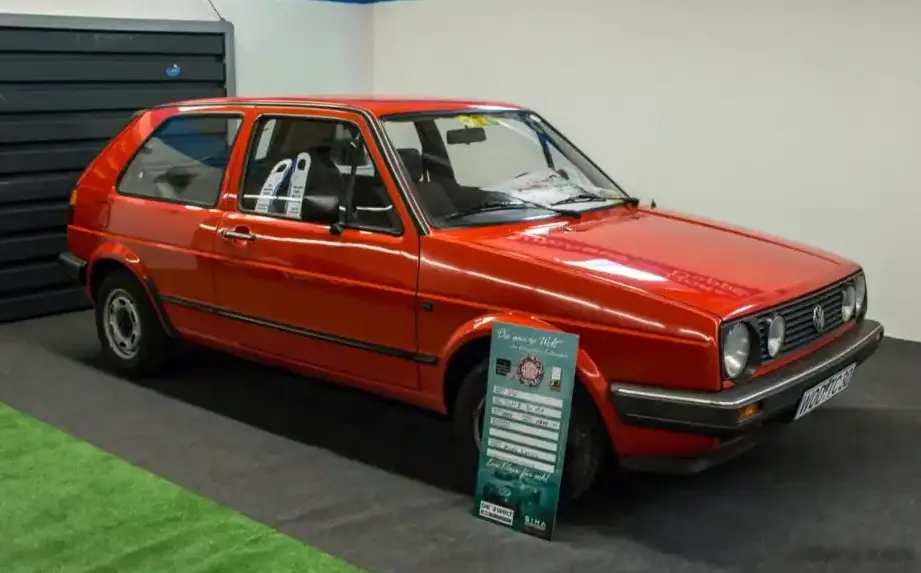
The Volkswagen Golf Mk2, produced from 1983 to 1992, marked a substantial advancement over the original Golf, boasting improved aerodynamics, a more spacious interior, and a broader selection of engine options. The 3-door 1.8 CAT (90 hp) variant, manufactured between 1984 and 1987, held a significant position in the Golf Mk2 lineup as an entry-level to mid-range offering, successfully balancing affordability with reasonable performance and fuel economy. It played a key role in expanding the Golf’s appeal to a wider customer base, particularly in European markets where smaller, fuel-efficient vehicles were highly valued. This version was built on the 1HX0/A3 platform.
Technical Specifications
| Brand | Volkswagen |
| Model | Golf |
| Generation | Golf II (3-door) |
| Type (Engine) | 1.8 CAT (90 Hp) |
| Start of production | 1984 |
| End of production | 1987 |
| Powertrain Architecture | Internal Combustion engine |
| Body type | Hatchback |
| Seats | 5 |
| Doors | 3 |
| Fuel consumption (urban) | 11.1 l/100 km (21.2 US mpg) |
| Fuel consumption (extra urban) | 5.8 l/100 km (40.6 US mpg) |
| Fuel Type | Petrol (Gasoline) |
| Acceleration 0 – 100 km/h | 11.5 sec |
| Acceleration 0 – 62 mph | 11.5 sec |
| Acceleration 0 – 60 mph | 10.9 sec |
| Maximum speed | 175 km/h (108.74 mph) |
| Weight-to-power ratio | 10.2 kg/Hp |
| Weight-to-torque ratio | 6.7 kg/Nm |
| Power | 90 Hp @ 5250 rpm |
| Power per litre | 50.5 Hp/l |
| Torque | 137 Nm @ 3000 rpm (101.05 lb.-ft. @ 3000 rpm) |
| Engine layout | Front, Transverse |
| Engine Model/Code | GX |
| Engine displacement | 1781 cm3 (108.68 cu. in.) |
| Number of cylinders | 4 |
| Engine configuration | Inline |
| Cylinder Bore | 81 mm (3.19 in.) |
| Piston Stroke | 86.4 mm (3.4 in.) |
| Compression ratio | 9:1 |
| Number of valves per cylinder | 2 |
| Fuel injection system | Single-point injection |
| Engine aspiration | Naturally aspirated engine |
| Valvetrain | SOHC |
| Engine oil capacity | 4 l (4.23 US qt | 3.52 UK qt) |
| Coolant capacity | 4.5 l (4.76 US qt | 3.96 UK qt) |
| Kerb Weight | 920 kg (2028.25 lbs.) |
| Max. weight | 1430 kg (3152.61 lbs.) |
| Max load | 510 kg (1124.36 lbs.) |
| Trunk (boot) space – minimum | 345 l (12.18 cu. ft.) |
| Trunk (boot) space – maximum | 1145 l (40.44 cu. ft.) |
| Fuel tank capacity | 55 l (14.53 US gal | 12.1 UK gal) |
| Permitted trailer load with brakes (12%) | 1200 kg (2645.55 lbs.) |
| Permitted trailer load without brakes | 470 kg (1036.17 lbs.) |
| Length | 3985 mm (156.89 in.) |
| Width | 1665 mm (65.55 in.) |
| Height | 1415 mm (55.71 in.) |
| Wheelbase | 2475 mm (97.44 in.) |
| Front track | 1427 mm (56.18 in.) |
| Rear track | 1422 mm (55.98 in.) |
| Front overhang | 810 mm (31.89 in.) |
| Rear overhang | 700 mm (27.56 in.) |
| Drag coefficient (Cd) | 0.34 |
| Minimum turning circle | 10.5 m (34.45 ft.) |
| Drivetrain Architecture | Front wheel drive |
| Number of gears and type of gearbox | 5 gears, manual transmission |
| Front suspension | Independent type McPherson, Transverse stabilizer |
| Rear suspension | Elastic beam |
| Front brakes | Disc |
| Rear brakes | Drum |
| Steering type | Steering rack and pinion |
| Tires size | 175/70 R13 |
| Wheel rims size | 5.5J x 13 |
Powertrain & Engine Architecture
The 1.8-liter inline-four engine, internally designated GX, was a common fixture in the Golf Mk2 range. This engine employed a single-point fuel injection system (Bosch Mono-Jetronic), a relatively straightforward and cost-effective solution compared to multi-point injection systems. The engine featured a single overhead camshaft (SOHC) valvetrain with two valves per cylinder. The 90 horsepower output was achieved at 5250 rpm, while peak torque of 137 Nm (101 lb-ft) arrived at 3000 rpm. The engine’s compression ratio was set at 9:1. The engine was mounted transversely, a configuration typical for front-wheel-drive vehicles, maximizing interior space. A 5-speed manual transmission was the standard offering, providing a balance between fuel efficiency and performance. An automatic transmission was available, but it was less frequently chosen and often considered to detract from the car’s responsiveness.
Driving Characteristics
The 1.8 CAT (90 hp) Golf Mk2 delivered a practical and economical driving experience. Acceleration from 0 to 60 mph took approximately 10.9 seconds, with a top speed around 108.74 mph. While not a particularly sporty variant, it offered adequate power for daily commutes and highway travel. The 5-speed manual transmission allowed drivers to maintain the engine within its optimal power band, whereas the automatic version, while convenient, resulted in a noticeable reduction in performance. The gear ratios were optimized for fuel economy, featuring a relatively tall final drive. Compared to the higher-performance GTI models, the 1.8 CAT felt considerably slower, but it provided a smoother and more comfortable ride. Handling was characteristic of front-wheel-drive cars of the era – secure and predictable, though lacking the agility of rear-wheel-drive alternatives.
Equipment & Trim Levels
The 1.8 CAT trim generally included standard features such as cloth upholstery, a basic dashboard layout, and manual windows and door locks. Power steering and central locking were frequently offered as optional extras. The interior was functional and durable, prioritizing practicality over luxury. Available options included a sunroof, upgraded audio systems, and various wheel cover designs. This trim level positioned itself in the middle of the Golf II range, offering more features than the base models but falling short of the sporty enhancements found in the GTI or the fuel economy of the diesel TDI versions.
Chassis & Braking
The Golf Mk2 utilized an independent McPherson strut front suspension and a torsion beam rear suspension. This setup provided a good compromise between ride comfort and handling. The front brakes were ventilated discs, while the rear brakes were drums – a common configuration for vehicles in this price bracket during the 1980s. Stabilizer bars were incorporated on both the front and rear axles to minimize body roll during cornering. The steering system was a rack-and-pinion design, delivering precise and responsive steering feel.
Market Reception & Comparison
The 1.8 CAT Golf Mk2 was generally well-received by automotive reviewers as a sensible and dependable family car. It was lauded for its fuel efficiency, comfortable ride quality, and practical interior space. However, it often faced criticism for its comparatively modest performance when measured against the GTI models. In comparison to the 1.6-liter base models, the 1.8 CAT offered a noticeable improvement in power and acceleration. The diesel versions (1.6 TDI) provided superior fuel economy but were slower and produced more noise. The 1.8 CAT struck a balance for many buyers, offering a compelling combination of performance, economy, and practicality.
Legacy
The Golf Mk2 1.8 CAT (90 hp) has proven to be a remarkably reliable and long-lasting vehicle. The GX engine, while not overly complex, is known for its durability and relative ease of maintenance. Today, these cars are increasingly sought after by classic car enthusiasts and collectors. Parts availability remains generally good, although some trim-specific components can be challenging to locate. The Golf Mk2 continues to be a popular choice for restoration projects and participation in classic car events, representing a significant chapter in Volkswagen’s history and setting a standard for compact family cars.