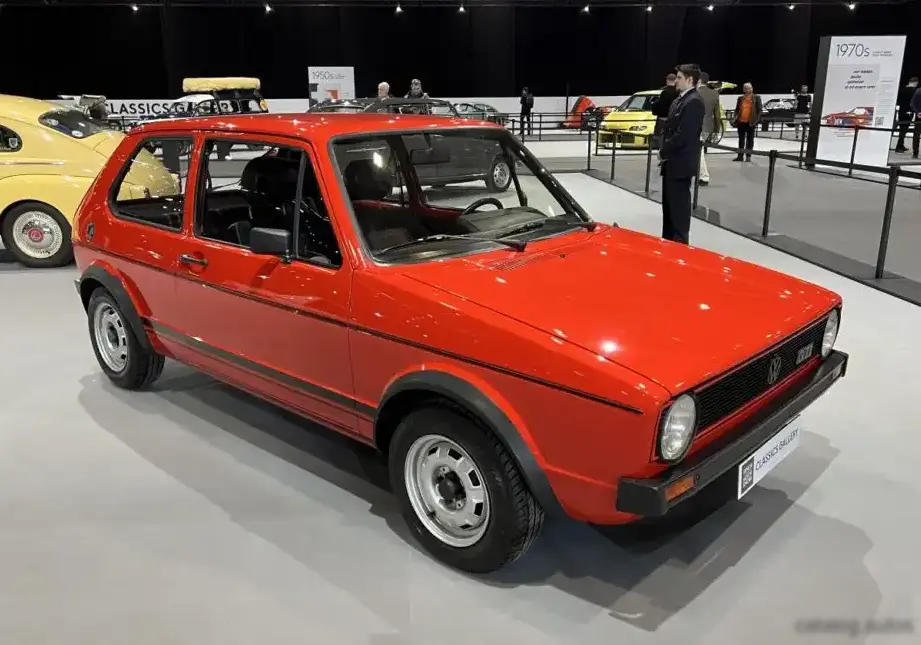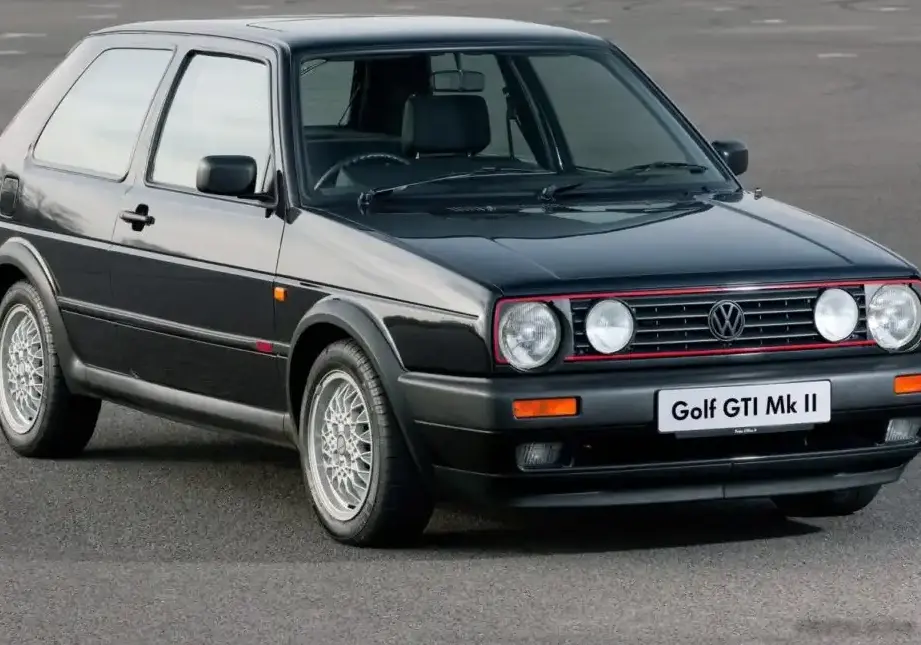
The Volkswagen Golf II 1.8 GTI G60, produced from 1990 to 1991, represents a high-performance iteration of the second-generation Golf. This 3-door hatchback, part of the facelifted Golf II range (1HX0/A3 platform), was distinguished by its supercharged 1.8-liter engine, offering a significant power upgrade over the naturally aspirated models. Positioned as the top-of-the-line Golf II before the introduction of the Mk3, the G60 catered to enthusiasts seeking a blend of practicality and spirited driving. It was a relatively short-lived model, making it a sought-after vehicle among collectors today.
Technical Specifications
| Brand | Volkswagen |
| Model | Golf |
| Generation | Golf II (3-door, facelift 1987) |
| Type (Engine) | 1.8 GTI G60 (160 Hp) |
| Start of production | 1990 |
| End of production | 1991 |
| Powertrain Architecture | Internal Combustion engine |
| Body type | Hatchback |
| Seats | 5 |
| Doors | 3 |
| Fuel consumption (urban) | 12.1 l/100 km (19.4 US mpg) |
| Fuel consumption (extra urban) | 6.9 l/100 km (34.1 US mpg) |
| Fuel Type | Petrol (Gasoline) |
| Acceleration 0 – 100 km/h | 8.3 sec |
| Acceleration 0 – 62 mph | 8.3 sec |
| Acceleration 0 – 60 mph | 7.9 sec |
| Maximum speed | 216 km/h (134.22 mph) |
| Weight-to-power ratio | 6.8 kg/Hp |
| Weight-to-torque ratio | 4.8 kg/Nm |
| Power | 160 Hp @ 5800 rpm |
| Power per litre | 89.8 Hp/l |
| Torque | 225 Nm @ 3800 rpm (165.95 lb.-ft. @ 3800 rpm) |
| Engine layout | Front, Transverse |
| Engine Model/Code | PG |
| Engine displacement | 1781 cm3 (108.68 cu. in.) |
| Number of cylinders | 4 |
| Engine configuration | Inline |
| Cylinder Bore | 81 mm (3.19 in.) |
| Piston Stroke | 86.4 mm (3.4 in.) |
| Compression ratio | 8:1 |
| Number of valves per cylinder | 2 |
| Fuel injection system | Multi-port manifold injection |
| Engine aspiration | Supercharger, Intercooler |
| Valvetrain | SOHC |
| Engine oil capacity | 4 l (4.23 US qt | 3.52 UK qt) |
| Coolant | 5.5 l (5.81 US qt | 4.84 UK qt) |
| Kerb Weight | 1080 kg (2380.99 lbs.) |
| Max. weight | 1530 kg (3373.07 lbs.) |
| Max load | 450 kg (992.08 lbs.) |
| Trunk (boot) space – minimum | 330 l (11.65 cu. ft.) |
| Trunk (boot) space – maximum | 1145 l (40.44 cu. ft.) |
| Fuel tank capacity | 55 l (14.53 US gal | 12.1 UK gal) |
| Permitted trailer load with brakes (12%) | 1200 kg (2645.55 lbs.) |
| Permitted trailer load without brakes | 510 kg (1124.36 lbs.) |
| Length | 4040 mm (159.06 in.) |
| Width | 1700 mm (66.93 in.) |
| Height | 1405 mm (55.31 in.) |
| Wheelbase | 2475 mm (97.44 in.) |
| Front track | 1437 mm (56.57 in.) |
| Rear (Back) track | 1432 mm (56.38 in.) |
| Drag coefficient (Cd) | 0.34 |
| Minimum turning circle (turning diameter) | 10.5 m (34.45 ft.) |
| Drivetrain Architecture | The Internal combustion engine (ICE) drives the front wheels of the vehicle. |
| Drive wheel | Front wheel drive |
| Number of gears and type of gearbox | 5 gears, manual transmission |
| Front suspension | Independent type McPherson, Transverse stabilizer |
| Rear suspension | Transverse stabilizer, Elastic beam |
| Front brakes | Ventilated discs |
| Rear brakes | Disc |
| Assisting systems | ABS (Anti-lock braking system) |
| Steering type | Steering rack and pinion |
| Power steering | Hydraulic Steering |
| Tires size | 195/50 R15 |
| Wheel rims size | 6.5J x 15 |
Powertrain & Engine Architecture
The heart of the Golf II G60 is the 1.8-liter inline-four cylinder engine, designated PG. What set this engine apart was its roots-type supercharger, a departure from the naturally aspirated engines found in other Golf II variants. This supercharger, developed by Kühnle, Kopp & Schmidt (KKS), provided significant boost, increasing power output to 160 horsepower at 5800 rpm and 225 Nm (165.95 lb-ft) of torque at 3800 rpm. The engine featured multi-port fuel injection and a single overhead camshaft (SOHC) valvetrain. The addition of an intercooler helped to cool the compressed air, further enhancing performance. The G60 engine utilized a relatively low 8:1 compression ratio to accommodate the forced induction. The engine’s unique characteristic was its immediate throttle response and strong mid-range power, a noticeable improvement over the standard 1.8-liter engines.
Driving Characteristics
The Golf II G60 offered a distinctly different driving experience compared to other Golf II models. The supercharger provided a surge of power that was readily available, making it feel significantly faster than the naturally aspirated versions. While not as peaky as a turbocharged engine, the G60 delivered a broad powerband, making it enjoyable to drive in various conditions. The five-speed manual transmission was well-matched to the engine’s characteristics, allowing drivers to effectively utilize the available power. The 0-60 mph sprint was achieved in approximately 7.9 seconds, and the car had a top speed of 134.22 mph. The G60’s front-wheel-drive configuration, combined with the increased power, could lead to torque steer under hard acceleration.
Equipment & Trim Levels
The Golf II G60 typically came well-equipped, reflecting its position as the flagship model. Standard features included power steering, ABS anti-lock brakes, and a sporty interior with bolstered seats. The interior trim often featured unique G60 badging and a distinctive instrument cluster. Optional extras included a sunroof, central locking, and upgraded audio systems. The exterior was distinguished by subtle G60 badging, a small rear spoiler, and often, a set of 15-inch alloy wheels.
Chassis & Braking
The Golf II G60 utilized the standard Golf II chassis, featuring independent McPherson strut suspension at the front and a torsion beam rear suspension. However, the G60 often received a thicker front stabilizer bar to help manage the increased power and reduce body roll. The braking system consisted of ventilated discs at the front and discs at the rear, providing adequate stopping power for the car’s performance capabilities. The ABS system further enhanced braking performance and stability.
Market Reception & Comparison
The Golf II G60 was generally well-received by automotive critics, who praised its performance and unique driving experience. It was seen as a compelling alternative to other hot hatches of the time. Compared to the naturally aspirated GTI models, the G60 offered a significant performance advantage. However, it was more expensive to purchase and maintain due to the complexity of the supercharger system. Compared to the later Golf II VR6, the G60 offered a different character – the VR6 provided a smoother, more refined power delivery, while the G60 was more raw and immediate. Fuel economy was also a consideration, with the G60 consuming more fuel than the standard Golf II models.
Legacy
The Volkswagen Golf II G60 remains a popular classic car among enthusiasts. The PG engine, while mechanically complex, is known for its durability when properly maintained. However, the supercharger system requires regular servicing, including oil changes and belt replacements. Finding original parts can be challenging, but a thriving aftermarket exists to support these vehicles. Today, the Golf II G60 is valued for its rarity, performance, and unique character, making it a desirable addition to any classic car collection. Its supercharged engine represents a unique chapter in Volkswagen’s performance history.