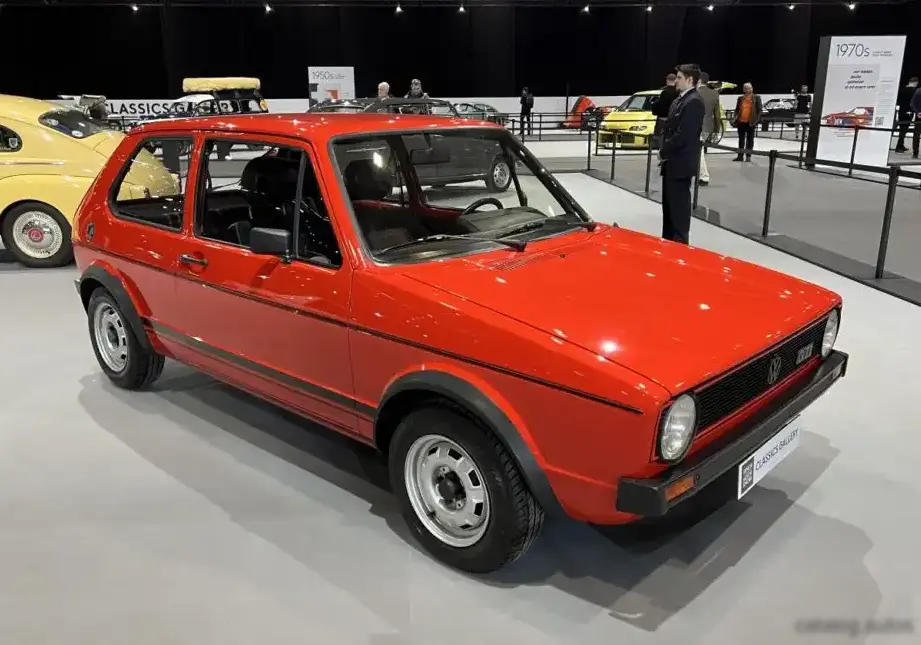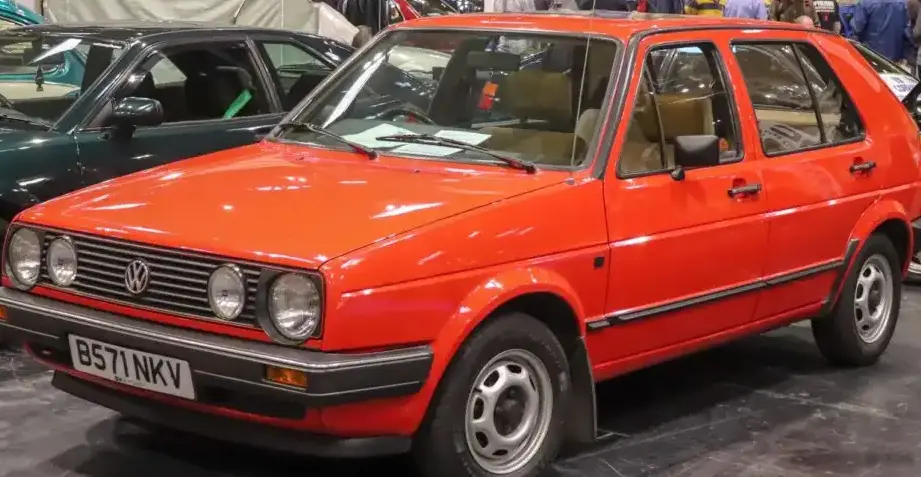
The Volkswagen Golf Mk2 1.8 (90 hp) represents a significant iteration within the hugely successful second generation Golf lineup, produced from 1983 to 1987. Positioned as a mid-range offering, this five-door hatchback aimed to balance affordability with reasonable performance and practicality. It was a key model in the 1HX0/A3 platform series, which saw the Golf solidify its position as a dominant force in the European compact car market. While not the sportiest or most economical variant, the 1.8-liter, 90 horsepower engine paired with an automatic transmission offered a comfortable and accessible entry point into Golf ownership for many buyers.
Technical Specifications
| Brand | Volkswagen |
| Model | Golf |
| Generation | Golf II (5-door) |
| Type (Engine) | 1.8 (90 Hp) |
| Start of production | 1983 |
| End of production | 1987 |
| Powertrain Architecture | Internal Combustion engine |
| Body type | Hatchback |
| Seats | 5 |
| Doors | 5 |
| Fuel consumption (urban) | 8.7 l/100 km (27 US mpg, 32.5 UK mpg, 11.5 km/l) |
| Fuel consumption (extra urban) | 5.5 l/100 km (42.8 US mpg, 51.4 UK mpg, 18.2 km/l) |
| Fuel Type | Petrol (Gasoline) |
| Acceleration 0 – 100 km/h | 10.8 sec |
| Acceleration 0 – 62 mph | 10.8 sec |
| Acceleration 0 – 60 mph | 10.3 sec |
| Maximum speed | 178 km/h (110.6 mph) |
| Weight-to-power ratio | 10 kg/Hp, 100 Hp/tonne |
| Weight-to-torque ratio | 6.2 kg/Nm, 161.1 Nm/tonne |
| Power | 90 Hp @ 5200 rpm |
| Power per litre | 50.5 Hp/l |
| Torque | 145 Nm @ 3300 rpm (106.95 lb.-ft. @ 3300 rpm) |
| Engine layout | Front, Transverse |
| Engine Model/Code | GU |
| Engine displacement | 1781 cm3 (108.68 cu. in.) |
| Number of cylinders | 4 |
| Engine configuration | Inline |
| Cylinder Bore | 81 mm (3.19 in.) |
| Piston Stroke | 86.4 mm (3.4 in.) |
| Compression ratio | 10:1 |
| Number of valves per cylinder | 2 |
| Fuel injection system | Carburettor |
| Engine aspiration | Naturally aspirated engine |
| Valvetrain | SOHC |
| Engine oil capacity | 3 l (3.17 US qt | 2.64 UK qt) |
| Coolant | 6.5 l (6.87 US qt | 5.72 UK qt) |
| Kerb Weight | 900 kg (1984.16 lbs.) |
| Max. weight | 1400 kg (3086.47 lbs.) |
| Max load | 500 kg (1102.31 lbs.) |
| Trunk (boot) space – minimum | 345 l (12.18 cu. ft.) |
| Trunk (boot) space – maximum | 1145 l (40.44 cu. ft.) |
| Fuel tank capacity | 55 l (14.53 US gal | 12.1 UK gal) |
| Permitted trailer load with brakes (12%) | 1200 kg (2645.55 lbs.) |
| Permitted trailer load without brakes | 470 kg (1036.17 lbs.) |
| Length | 3985 mm (156.89 in.) |
| Width | 1665 mm (65.55 in.) |
| Height | 1415 mm (55.71 in.) |
| Wheelbase | 2475 mm (97.44 in.) |
| Front track | 1427 mm (56.18 in.) |
| Rear (Back) track | 1422 mm (55.98 in.) |
| Front overhang | 810 mm (31.89 in.) |
| Rear overhang | 700 mm (27.56 in.) |
| Drag coefficient (Cd) | 0.34 |
| Minimum turning circle (turning diameter) | 10.5 m (34.45 ft.) |
| Drivetrain Architecture | The Internal combustion engine (ICE) drives the front wheels of the vehicle. |
| Drive wheel | Front wheel drive |
| Number of gears and type of gearbox | 5 gears, manual transmission |
| Front suspension | Independent type McPherson, Transverse stabilizer |
| Rear suspension | Elastic beam |
| Front brakes | Disc |
| Rear brakes | Drum |
| Steering type | Steering rack and pinion |
| Tires size | 175/70 R13 |
| Wheel rims size | 5.5J x 13 |
Powertrain & Engine Architecture
The heart of this Golf variant is the Volkswagen GU engine, a 1.8-liter inline four-cylinder petrol engine. This engine utilized a single overhead camshaft (SOHC) valvetrain with two valves per cylinder. Unlike later Golf models that embraced fuel injection, the 1.8 GU relied on a carburetor for fuel delivery, a cost-saving measure that impacted performance and emissions compared to injected counterparts. The engine produced 90 horsepower at 5200 rpm and 145 Nm (107 lb-ft) of torque at 3300 rpm. The automatic transmission was typically a three-speed unit, designed for smooth, if not particularly rapid, gear changes. This transmission was chosen to provide ease of use, appealing to drivers prioritizing comfort over sporty driving dynamics.
Driving Characteristics
The 1.8-liter automatic Golf Mk2 offered a comfortable, but unhurried, driving experience. Acceleration from 0-60 mph took around 10.3 seconds, and top speed was approximately 110 mph. Compared to the manual transmission versions of the same engine, the automatic suffered a slight performance penalty due to the inherent losses in the torque converter. It also felt noticeably slower than the more powerful Golf GTI or diesel variants. The three-speed automatic transmission, while providing smooth shifts, lacked the versatility of a five-speed manual, and the gear ratios were optimized for fuel economy rather than spirited acceleration. However, for everyday commuting and general driving, the 1.8 automatic provided adequate power and a relaxed driving experience.
Equipment & Trim Levels
The 1.8 automatic Golf typically fell into a mid-range trim level. Standard features included cloth upholstery, basic instrumentation, and manual windows and door locks. Optional extras, such as a sunroof, upgraded stereo system, and central locking, were available to enhance the vehicle’s comfort and convenience. Interior trim was generally functional and durable, reflecting the Golf’s reputation for practicality. The dashboard layout was straightforward and easy to use, with clearly marked controls.
Chassis & Braking
The Golf Mk2 featured an independent McPherson strut front suspension and a torsion beam rear suspension. This setup provided a good balance of ride comfort and handling. The front brakes were disc brakes, while the rear brakes were drum brakes – a common configuration for this class of vehicle at the time. Stabilizer bars were typically fitted to both the front and rear axles to reduce body roll during cornering. The steering was a rack-and-pinion system, providing precise and responsive steering feel.
Market Reception & Comparison
The 1.8-liter automatic Golf was generally well-received as a practical and affordable family car. Critics acknowledged its comfortable ride and ease of use, but noted its lack of outright performance compared to other Golf variants. Fuel economy was reasonable for the time, but not class-leading. Compared to the more popular GTI, the 1.8 automatic offered a significantly more relaxed driving experience, appealing to a different demographic. The 1.9 TDI diesel, when it became available, offered superior fuel economy but lacked the refinement of the petrol engine. Maintenance costs were generally moderate, although the carburetor required periodic adjustment and cleaning.
Legacy
The Golf Mk2 1.8 automatic, while not the most iconic version of the second-generation Golf, remains a popular choice among classic car enthusiasts. The GU engine, while simple in design, is relatively reliable if properly maintained. However, finding parts for the carburetor can sometimes be challenging. Today, these Golfs are often sought after as affordable entry points into classic Volkswagen ownership, offering a nostalgic driving experience and a connection to a pivotal era in automotive history. Their simplicity and relatively low running costs make them appealing to those seeking a classic car that can be enjoyed without breaking the bank.