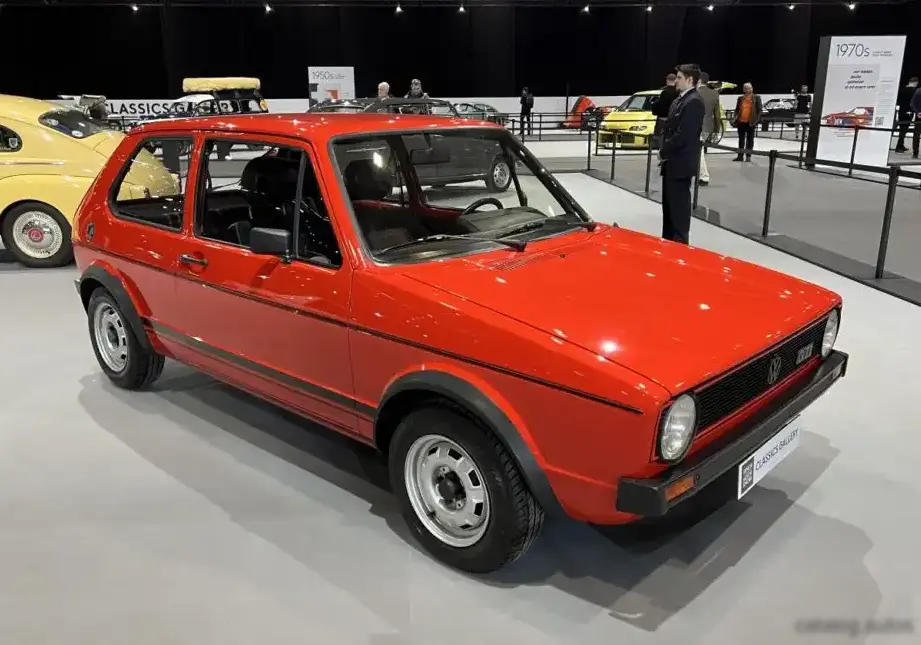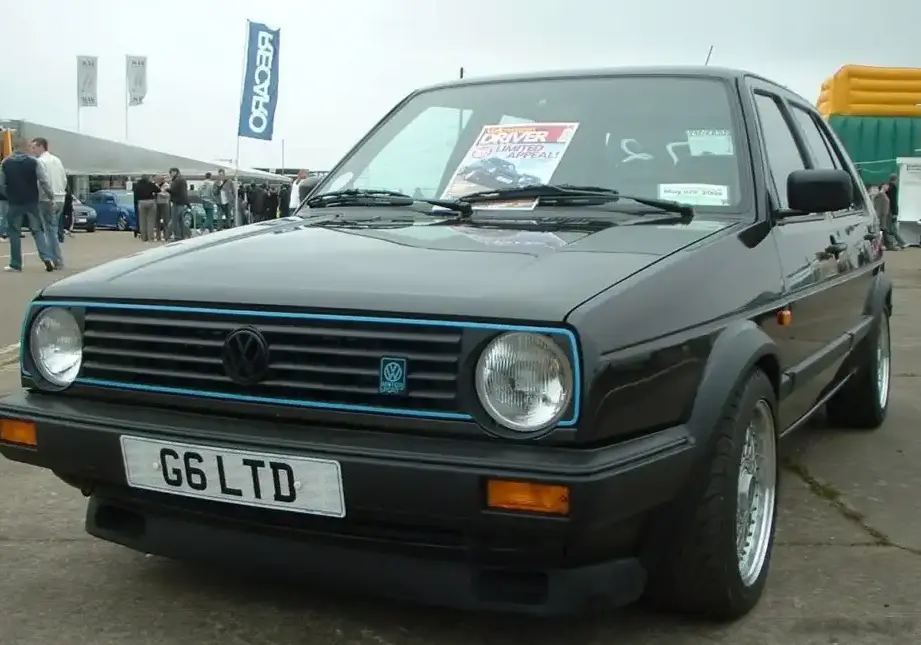
The Volkswagen Golf II 1.6 TD, produced from 1989 to 1991, represents a significant offering in the second generation Golf lineup (the 1987 facelifted version). Positioned as an economy-focused variant, it catered to buyers seeking fuel efficiency and practicality in a compact hatchback. This model, distinguished by its turbocharged diesel engine, played a crucial role in establishing the Golf’s reputation for versatility and affordability in the European market. While not a performance leader, the 1.6 TD offered a compelling blend of running costs and everyday usability, making it a popular choice for commuting and long-distance travel.
Technical Specifications
| Brand | Volkswagen |
| Model | Golf |
| Generation | Golf II (5-door, facelift 1987) |
| Type (Engine) | 1.6 TD (60 Hp) |
| Start of production | 1989 |
| End of production | 1991 |
| Powertrain Architecture | Internal Combustion engine |
| Body type | Hatchback |
| Seats | 5 |
| Doors | 5 |
| Fuel consumption (urban) | 6.5 l/100 km (36.2 US mpg, 43.5 UK mpg, 15.4 km/l) |
| Fuel consumption (extra urban) | 4.6 l/100 km (51.1 US mpg, 61.4 UK mpg, 21.7 km/l) |
| Fuel Type | Diesel |
| Acceleration 0 – 100 km/h | 16.9 sec |
| Acceleration 0 – 62 mph | 16.9 sec |
| Acceleration 0 – 60 mph | 16.1 sec |
| Maximum speed | 151 km/h (93.83 mph) |
| Weight-to-power ratio | 16.4 kg/Hp, 60.9 Hp/tonne |
| Weight-to-torque ratio | 9 kg/Nm, 111.7 Nm/tonne |
| Power | 60 Hp @ 4500 rpm |
| Power per litre | 37.8 Hp/l |
| Torque | 110 Nm @ 2400 rpm (81.13 lb.-ft. @ 2400 rpm) |
| Engine layout | Front, Transverse |
| Engine Model/Code | 1V |
| Engine displacement | 1588 cm3 (96.91 cu. in.) |
| Number of cylinders | 4 |
| Engine configuration | Inline |
| Cylinder Bore | 76.5 mm (3.01 in.) |
| Piston Stroke | 86.4 mm (3.4 in.) |
| Compression ratio | 23:1 |
| Number of valves per cylinder | 2 |
| Fuel injection system | Precombustion chamber injection |
| Engine aspiration | Turbocharger |
| Valvetrain | SOHC |
| Engine oil capacity | 4.5 l (4.76 US qt | 3.96 UK qt) |
| Kerb Weight | 985 kg (2171.55 lbs.) |
| Max. weight | 1465 kg (3229.77 lbs.) |
| Max load | 480 kg (1058.22 lbs.) |
| Trunk (boot) space – minimum | 330 l (11.65 cu. ft.) |
| Trunk (boot) space – maximum | 1145 l (40.44 cu. ft.) |
| Fuel tank capacity | 55 l (14.53 US gal | 12.1 UK gal) |
| Permitted trailer load with brakes (12%) | 850 kg (1873.93 lbs.) |
| Permitted trailer load without brakes | 480 kg (1058.22 lbs.) |
| Length | 3985-4040 mm (156.89 – 159.06 in.) |
| Width | 1665 mm (65.55 in.) |
| Height | 1415 mm (55.71 in.) |
| Wheelbase | 2475 mm (97.44 in.) |
| Front track | 1427 mm (56.18 in.) |
| Rear (Back) track | 1422 mm (55.98 in.) |
| Drag coefficient (Cd) | 0.34 |
| Minimum turning circle | 10.5 m (34.45 ft.) |
| Drivetrain Architecture | The Internal combustion engine (ICE) drives the front wheels of the vehicle. |
| Drive wheel | Front wheel drive |
| Number of gears and type of gearbox | 5 gears, manual transmission |
| Front suspension | Independent type McPherson, Transverse stabilizer |
| Rear suspension | Elastic beam |
| Front brakes | Disc |
| Rear brakes | Drum |
| Steering type | Steering rack and pinion |
| Tires size | 155/65 R13 |
| Wheel rims size | 5J x 13 |
INTRODUCTION
The Volkswagen Golf II 1.6 TD, introduced in 1989 as part of the facelifted second-generation Golf range, was designed to offer economical motoring to a broad audience. Building upon the success of the original Golf, the MkII refined the formula with improved aerodynamics, a more spacious interior, and a wider range of engine options. The 1.6 TD variant specifically targeted buyers prioritizing fuel efficiency and low running costs. It occupied the lower-mid range of the Golf II lineup, sitting below the more powerful petrol engines (like the 1.8 and 2.0 litre versions) and above the base 1.6 petrol model. This model was primarily sold in Europe, where diesel engines were – and continue to be – highly popular due to favorable taxation and fuel prices.
Powertrain & Engine Architecture
The heart of the Golf II 1.6 TD is the 1V engine code, a 1.6-liter inline four-cylinder diesel engine equipped with a turbocharger. This engine utilized a precombustion chamber injection system, a common technology for diesel engines of the era. This system involved injecting fuel into a small precombustion chamber connected to the main cylinder, promoting more complete combustion and reducing emissions. The engine featured a single overhead camshaft (SOHC) valvetrain operating two valves per cylinder. The turbocharger, a Garrett unit in many cases, significantly boosted power output compared to naturally aspirated diesel engines of similar displacement. The engine produced 60 horsepower at 4500 rpm and 110 Nm (81.13 lb-ft) of torque at 2400 rpm. The engine was paired with a five-speed manual transmission, optimized for fuel economy and providing adequate gearing for highway cruising.
Driving Characteristics
The Golf II 1.6 TD, with its 60 horsepower and 110 Nm of torque, wasn’t designed for outright speed. Acceleration from 0 to 60 mph took around 16.1 seconds, and top speed was limited to 151 km/h (93.83 mph). However, the turbocharger provided a noticeable boost in power once spooled up, offering reasonable performance for overtaking and merging onto highways. The five-speed manual transmission allowed drivers to keep the engine in its optimal torque band, maximizing fuel efficiency. Compared to the more powerful petrol versions, the 1.6 TD felt noticeably slower, but it offered significantly better fuel economy. The gear ratios were relatively long, prioritizing economy over rapid acceleration. The driving experience was characterized by its relaxed nature and predictable handling, making it a comfortable and easy car to drive.
Equipment & Trim Levels
The Golf II 1.6 TD typically came with a fairly basic level of equipment, reflecting its position as an economy-focused model. Standard features included cloth upholstery, a basic instrument cluster, and manual windows and door locks. Power steering was often an optional extra, as was air conditioning. Interior trim was generally functional and durable, prioritizing practicality over luxury. Higher trim levels, such as the GL, offered additional features like upgraded upholstery, central locking, and electric windows. Optional extras included a sunroof, alloy wheels, and a more sophisticated audio system.
Chassis & Braking
The Golf II 1.6 TD utilized a McPherson strut front suspension with a transverse stabilizer bar, providing a comfortable and controlled ride. The rear suspension employed a torsion beam setup, which was cost-effective and provided adequate handling characteristics for everyday driving. The braking system consisted of disc brakes on the front wheels and drum brakes on the rear. This configuration was typical for cars in this class at the time. The steering was a rack and pinion system, offering precise and responsive steering feel. The car rode on 155/65 R13 tires, providing a good balance of grip and comfort.
Market Reception & Comparison
The Golf II 1.6 TD was generally well-received by critics and buyers alike. It was praised for its fuel efficiency, reliability, and practicality. However, its performance was often criticized as being somewhat lackluster. Compared to the 1.8 and 2.0-liter petrol versions, the 1.6 TD offered significantly lower performance but superior fuel economy. The 1.9 TDI, introduced later in the Golf II’s lifecycle, offered a more refined and powerful diesel experience, but at a higher price point. The 1.6 TD represented a compelling value proposition for buyers seeking an economical and reliable hatchback.
Legacy
The Volkswagen Golf II 1.6 TD has proven to be a remarkably durable and reliable car. Many examples are still on the road today, testament to the quality of its engineering and construction. The 1V engine, while not particularly powerful, is known for its longevity and relatively simple maintenance requirements. In the used car market, the Golf II 1.6 TD remains a popular choice for enthusiasts and budget-conscious buyers. Its affordability, fuel efficiency, and classic styling continue to appeal to a wide range of drivers. It stands as a representative example of 1980s and early 1990s automotive engineering, embodying the principles of practicality, reliability, and economy.