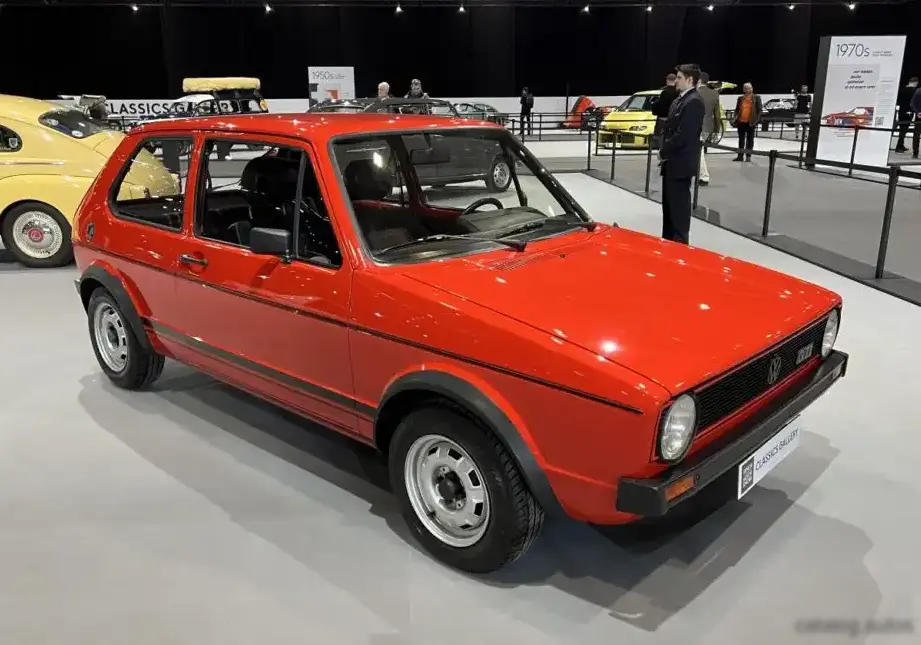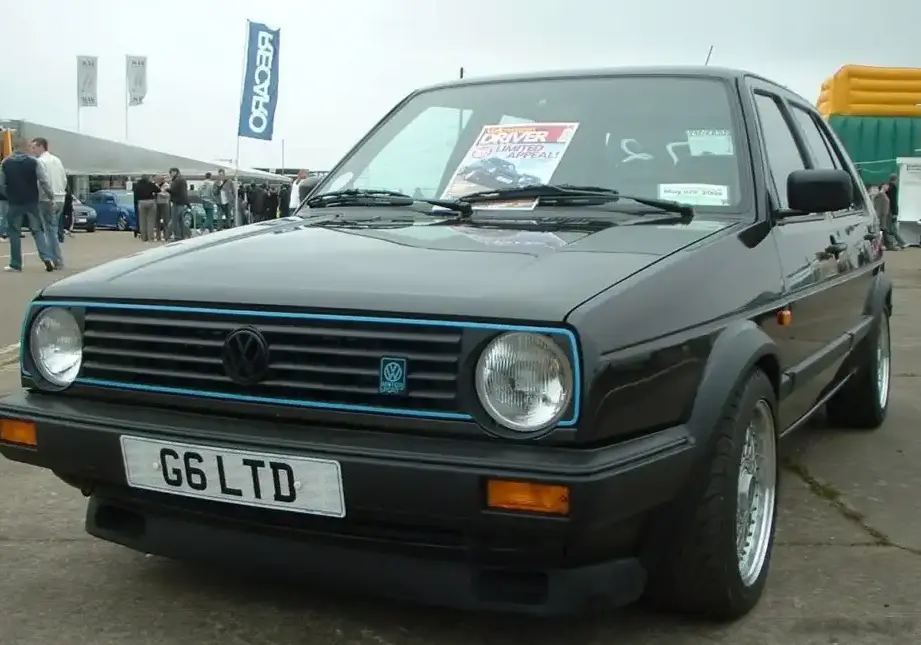
The Volkswagen Golf II 1.8 (90 hp) represents a significant iteration within the hugely successful second generation Golf range, produced from 1987 to 1991. This five-door hatchback, often referred to as the facelifted model due to minor cosmetic updates introduced in 1987, served as a popular entry point into the Golf lineup for buyers prioritizing affordability and practicality. Positioned below the more powerful GTI and diesel variants, the 1.8 offered a balance of reasonable performance and fuel economy, making it a common sight on European roads. It was a key model in solidifying the Golf’s reputation as a versatile and reliable family car.
Technical Specifications
| Brand | Volkswagen |
| Model | Golf |
| Generation | Golf II (5-door, facelift 1987) |
| Type (Engine) | 1.8 (90 Hp) |
| Start of production | 1987 |
| End of production | 1991 |
| Powertrain Architecture | Internal Combustion engine |
| Body type | Hatchback |
| Seats | 5 |
| Doors | 5 |
| Fuel consumption (urban) | 10.5 l/100 km (22.4 US mpg, 26.9 UK mpg, 9.5 km/l) |
| Fuel consumption (extra urban) | 6.3 l/100 km (37.3 US mpg, 44.8 UK mpg, 15.9 km/l) |
| Fuel Type | Petrol (Gasoline) |
| Acceleration 0 – 100 km/h | 11.9 sec |
| Acceleration 0 – 62 mph | 11.9 sec |
| Acceleration 0 – 60 mph | 11.3 sec |
| Maximum speed | 175 km/h (108.74 mph) |
| Weight-to-power ratio | 10.7 kg/Hp, 93.8 Hp/tonne |
| Weight-to-torque ratio | 6.8 kg/Nm, 147.9 Nm/tonne |
| Power | 90 Hp @ 5250 rpm |
| Power per litre | 50.5 Hp/l |
| Torque | 142 Nm @ 3000 rpm (104.73 lb.-ft. @ 3000 rpm) |
| Engine layout | Front, Transverse |
| Engine Model/Code | RP |
| Engine displacement | 1781 cm3 (108.68 cu. in.) |
| Number of cylinders | 4 |
| Engine configuration | Inline |
| Cylinder Bore | 81 mm (3.19 in.) |
| Piston Stroke | 86.4 mm (3.4 in.) |
| Compression ratio | 9:1 |
| Number of valves per cylinder | 2 |
| Fuel injection system | Single-point injection |
| Engine aspiration | Naturally aspirated engine |
| Valvetrain | SOHC |
| Engine oil capacity | 4 l (4.23 US qt | 3.52 UK qt) |
| Coolant capacity | 6.3 l (6.66 US qt | 5.54 UK qt) |
| Kerb Weight | 960 kg (2116.44 lbs.) |
| Max. weight | 1440 kg (3174.66 lbs.) |
| Max load | 480 kg (1058.22 lbs.) |
| Trunk (boot) space – minimum | 330 l (11.65 cu. ft.) |
| Trunk (boot) space – maximum | 1145 l (40.44 cu. ft.) |
| Fuel tank capacity | 55 l (14.53 US gal | 12.1 UK gal) |
| Permitted trailer load with brakes (12%) | 1200 kg (2645.55 lbs.) |
| Permitted trailer load without brakes | 470 kg (1036.17 lbs.) |
| Length | 3985-4040 mm (156.89 – 159.06 in.) |
| Width | 1665 mm (65.55 in.) |
| Height | 1415 mm (55.71 in.) |
| Wheelbase | 2475 mm (97.44 in.) |
| Front track | 1427 mm (56.18 in.) |
| Rear track | 1422 mm (55.98 in.) |
| Drag coefficient (Cd) | 0.34 |
| Minimum turning circle | 10.5 m (34.45 ft.) |
| Drivetrain Architecture | ICE, Front wheel drive |
| Number of gears and type of gearbox | 5 gears, manual transmission |
| Front suspension | Independent type McPherson, Transverse stabilizer |
| Rear suspension | Elastic beam |
| Front brakes | Disc |
| Rear brakes | Drum |
| Steering type | Steering rack and pinion |
| Tires size | 175/70 R13 |
| Wheel rims size | 5.5J x 13 |
Powertrain & Engine Architecture
The heart of the Golf II 1.8 was the RP engine, a 1781cc inline four-cylinder unit. This engine utilized a single-point fuel injection system (Bosch Mono-Jetronic), a relatively simple and cost-effective technology for the time. The single injector, positioned in the throttle body, delivered fuel to all four cylinders. The engine featured a single overhead camshaft (SOHC) operating two valves per cylinder. This configuration prioritized simplicity and reliability over outright performance. The 90 horsepower output was a modest figure, but adequate for everyday driving. The engine’s relatively low compression ratio of 9:1 allowed it to run on lower octane fuel, further contributing to its affordability. The engine was transversely mounted, a layout common in front-wheel-drive vehicles, and paired with either a 4-speed or 5-speed manual transmission, or a 3-speed automatic transmission. The automatic transmission, while offering convenience, was known to slightly reduce fuel economy and responsiveness compared to the manual options.
Driving Characteristics
The 1.8-liter, 90 hp Golf II with the automatic transmission delivered a comfortable, if not particularly exhilarating, driving experience. Acceleration from 0-60 mph took around 11.3 seconds, and top speed was approximately 108.74 mph. The automatic gearbox featured relatively long gear ratios, prioritizing fuel efficiency over rapid acceleration. This meant that the engine often felt strained when attempting quick overtaking maneuvers or climbing hills. Compared to the manual transmission versions, the automatic suffered from a noticeable power loss due to the torque converter. The suspension, while providing a decent ride quality, was tuned for comfort rather than sporty handling. Steering was light and easy, making it well-suited for urban driving. Overall, the driving experience was geared towards practicality and ease of use, rather than performance.
Equipment & Trim Levels
The Golf II 1.8 Automatic typically came with a fairly basic level of equipment. Standard features included cloth upholstery, a basic stereo system, and manual windows and door locks. The interior was functional and durable, but lacked the refinement of higher-spec models. Optional extras included power windows, central locking, a sunroof, and upgraded stereo systems. Trim levels varied slightly depending on the market, but generally, the 1.8 Automatic occupied a mid-range position in the Golf II lineup. It offered a step up in convenience compared to the base models, but lacked the sporty styling and performance enhancements of the GTI.
Chassis & Braking
The Golf II 1.8 utilized a McPherson strut front suspension and an elastic beam rear suspension. This setup provided a good balance of ride comfort and handling. The front brakes were disc brakes, while the rear brakes were drum brakes – a common configuration for vehicles in this price range. The braking system was adequate for everyday use, but lacked the stopping power of the GTI’s all-disc setup. A stabilizer bar was fitted to the front suspension to reduce body roll during cornering. The chassis was relatively lightweight, contributing to the car’s decent fuel economy.
Market Reception & Comparison
The Golf II 1.8 Automatic was generally well-received by critics as a practical and affordable family car. It was praised for its reliability, fuel efficiency, and comfortable ride. However, it was often criticized for its lack of performance, particularly when equipped with the automatic transmission. Compared to the more powerful GTI models, the 1.8 Automatic offered significantly less excitement. However, it was considerably cheaper to buy and run, making it a popular choice for budget-conscious buyers. The 1.8 diesel version offered superior fuel economy, but at the expense of performance and refinement.
Legacy
The Volkswagen Golf II 1.8 Automatic has proven to be a remarkably durable and reliable vehicle. Many examples are still on the road today, testament to the quality of its engineering. The RP engine is known for its longevity, provided it has been properly maintained. In the used car market, these Golfs are often sought after by enthusiasts and collectors, particularly those looking for a classic European hatchback. While not the most desirable variant in the Golf II range, the 1.8 Automatic represents a significant piece of automotive history and continues to offer a practical and enjoyable driving experience.