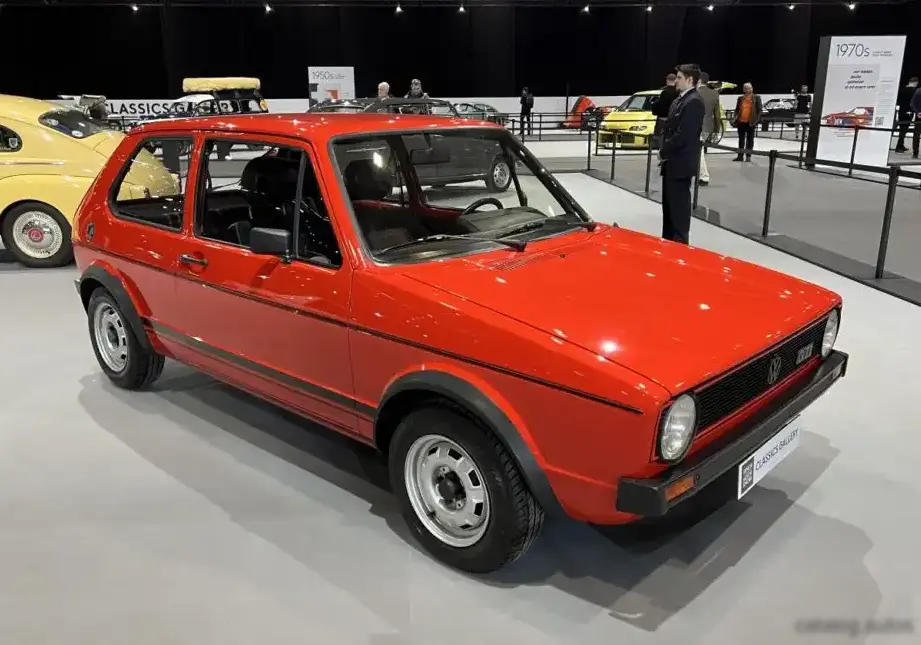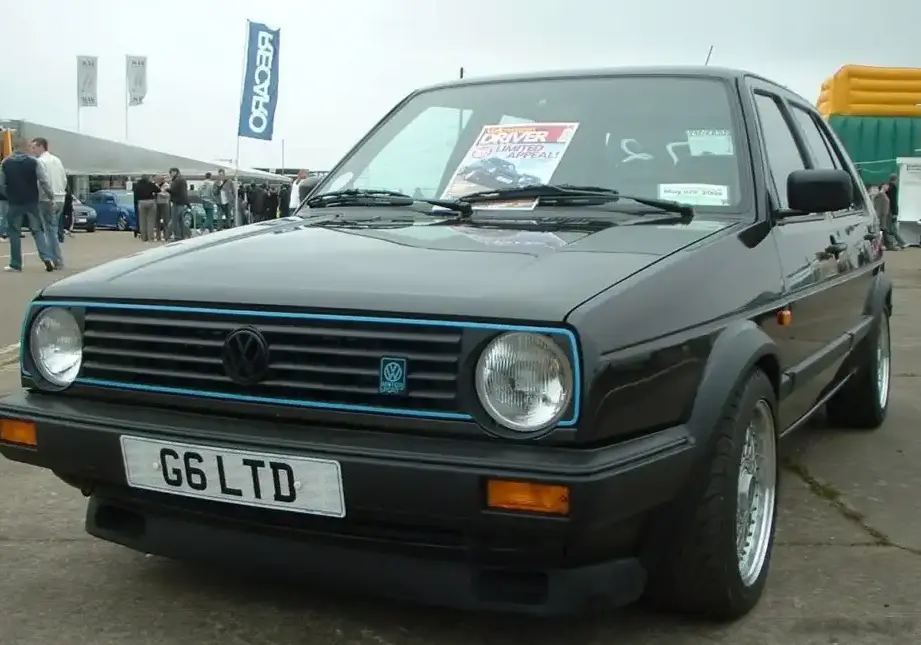
The Volkswagen Golf II 1.8 GT (90 hp) was a popular variant of the second-generation Golf, produced from 1987 to 1991. This model, part of the facelifted Golf II range (designated 1HX0/A3), occupied a mid-range position in the lineup, offering a balance between affordability and performance. It was primarily marketed in Europe, where the Golf II was a dominant force in the compact hatchback segment. The 1.8 GT aimed to provide a more refined driving experience than the base models, while remaining accessible to a wider customer base than the more powerful GTI or VR6 versions.
Technical Specifications
| Brand | Volkswagen |
| Model | Golf |
| Generation | Golf II (5-door, facelift 1987) |
| Type (Engine) | 1.8 GT (90 Hp) |
| Start of production | 1987 |
| End of production | 1991 |
| Powertrain Architecture | Internal Combustion engine |
| Body type | Hatchback |
| Seats | 5 |
| Doors | 5 |
| Fuel consumption (urban) | 10.8 l/100 km (21.8 US mpg, 26.2 UK mpg, 9.3 km/l) |
| Fuel consumption (extra urban) | 6.7 l/100 km (35.1 US mpg, 42.2 UK mpg, 14.9 km/l) |
| Fuel Type | Petrol (Gasoline) |
| Acceleration 0 – 100 km/h | 11.7 sec |
| Acceleration 0 – 62 mph | 11.7 sec |
| Acceleration 0 – 60 mph | 11.1 sec |
| Maximum speed | 175 km/h (108.74 mph) |
| Weight-to-power ratio | 10.7 kg/Hp, 93.8 Hp/tonne |
| Weight-to-torque ratio | 6.8 kg/Nm, 147.9 Nm/tonne |
| Power | 90 Hp @ 5250 rpm |
| Power per litre | 50.5 Hp/l |
| Torque | 142 Nm @ 3000 rpm (104.73 lb.-ft. @ 3000 rpm) |
| Engine layout | Front, Transverse |
| Engine Model/Code | RP |
| Engine displacement | 1781 cm3 (108.68 cu. in.) |
| Number of cylinders | 4 |
| Engine configuration | Inline |
| Cylinder Bore | 81 mm (3.19 in.) |
| Piston Stroke | 86.4 mm (3.4 in.) |
| Compression ratio | 9:1 |
| Number of valves per cylinder | 2 |
| Fuel injection system | Single-point injection |
| Engine aspiration | Naturally aspirated engine |
| Valvetrain | SOHC |
| Engine oil capacity | 4 l (4.23 US qt | 3.52 UK qt) |
| Coolant capacity | 6.3 l (6.66 US qt | 5.54 UK qt) |
| Kerb Weight | 960 kg (2116.44 lbs.) |
| Max. weight | 1440 kg (3174.66 lbs.) |
| Max load | 480 kg (1058.22 lbs.) |
| Trunk (boot) space – minimum | 330 l (11.65 cu. ft.) |
| Trunk (boot) space – maximum | 1145 l (40.44 cu. ft.) |
| Fuel tank capacity | 55 l (14.53 US gal | 12.1 UK gal) |
| Permitted trailer load with brakes (12%) | 1200 kg (2645.55 lbs.) |
| Permitted trailer load without brakes | 470 kg (1036.17 lbs.) |
| Length | 3985 mm (156.89 in.) |
| Width | 1680 mm (66.14 in.) |
| Height | 1405 mm (55.31 in.) |
| Wheelbase | 2475 mm (97.44 in.) |
| Front track | 1427 mm (56.18 in.) |
| Rear (Back) track | 1422 mm (55.98 in.) |
| Drag coefficient (Cd) | 0.34 |
| Minimum turning circle | 10.5 m (34.45 ft.) |
| Drivetrain Architecture | The Internal combustion engine (ICE) drives the front wheels of the vehicle. |
| Drive wheel | Front wheel drive |
| Number of gears and type of gearbox | 5 gears, manual transmission |
| Front suspension | Independent type McPherson, Transverse stabilizer |
| Rear suspension | Transverse stabilizer, Elastic beam |
| Front brakes | Ventilated discs |
| Rear brakes | Disc |
| Steering type | Steering rack and pinion |
| Tires size | 185/60 R14 |
| Wheel rims size | 6J x 14 |
Powertrain & Engine Architecture
The 1.8 GT variant was powered by the Volkswagen RP engine, an inline four-cylinder, naturally aspirated gasoline engine displacing 1781 cc (1.8 liters). This engine utilized a single-point fuel injection system (Bosch Mono-Jetronic), which was a cost-effective solution compared to multi-point injection found in higher-spec models. The engine featured a single overhead camshaft (SOHC) valvetrain with two valves per cylinder. The RP engine was known for its relative simplicity and durability, though it lacked the outright performance of the later 16-valve engines. The engine produced 90 horsepower at 5250 rpm and 142 Nm (104.73 lb-ft) of torque at 3000 rpm. The engine was transversely mounted, driving the front wheels. The transmission was a 5-speed manual, offering a reasonable balance between fuel economy and drivability.
Driving Characteristics
The Golf II 1.8 GT with the 5-speed manual transmission offered adequate performance for everyday driving. Acceleration from 0 to 60 mph took around 11.1 seconds, and the top speed was approximately 108.74 mph. While not particularly sporty, the 1.8 GT provided sufficient power for overtaking and highway cruising. The gear ratios were tuned for a balance of fuel efficiency and usability, with a relatively long fifth gear for comfortable high-speed travel. Compared to the more powerful GTI, the 1.8 GT felt noticeably slower, especially in higher gears. However, it offered a smoother and more relaxed driving experience, making it a popular choice for drivers who prioritized comfort and economy over outright performance. The handling was typical of the Golf II – secure and predictable, but not particularly engaging.
Equipment & Trim Levels
The 1.8 GT trim level offered a step up in equipment compared to the base Golf models. Standard features typically included central locking, electric front windows, a basic stereo system, and upgraded interior trim. The interior upholstery was usually cloth, with a patterned design. Optional extras included a sunroof, alloy wheels, and a more sophisticated stereo system. The dashboard layout was typical of the Golf II, with a functional and straightforward design. The 1.8 GT often featured a leather-wrapped steering wheel and gear knob as optional upgrades.
Chassis & Braking
The Golf II 1.8 GT utilized a McPherson strut front suspension with a transverse stabilizer, providing a comfortable and controlled ride. The rear suspension employed a torsion beam setup, which was a cost-effective and space-saving solution. The braking system consisted of ventilated disc brakes at the front and disc brakes at the rear, offering adequate stopping power for the vehicle’s weight and performance. The steering was a rack and pinion system, providing precise and responsive handling. The standard tire size was 185/60 R14, mounted on 6J x 14 inch steel or optional alloy wheels.
Market Reception & Comparison
The Golf II 1.8 GT was well-received by critics as a practical and affordable hatchback. It offered a good balance of performance, economy, and comfort, making it a popular choice for families and commuters. Compared to the more expensive GTI, the 1.8 GT provided a more accessible entry point into the Golf range. Fuel economy was a strong point, with combined fuel consumption averaging around 35.1 US mpg. Reliability was generally good, although the single-point fuel injection system could occasionally require maintenance. Compared to the diesel-powered Golfs, the 1.8 GT offered more refined performance but at the cost of fuel economy.
Legacy
The Volkswagen Golf II 1.8 GT remains a popular classic car today, appreciated for its simplicity, reliability, and affordability. The RP engine is known for its durability, and many examples are still on the road. Parts availability is generally good, making it relatively easy to maintain and repair. While not a particularly collectible model, the 1.8 GT represents a significant part of the Golf II’s success story, offering a practical and enjoyable driving experience for a wide range of drivers. The Golf II, in general, is remembered as a pivotal model in the history of Volkswagen, solidifying its position as a leading manufacturer of compact hatchbacks.