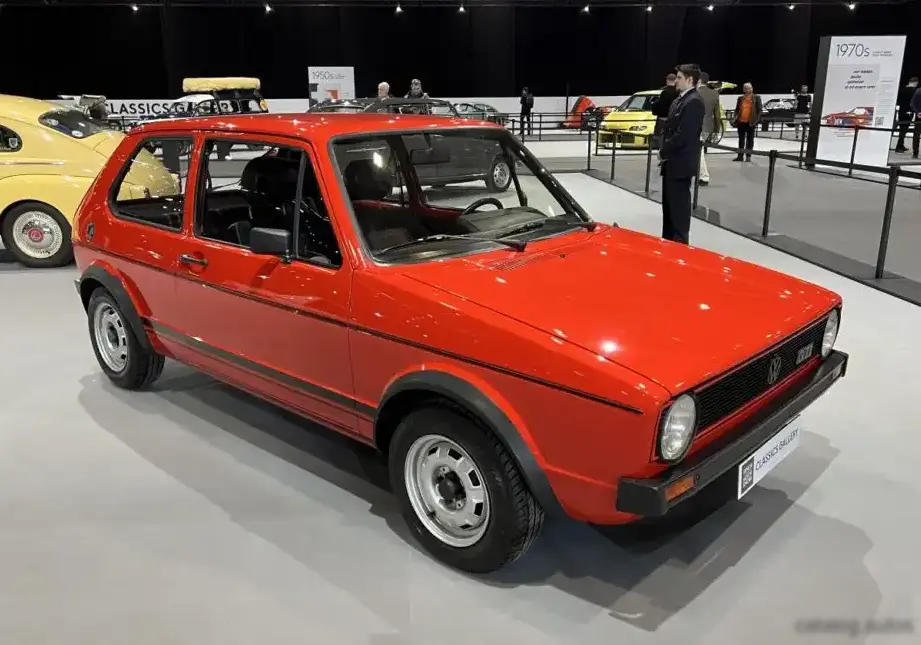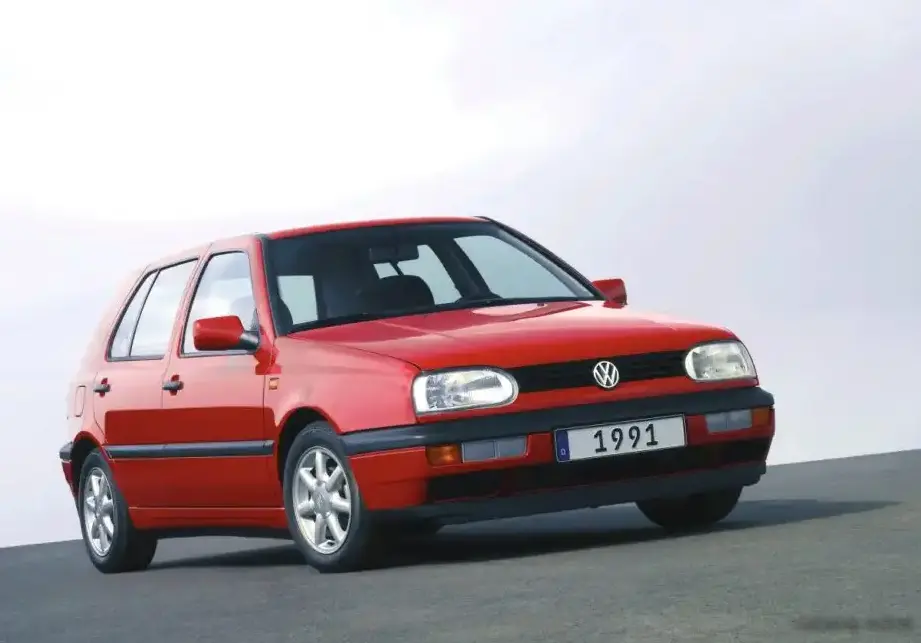
The Volkswagen Golf Mk3 1.8 (75 hp) Automatic, produced between 1991 and 1997, represented an entry-level offering within the highly successful third-generation Golf lineup (Typ 1H). Positioned as a comfortable and economical option, this variant catered to drivers prioritizing ease of use over outright performance. It was a key model in broadening the Golf’s appeal, particularly in European markets where automatic transmissions were gaining popularity. The Mk3 Golf, built on the A3 platform shared with the SEAT Ibiza Mk2, Škoda Octavia, and Audi A3, significantly improved upon its predecessor in terms of refinement, space, and safety. This specific 1.8L automatic configuration aimed to provide a practical and affordable hatchback for everyday use.
Technical Specifications
| Brand | Volkswagen |
| Model | Golf |
| Generation | Golf III |
| Type (Engine) | 1.8 (75 Hp) Automatic |
| Start of production | 1991 |
| End of production | 1997 |
| Powertrain Architecture | Internal Combustion engine |
| Body type | Hatchback |
| Seats | 5 |
| Doors | 3-5 |
| Fuel consumption (combined) | 8.8 l/100 km |
| Fuel consumption (US mpg) | 26.7 US mpg |
| Fuel consumption (UK mpg) | 32.1 UK mpg |
| Fuel consumption (km/l) | 11.4 km/l |
| Fuel Type | Petrol (Gasoline) |
| Acceleration 0 – 100 km/h | 17.6 sec |
| Acceleration 0 – 62 mph | 17.6 sec |
| Acceleration 0 – 60 mph | 16.7 sec |
| Maximum speed | 164 km/h (101.9 mph) |
| Weight-to-power ratio | 15.3 kg/Hp |
| Weight-to-torque ratio | 8.2 kg/Nm |
| Power | 75 Hp @ 5000 rpm |
| Power per litre | 42.1 Hp/l |
| Torque | 140 Nm @ 2500 rpm (103.26 lb.-ft. @ 2500 rpm) |
| Engine layout | Front, Transverse |
| Engine Model/Code | AAM |
| Engine displacement | 1781 cm3 (108.68 cu. in.) |
| Number of cylinders | 4 |
| Engine configuration | Inline |
| Cylinder Bore | 81 mm (3.19 in.) |
| Piston Stroke | 86.4 mm (3.4 in.) |
| Compression ratio | 9:1 |
| Number of valves per cylinder | 2 |
| Fuel injection system | Single-point injection |
| Engine aspiration | Naturally aspirated engine |
| Valvetrain | OHC |
| Engine oil capacity | 3.8 l (4.02 US qt | 3.34 UK qt) |
| Coolant capacity | 5.5 l (5.81 US qt | 4.84 UK qt) |
| Kerb Weight | 1150 kg (2535.32 lbs.) |
| Max. weight | 1580 kg (3483.3 lbs.) |
| Max load | 430 kg (947.99 lbs.) |
| Trunk (boot) space – minimum | 330 l (11.65 cu. ft.) |
| Trunk (boot) space – maximum | 687 l (24.26 cu. ft.) |
| Fuel tank capacity | 55 l (14.53 US gal | 12.1 UK gal) |
| Length | 4020 mm (158.27 in.) |
| Width | 1695 mm (66.73 in.) |
| Height | 1425 mm (56.1 in.) |
| Wheelbase | 2475 mm (97.44 in.) |
| Front track | 1478 mm (58.19 in.) |
| Rear track | 1448 mm (57.01 in.) |
| Drivetrain Architecture | Front wheel drive |
| Number of gears | 4 |
| Gearbox type | Automatic transmission |
| Front suspension | Trailing arm |
| Rear suspension | Rigid axle suspension |
| Front brakes | Disc |
| Rear brakes | Drum |
| Assisting systems | ABS (Anti-lock braking system) |
| Steering type | Steering rack and pinion |
| Power steering | Hydraulic Steering |
| Tires size | 175/ 65 R14 |
| Wheel rims size | 14 |
Powertrain & Engine Architecture
The Golf Mk3 1.8 Automatic utilized the Volkswagen AAM engine code, a 1.8-liter inline-four cylinder engine. This engine featured a single-point fuel injection system (also known as mono-point injection), where a single injector delivered fuel into the intake manifold. This was a cost-effective solution compared to multi-point injection, contributing to the lower price point of this Golf variant. The engine employed an overhead camshaft (OHC) valvetrain with two valves per cylinder. The 9:1 compression ratio was typical for the era, balancing performance and fuel efficiency. Paired with this engine was a four-speed automatic transmission, designed for smooth and effortless driving. This transmission, while reliable, wasn’t known for its sporty responsiveness, prioritizing comfort and ease of use.
Driving Characteristics
The 75 hp output and four-speed automatic transmission resulted in a relaxed driving experience. Acceleration was modest, with a 0-60 mph time of around 16.7 seconds. The automatic transmission’s gear ratios were geared towards fuel economy rather than rapid acceleration. Compared to the more powerful 1.9 TDI diesel or the sportier VR6 variants, the 1.8 Automatic felt significantly less responsive. However, it offered a smoother and more forgiving driving experience, particularly in urban environments. The automatic transmission eliminated the need for constant gear changes, making it ideal for drivers unfamiliar with manual transmissions or those who preferred a more relaxed driving style. The engine delivered its peak torque of 140 Nm (103 lb-ft) at 2500 rpm, providing adequate pulling power for everyday driving situations.
Equipment & Trim Levels
The 1.8 Automatic typically came with a basic level of equipment. Standard features generally included power steering, central locking, and an AM/FM radio. Interior upholstery was typically cloth, with a relatively simple dashboard layout. Optional extras included power windows, a sunroof, and upgraded audio systems. Trim levels varied slightly depending on the market, but this variant generally occupied the entry-level or mid-range position in the Golf Mk3 lineup. It was often seen as a step up from the base model, offering the convenience of an automatic transmission.
Chassis & Braking
The Golf Mk3 1.8 Automatic featured a front-wheel-drive layout with a trailing arm rear suspension and a rigid axle. The front suspension utilized coil springs and shock absorbers. Braking consisted of disc brakes on the front wheels and drum brakes on the rear. ABS (Anti-lock Braking System) was often included as standard equipment, enhancing safety. The suspension setup was tuned for comfort, providing a relatively smooth ride quality. Stabilizer bars were typically fitted to reduce body roll during cornering, although they were often thinner than those found on higher-performance Golf models.
Market Reception & Comparison
The Golf Mk3 1.8 Automatic was generally well-received as a practical and affordable hatchback. Critics praised its comfortable ride, spacious interior, and ease of use. However, the engine’s modest power output and the automatic transmission’s lack of responsiveness were often cited as drawbacks. Compared to the 1.9 TDI, the 1.8 Automatic offered less fuel economy but a smoother and quieter driving experience. The VR6 variant provided significantly more performance but came at a higher price. The 1.8 Automatic appealed to drivers who prioritized comfort and convenience over sporty handling and rapid acceleration.
Legacy
The Volkswagen Golf Mk3 1.8 Automatic, while not the most exciting variant in the lineup, proved to be a reliable and durable vehicle. The AAM engine, while simple in design, is known for its longevity when properly maintained. The four-speed automatic transmission is also generally considered to be robust. Today, these Golfs are relatively affordable on the used car market, making them attractive options for budget-conscious buyers. However, potential buyers should be aware of common issues such as rust, worn suspension components, and potential oil leaks. Despite its age, the Golf Mk3 1.8 Automatic remains a testament to Volkswagen’s engineering prowess and its ability to create a practical and enduring family car.