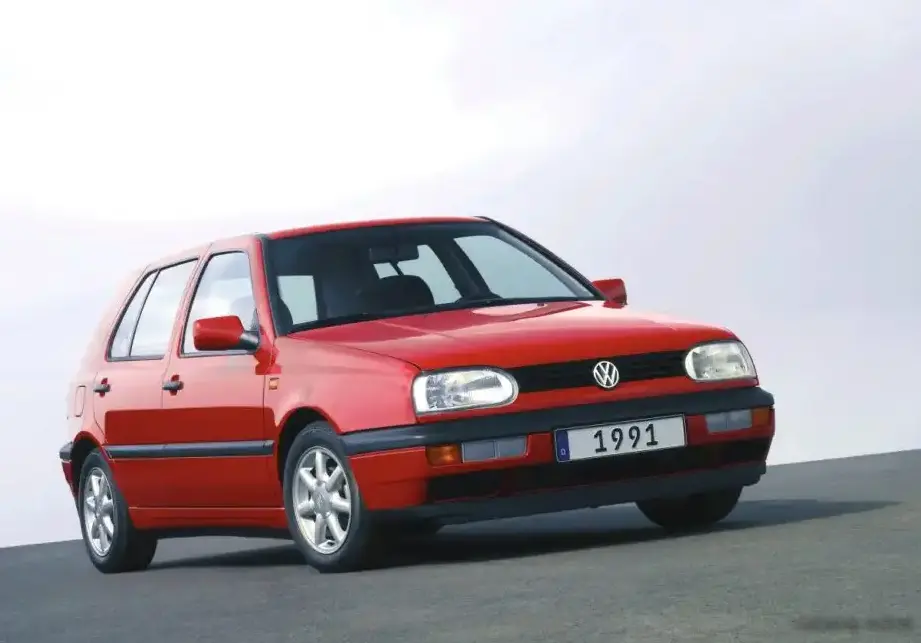
The Volkswagen Golf III 1.9 TDI Syncro, produced between 1995 and 1997, represents a unique offering within the broader Golf Mk3 range (1HX0/A3 platform). This variant combined Volkswagen’s renowned diesel efficiency with the added capability of all-wheel drive, appealing to drivers in regions with challenging weather conditions or those seeking enhanced stability. Positioned as a mid-range option, it offered a practical balance between performance, fuel economy, and all-weather traction, slotting below the more powerful GTI and VR6 models but above the base specification diesels. The Syncro system, coupled with the 1.9 TDI engine, created a versatile and durable hatchback that remains popular with enthusiasts today.
Technical Specifications
| Brand | Volkswagen |
| Model | Golf |
| Generation | Golf III |
| Type (Engine) | 1.9 TDI Syncro (90 Hp) |
| Start of production | 1995 |
| End of production | 1997 |
| Powertrain Architecture | Internal Combustion engine |
| Body type | Hatchback |
| Seats | 4 |
| Doors | 3-5 |
| Fuel consumption (combined) | 5.5 l/100 km (42.8 US mpg, 51.4 UK mpg, 18.2 km/l) |
| Fuel Type | Diesel |
| Acceleration 0 – 100 km/h | 13.9 sec |
| Acceleration 0 – 62 mph | 13.9 sec |
| Acceleration 0 – 60 mph | 13.2 sec |
| Maximum speed | 175 km/h (108.74 mph) |
| Weight-to-power ratio | 14.7 kg/Hp, 67.9 Hp/tonne |
| Weight-to-torque ratio | 6.6 kg/Nm, 152.5 Nm/tonne |
| Power | 90 Hp @ 4000 rpm |
| Power per litre | 47.5 Hp/l |
| Torque | 202 Nm @ 1900 rpm (148.99 lb.-ft. @ 1900 rpm) |
| Engine layout | Front, Longitudinal |
| Engine Model/Code | 1Z |
| Engine displacement | 1896 cm3 (115.7 cu. in.) |
| Number of cylinders | 4 |
| Engine configuration | Inline |
| Cylinder Bore | 79.5 mm (3.13 in.) |
| Piston Stroke | 95.5 mm (3.76 in.) |
| Compression ratio | 19.5:1 |
| Number of valves per cylinder | 2 |
| Fuel injection system | Direct injection |
| Engine aspiration | Turbocharger, Intercooler |
| Valvetrain | OHC |
| Engine oil capacity | 4.3 l (4.54 US qt | 3.78 UK qt) |
| Coolant | 6.5 l (6.87 US qt | 5.72 UK qt) |
| Kerb Weight | 1325 kg (2921.12 lbs.) |
| Max. weight | 1760 kg (3880.14 lbs.) |
| Max load | 435 kg (959.01 lbs.) |
| Trunk (boot) space – minimum | 320 l (11.3 cu. ft.) |
| Trunk (boot) space – maximum | 677 l (23.91 cu. ft.) |
| Fuel tank capacity | 55 l (14.53 US gal | 12.1 UK gal) |
| Length | 4020 mm (158.27 in.) |
| Width | 1695 mm (66.73 in.) |
| Height | 1425 mm (56.1 in.) |
| Wheelbase | 2475 mm (97.44 in.) |
| Front track | 1464 mm (57.64 in.) |
| Rear (Back) track | 1428 mm (56.22 in.) |
| Drive wheel | All wheel drive (4×4) |
| Number of gears and type of gearbox | 5 gears, manual transmission |
| Front suspension | Wishbone |
| Rear suspension | Suspension with traction connecting levers |
| Front brakes | Ventilated discs |
| Rear brakes | Drum |
| Assisting systems | ABS (Anti-lock braking system) |
| Steering type | Steering rack and pinion |
| Power steering | Hydraulic Steering |
| Tires size | 185/60 R14 |
| Wheel rims size | 14 |
Powertrain & Engine Architecture
The heart of the Golf III 1.9 TDI Syncro is the 1Z engine, a 1.9-liter, four-cylinder diesel engine. This engine utilizes a direct injection system, a key feature for its time, which improved fuel efficiency and reduced emissions compared to indirect injection diesels. The 1Z engine boasts a robust cast iron block and an aluminum cylinder head, featuring a single overhead camshaft (OHC) operating two valves per cylinder. A turbocharger with an intercooler is employed to boost power output to 90 horsepower and 202 Nm (148.99 lb-ft) of torque. The Syncro models were exclusively offered with a five-speed manual transmission, chosen for its durability and ability to handle the increased torque delivered to all four wheels. The transmission’s gear ratios were optimized for both fuel economy and usable power in everyday driving situations.
Driving Characteristics
The 1.9 TDI Syncro offered a distinctly different driving experience compared to its petrol-powered siblings. While not a performance car, the 90 hp engine provided adequate power for comfortable cruising and overtaking. The turbocharger provided a noticeable boost in mid-range torque, making it feel more responsive than its horsepower figure might suggest. The all-wheel-drive system significantly enhanced traction, particularly on slippery surfaces, providing a surefooted feel that was absent in front-wheel-drive Golfs. The five-speed manual transmission allowed drivers to keep the engine in its optimal power band. Compared to the higher-output VR6 or even the 1.8 petrol versions, the TDI Syncro prioritized fuel efficiency and durability over outright speed. The gear ratios were taller, favoring economy over rapid acceleration.
Equipment & Trim Levels
The Golf III 1.9 TDI Syncro typically came equipped with a reasonable level of standard features. These included power steering, central locking, electric front windows, and an adjustable steering column. Interior upholstery was typically cloth, with a functional and durable design. Optional extras included air conditioning, a sunroof, alloy wheels, and upgraded audio systems. The trim level often dictated the quality of the interior materials and the availability of certain features. The Syncro models generally received slightly more robust suspension components to cope with the demands of the all-wheel-drive system.
Chassis & Braking
The Golf III’s chassis featured independent suspension at the front, utilizing wishbones and coil springs, while the rear employed a torsion beam suspension. The Syncro models benefited from slightly stiffer springs and dampers to improve handling stability. Braking duties were handled by ventilated discs at the front and drum brakes at the rear. Anti-lock Braking System (ABS) was standard, enhancing safety by preventing wheel lockup during hard braking. The Syncro’s all-wheel-drive system employed a viscous coupling to distribute torque between the front and rear axles, providing automatic all-wheel drive engagement when needed.
Market Reception & Comparison
The Golf III 1.9 TDI Syncro was well-received in markets where all-wheel drive was valued, such as Northern Europe and mountainous regions. Critics praised its fuel efficiency, durability, and all-weather capability. Compared to the front-wheel-drive TDI models, the Syncro offered superior traction and handling. However, it came at a price premium and with a slight weight penalty. Against the more powerful Golf variants, the TDI Syncro appealed to a different demographic – those prioritizing practicality and economy over outright performance. Fuel economy was a significant advantage, consistently achieving around 42.8 US mpg in combined driving.
Legacy
The Volkswagen Golf III 1.9 TDI Syncro has earned a reputation for reliability and longevity. The 1Z engine is known for its robustness, and the Syncro system, while relatively simple, has proven to be durable. Today, these cars are sought after by enthusiasts who appreciate their practicality, fuel efficiency, and all-weather capability. Finding well-maintained examples can be challenging, as many have accumulated high mileage. However, the Golf III TDI Syncro remains a testament to Volkswagen’s engineering prowess and a popular choice for those seeking a classic hatchback with a unique blend of features.