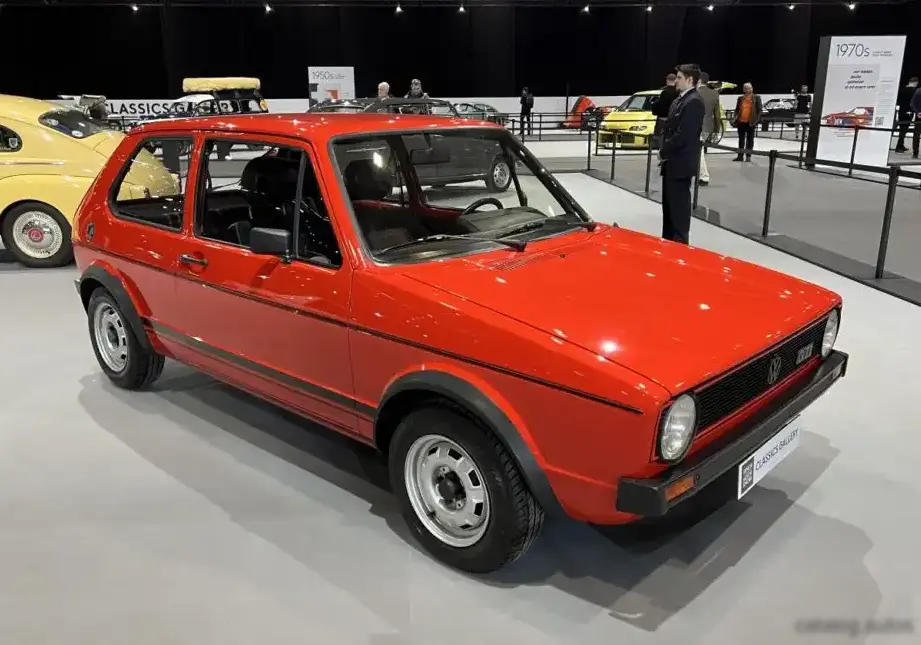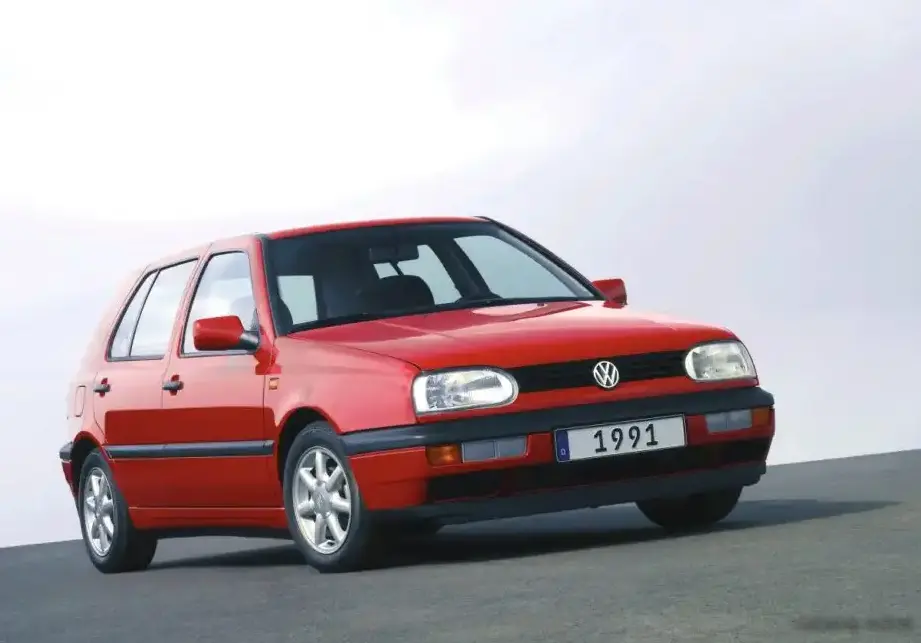
The Volkswagen Golf III 2.0, producing 115 horsepower, was a mainstay of the Golf Mk3 lineup produced between 1991 and 1997. Representing a significant step up from the base 1.4 and 1.6 liter engines, the 2.0 liter variant offered a balance of performance and affordability, appealing to buyers seeking a more capable family hatchback. It occupied a mid-range position within the Golf III range, slotting below the performance-oriented VR6 models but offering more power than the entry-level options. The Golf III itself was a pivotal model for Volkswagen, solidifying its reputation for quality and refinement in the compact class, and the 2.0 liter engine played a key role in its success.
Technical Specifications
| Brand | Volkswagen |
| Model | Golf |
| Generation | Golf III |
| Type (Engine) | 2.0 (115 Hp) |
| Start of production | 1991 |
| End of production | 1997 |
| Powertrain Architecture | Internal Combustion engine |
| Body type | Hatchback |
| Seats | 5 |
| Doors | 3-5 |
| Fuel consumption (combined) | 8.7 l/100 km |
| Fuel consumption (US mpg) | 27 US mpg |
| Fuel consumption (UK mpg) | 32.5 UK mpg |
| Fuel consumption (km/l) | 11.5 km/l |
| Fuel Type | Petrol (Gasoline) |
| Acceleration 0 – 100 km/h | 10.1 sec |
| Acceleration 0 – 62 mph | 10.1 sec |
| Acceleration 0 – 60 mph | 9.6 sec |
| Maximum speed | 198 km/h (123.03 mph) |
| Weight-to-power ratio | 9.7 kg/Hp |
| Weight-to-torque ratio | 6.5 kg/Nm |
| Power | 115 Hp @ 5200 rpm |
| Power per litre | 58 Hp/l |
| Torque | 170 Nm @ 2400 rpm (125.39 lb.-ft. @ 2400 rpm) |
| Engine layout | Front, Transverse |
| Engine Model/Code | 2E, ADY, AGG |
| Engine displacement | 1984 cm3 (121.07 cu. in.) |
| Number of cylinders | 4 |
| Engine configuration | Inline |
| Cylinder Bore | 82.5 mm (3.25 in.) |
| Piston Stroke | 92.8 mm (3.65 in.) |
| Compression ratio | 10:1 |
| Number of valves per cylinder | 2 |
| Fuel injection system | Multi-port manifold injection |
| Engine aspiration | Naturally aspirated engine |
| Valvetrain | OHC |
| Engine oil capacity | 3.8 l (4.02 US qt | 3.34 UK qt) |
| Coolant capacity | 5.5 l (5.81 US qt | 4.84 UK qt) |
| Kerb Weight | 1110 kg (2447.13 lbs.) |
| Max. weight | 1610 kg (3549.44 lbs.) |
| Max load | 500 kg (1102.31 lbs.) |
| Trunk (boot) space – minimum | 330 l (11.65 cu. ft.) |
| Trunk (boot) space – maximum | 1160 l (40.97 cu. ft.) |
| Fuel tank capacity | 55 l (14.53 US gal | 12.1 UK gal) |
| Length | 4020 mm (158.27 in.) |
| Width | 1695 mm (66.73 in.) |
| Height | 1425 mm (56.1 in.) |
| Wheelbase | 2475 mm (97.44 in.) |
| Front track | 1478 mm (58.19 in.) |
| Rear (Back) track | 1462 mm (57.56 in.) |
| Drivetrain Architecture | The Internal combustion engine (ICE) drives the front wheels of the vehicle. |
| Drive wheel | Front wheel drive |
| Number of gears and type of gearbox | 5 gears, manual transmission |
| Front suspension | Wishbone |
| Rear suspension | Suspension with traction connecting levers |
| Front brakes | Ventilated discs |
| Rear brakes | Disc |
| Assisting systems | ABS (Anti-lock braking system) |
| Steering type | Steering rack and pinion |
| Power steering | Hydraulic Steering |
| Tires size | 185/60 R14 |
| Wheel rims size | 14 |
Powertrain & Engine Architecture
The Golf III 2.0 typically employed the Volkswagen 2E, ADY, or AGG engine codes, all variations of the 1.8 and 2.0 liter inline-four cylinder gasoline engine. These engines featured a cast iron block with an aluminum cylinder head, utilizing a single overhead camshaft (OHC) design operating two valves per cylinder. Fuel delivery was managed by Bosch multi-port fuel injection, providing a balance between efficiency and performance. The 2.0 liter engine benefited from a slightly higher compression ratio (10:1) compared to some of the smaller displacement Golf III engines, contributing to its increased power output. The five-speed manual transmission was the most common pairing, although a four-speed automatic transmission was also available, albeit impacting acceleration and fuel economy. The automatic transmission, while offering convenience, was known for its relatively conservative shift programming, prioritizing smoothness over outright performance.
Driving Characteristics
The 115 hp 2.0 liter Golf III offered a noticeable improvement in performance over the smaller-engined models. While not a sports car, it provided adequate acceleration for everyday driving and highway cruising. The 0-60 mph time of around 9.6 seconds was respectable for the early 1990s. The engine delivered a reasonably broad torque curve, with peak torque of 170 Nm (125 lb-ft) available at 2400 rpm. This made it relatively easy to maintain speed on inclines and overtake slower traffic. The manual transmission allowed for greater driver control, while the automatic version, though less engaging, provided a more relaxed driving experience. Compared to the more powerful VR6, the 2.0 liter felt less refined and lacked the VR6’s distinctive exhaust note. However, it offered a more economical and less complex alternative.
Equipment & Trim Levels
The Golf III 2.0 was available in various trim levels, including base, GL, and GTI (though the GTI typically featured the 2.0 liter 16V engine). Standard equipment on the base model typically included power steering, central locking, and a basic stereo system. The GL trim added features such as electric windows, upgraded upholstery, and alloy wheels. Optional extras included air conditioning, a sunroof, and upgraded audio systems. Interior upholstery varied depending on the trim level, ranging from cloth to more premium velour options. Dashboard configurations were generally consistent across the range, with a functional and straightforward layout.
Chassis & Braking
The Golf III utilized a MacPherson strut front suspension and a torsion beam rear suspension. The 2.0 liter models generally featured a slightly thicker front stabilizer bar compared to the base models, improving handling and reducing body roll. Braking systems varied depending on the year and trim level. Earlier models often featured disc brakes on the front and drum brakes on the rear, while later models and higher trim levels were typically equipped with disc brakes all around. ABS (Anti-lock Braking System) was available as an option, and became increasingly common as standard equipment on higher trim levels.
Market Reception & Comparison
The Golf III 2.0 was well-received by automotive critics as a practical and well-rounded family hatchback. It was praised for its build quality, comfortable ride, and relatively spacious interior. Fuel economy was considered reasonable for its class, averaging around 27 US mpg in combined driving. Compared to other 2.0 liter hatchbacks of the time, such as the Opel/Vauxhall Astra and Ford Escort, the Golf III was often seen as offering a more refined and sophisticated driving experience. However, some critics noted that the automatic transmission could feel sluggish, and the interior design, while functional, lacked the visual flair of some competitors.
Legacy
The Golf III 2.0, particularly with the 2E engine code, has proven to be a relatively reliable powertrain. While age and mileage inevitably lead to wear and tear, these engines are generally known for their durability. Common issues include oil leaks, worn suspension components, and corrosion. In the used car market today, the Golf III 2.0 represents an affordable and accessible entry point into classic Volkswagen ownership. Well-maintained examples are sought after by enthusiasts and collectors, offering a nostalgic driving experience and a connection to a pivotal era in Volkswagen’s history. The 2.0 liter engine, while not the most powerful in the Golf III range, remains a popular choice for its balance of performance, reliability, and affordability.