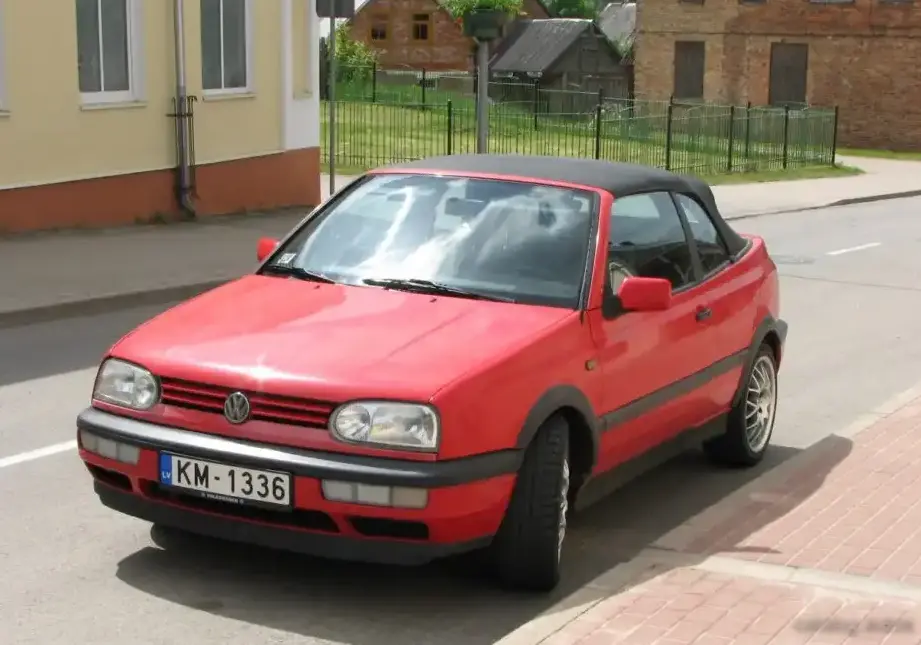
The Volkswagen Golf III Cabrio 1.8 i (90 hp) was a popular variant of the Golf III Cabriolet produced between 1993 and 1998. Positioned as an entry-level offering within the Golf III Cabrio range, it provided an accessible and economical open-top motoring experience. This model utilized a 1.8-liter inline-four engine paired with an automatic transmission, catering to drivers prioritizing comfort and ease of use over outright performance. It was a key part of the Golf III’s success, building on the legacy of the original Golf Cabriolet and offering a more refined experience than its predecessors.
Technical Specifications
| Brand | Volkswagen |
| Model | Golf |
| Generation | Golf III Cabrio |
| Type (Engine) | 1.8 i (90 Hp) |
| Start of production | 1993 |
| End of production | 1998 |
| Powertrain Architecture | Internal Combustion engine |
| Body type | Cabriolet |
| Fuel Type | Petrol (Gasoline) |
| Power | 90 Hp @ 5500 rpm |
| Power per litre | 50.5 Hp/l |
| Torque | 145 Nm @ 2500 rpm / 106.95 lb.-ft. @ 2500 rpm |
| Engine layout | Front, Transverse |
| Engine Model/Code | ABS, ACC, ADD, ADZ |
| Engine displacement | 1781 cm3 / 108.68 cu. in. |
| Number of cylinders | 4 |
| Engine configuration | Inline |
| Cylinder Bore | 81 mm / 3.19 in. |
| Piston Stroke | 86.4 mm / 3.4 in. |
| Compression ratio | 10:1 |
| Number of valves per cylinder | 2 |
| Fuel injection system | Single-point injection |
| Engine aspiration | Naturally aspirated engine |
| Valvetrain | OHC |
| Engine oil capacity | 3.8 l / 4.02 US qt | 3.34 UK qt |
| Coolant | 5.5 l / 5.81 US qt | 4.84 UK qt |
Powertrain & Engine Architecture
The Golf III Cabrio 1.8 i (90 hp) was powered by the Volkswagen ABS, ACC, ADD, or ADZ engine code, all variations of the 1.8-liter inline-four cylinder gasoline engine. This engine was a mainstay of the Volkswagen Group during the 1990s, appearing in various models across the VW, Audi, SEAT, and Skoda lineups. The engine featured a single-point fuel injection system (also known as mono-point injection), where a single fuel injector delivered fuel into the intake manifold. This system was simpler and less expensive than multi-point injection, contributing to the lower cost of this variant. The engine utilized an overhead camshaft (OHC) valvetrain with two valves per cylinder. The automatic transmission was typically a four-speed unit, designed for smooth operation and ease of driving. While not particularly sophisticated, it was a reliable unit well-suited to the engine’s power output.
Driving Characteristics
The 90 hp output and automatic transmission combination resulted in a driving experience focused on comfort and usability rather than sporty performance. Acceleration was adequate for everyday driving, with a 0-60 mph time estimated around 12-14 seconds. The automatic transmission, while smooth, did detract from the engine’s responsiveness. Gear ratios were optimized for fuel economy and relaxed cruising, meaning the engine often felt strained during hard acceleration. Compared to the manual transmission versions of the 1.8, the automatic suffered a noticeable performance penalty. The higher-output 1.8 engines (often found in GT models) and the VR6 variants offered significantly more power and a more engaging driving experience. However, the 1.8 automatic provided a more accessible entry point into Golf Cabrio ownership.
Equipment & Trim Levels
The 1.8 i (90 hp) Cabriolet typically represented the base trim level. Standard equipment generally included power steering, central locking, and basic cloth upholstery. The dashboard layout was functional and straightforward, with a focus on usability. Optional extras included alloy wheels, a more premium audio system, and upgraded interior trim. Power windows were often an optional extra, as was air conditioning. The interior materials were generally durable but not luxurious, reflecting the car’s position as an entry-level model. The convertible top was manually operated, further emphasizing the cost-conscious nature of this trim.
Chassis & Braking
The Golf III Cabriolet utilized a MacPherson strut front suspension and a twist-beam rear suspension. The suspension setup was tuned for comfort, providing a relatively smooth ride. Braking was typically accomplished with disc brakes on the front wheels and drum brakes on the rear. Stabilizer bars were fitted to both the front and rear axles, helping to reduce body roll during cornering. The braking system was adequate for the car’s weight and performance, but lacked the stopping power of the larger brake systems found on higher-spec models. The chassis was reinforced compared to the earlier Golf Cabriolet to improve rigidity and safety.
Market Reception & Comparison
The Golf III Cabrio 1.8 i (90 hp) was generally well-received as an affordable and practical open-top car. Critics praised its comfortable ride and ease of use, but noted its lack of outright performance. Compared to the more powerful Golf Cabriolet variants, the 1.8 automatic offered significantly lower fuel economy, though the difference wasn’t dramatic. Reliability was generally good, with the 1.8-liter engine proving to be durable and relatively trouble-free. The automatic transmission, while not the most exciting, was also known for its longevity. The 1.9 TDI diesel version offered superior fuel economy, but at the expense of refinement and performance. The 1.8 manual offered a better balance of performance and economy, but required more driver involvement.
Legacy
The Golf III Cabrio 1.8 i (90 hp) remains a popular choice in the used car market, particularly for those seeking an affordable and reliable classic convertible. The powertrain, while not cutting-edge, has proven to be durable over time. Common issues include wear and tear on the convertible top mechanism and occasional problems with the single-point fuel injection system. However, parts availability is generally good, and maintenance costs are relatively low. The car’s simple design and robust construction contribute to its enduring appeal. It represents a significant step forward in terms of refinement and build quality compared to the earlier Golf Cabriolet, and continues to provide a fun and accessible open-top driving experience.