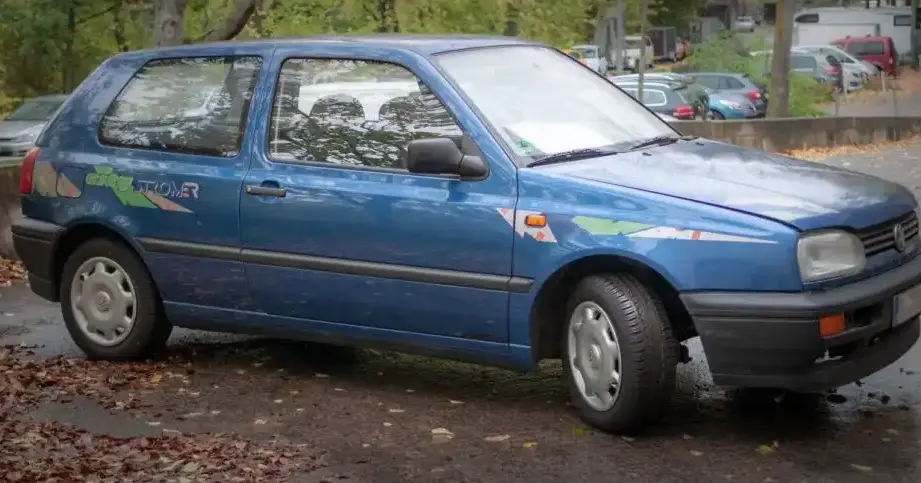
The Volkswagen Golf III Citystromer 17.3 kWh represents a fascinating, if limited, foray by Volkswagen into electric vehicle technology during the early 1990s. Produced between 1993 and 1996, this variant utilized a fully electric powertrain within the familiar Golf III hatchback body. It was primarily a research and development vehicle, and a small-scale production run intended to explore the viability of electric mobility before widespread infrastructure was available. The Citystromer was not widely marketed to the general public and served more as a pilot program and demonstration fleet vehicle, particularly within Volkswagen’s home market of Germany.
Technical Specifications
| Brand | Volkswagen |
| Model | Golf |
| Generation | Golf III |
| Type (Engine) | Citystromer 17.3 kWh (27 Hp) |
| Start of production | 1993 |
| End of production | 1996 |
| Powertrain Architecture | BEV (Electric Vehicle) |
| Body type | Hatchback |
| Seats | 4 |
| Doors | 3 |
| Fuel Type | Electricity |
| Maximum speed | 100 km/h (62.14 mph) |
| Weight-to-power ratio | 55.9 kg/Hp, 17.9 Hp/tonne |
| Gross battery capacity | 17.3 kWh |
| Battery voltage | 96 V |
| Battery technology | Lead-Acid |
| Battery weight | 300 kg (661.39 lbs.) |
| Battery location | Inside the trunk, Under the front hood |
| All-electric range | 70-90 km (43.5 – 55.92 mi) |
| Average Energy consumption | 25 kWh/100 km (40.23 kWh/100 mi) |
| MPGe | 84 |
| km/kWh | 4 |
| mi/kWh | 2.5 |
| Electric motor power | 27 Hp @ 3450 rpm |
| Electric motor location | Front axle, Transverse |
| System power | 27 Hp @ 3450 rpm |
| Kerb Weight | 1510 kg (3328.98 lbs.) |
| Max. weight | 1860 kg (4100.6 lbs.) |
| Max load | 350 kg (771.62 lbs.) |
| Drivetrain Architecture | One electric motor drives the front wheels. |
| Drive wheel | Front wheel drive |
| Number of gears and type of gearbox | 5 gears, manual transmission |
Powertrain & Engine Architecture
The Citystromer’s powertrain is fundamentally different from the gasoline and diesel engines found in other Golf III models. It utilizes a 96-volt electric motor producing 27 horsepower at 3450 rpm. This motor is transversely mounted at the front of the vehicle, driving the front wheels. The energy is supplied by a 17.3 kWh lead-acid battery pack. A significant design challenge was packaging this substantial battery weight. Volkswagen engineers split the battery pack, placing a portion under the front hood and the remainder within the trunk, significantly reducing cargo space. The car employs a single-speed, manual transmission with five forward gears, allowing the driver to select the optimal ratio for efficiency or limited acceleration. The electrical system included a relatively basic battery management system for the time, monitoring charge and discharge rates to prolong battery life.
Driving Characteristics
The driving experience of the Citystromer is understandably different from its internal combustion engine counterparts. Acceleration is modest, with the 27 horsepower translating to a 0-100 km/h (0-62 mph) time that is considerably slower than even the base gasoline-powered Golf III. The car’s strength lies in its quiet operation and instant torque delivery, characteristic of electric motors. The five-speed manual transmission allows for some control over the motor’s operating point, but the limited power output means that maintaining highway speeds requires careful planning. The heavy battery pack, weighing approximately 661 lbs, noticeably affects handling, making the Citystromer feel less nimble than other Golf III variants. The range of 70-90 km (43.5-55.92 miles) on a full charge was sufficient for urban commuting but limited its practicality for longer journeys.
Equipment & Trim Levels
Given its experimental nature, the Citystromer was not offered with a wide range of trim options. It generally featured a fairly basic specification level, mirroring that of the entry-level Golf III models. Interior appointments were functional rather than luxurious, with cloth upholstery and a simple dashboard layout. Standard equipment included power steering, central locking, and electric windows. Air conditioning and other comfort features were typically omitted to minimize weight and energy consumption. The exterior styling was largely identical to the standard Golf III, with the exception of subtle “Citystromer” badging. The primary focus was on the electric powertrain, and less emphasis was placed on cosmetic enhancements.
Chassis & Braking
The Citystromer utilized the standard Golf III chassis, with some modifications to accommodate the weight of the battery pack. The suspension consisted of MacPherson struts at the front and a twist-beam axle at the rear. The braking system was a combination of disc brakes at the front and drum brakes at the rear, a common configuration for base-model Golf IIIs. The added weight of the batteries did necessitate slightly stiffer spring rates to maintain acceptable handling characteristics. Stabilizer bars were fitted to both the front and rear axles to reduce body roll. The steering system was a conventional rack-and-pinion setup, providing adequate feedback and control.
Market Reception & Comparison
The Citystromer did not receive widespread critical acclaim, largely due to its limited range, modest performance, and the high cost of the battery technology at the time. Critics acknowledged the vehicle’s potential as a clean and quiet urban commuter, but highlighted its impracticality for anything beyond short trips. Compared to the gasoline-powered Golf III models, the Citystromer offered significantly lower performance and a much higher purchase price. The 1.8-liter gasoline engine, available with either 75 or 90 horsepower, provided a far more versatile and affordable option for most buyers. Even the 1.9-liter diesel engine offered better range and fuel economy. The Citystromer’s primary value lay in its role as a testbed for electric vehicle technology, rather than as a commercially viable product.
Legacy
The Volkswagen Golf III Citystromer, while not a commercial success, played an important role in Volkswagen’s early exploration of electric vehicle technology. It provided valuable insights into the challenges of battery packaging, weight distribution, and range anxiety. The lessons learned from the Citystromer program informed Volkswagen’s subsequent electric vehicle development efforts, ultimately leading to the launch of more successful electric models like the e-Golf and the ID. series. Today, the Citystromer is a rare and collectible vehicle, sought after by enthusiasts and historians interested in the early days of electric mobility. The lead-acid battery technology used in the Citystromer is now largely obsolete, and finding replacement batteries can be a significant challenge. However, the car remains a testament to Volkswagen’s pioneering spirit and its commitment to sustainable transportation.