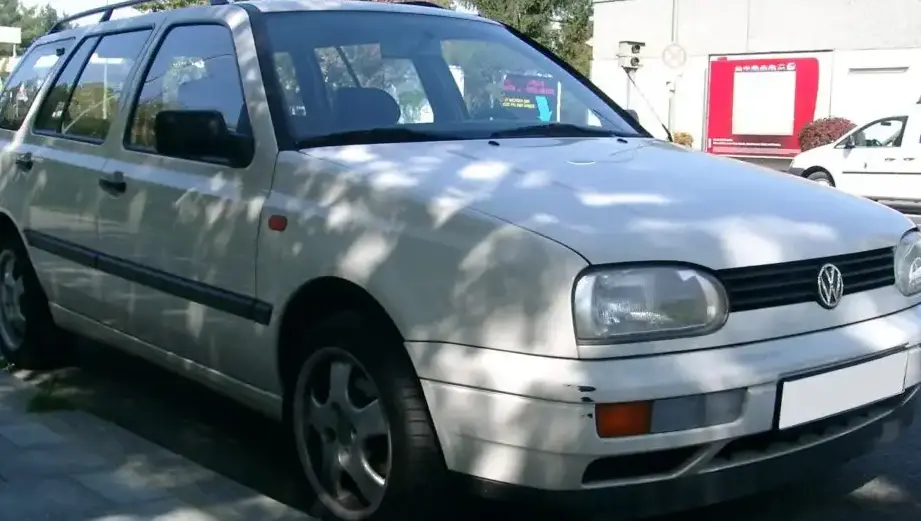
The Volkswagen Golf III Variant 1.8, producing 90 horsepower, was a popular choice within the Golf Mk3 range, particularly from 1993 to 1999. Positioned as an entry-level to mid-range option, this variant offered a practical and affordable estate (station wagon) body style, appealing to families and those needing increased cargo capacity. It was a key component of Volkswagen’s strategy to offer a versatile vehicle within the competitive European market, and later found a niche following in other regions as a used import. This specific configuration, combining the 1.8-liter engine with an automatic transmission, represented a balance between fuel efficiency and ease of driving, though it differed significantly in performance from its more powerful siblings.
Technical Specifications
| Brand | Volkswagen |
| Model | Golf |
| Generation | Golf III Variant |
| Type (Engine) | 1.8 (90 Hp) |
| Start of production | 1993 |
| End of production | 1999 |
| Powertrain Architecture | Internal Combustion engine |
| Body type | Station wagon (estate) |
| Seats | 5 |
| Doors | 5 |
| Fuel consumption (combined) | 7.9 l/100 km |
| Fuel consumption (US mpg) | 29.8 US mpg |
| Fuel consumption (UK mpg) | 35.8 UK mpg |
| Fuel consumption (km/l) | 12.7 km/l |
| Fuel Type | Petrol (Gasoline) |
| Acceleration 0 – 100 km/h | 12.8 sec |
| Acceleration 0 – 62 mph | 12.8 sec |
| Acceleration 0 – 60 mph | 12.2 sec |
| Maximum speed | 175 km/h (108.74 mph) |
| Weight-to-power ratio | 13.2 kg/Hp |
| Weight-to-torque ratio | 8.2 kg/Nm |
| Power | 90 Hp @ 5500 rpm |
| Power per litre | 50.5 Hp/l |
| Torque | 145 Nm @ 2500 rpm (106.95 lb.-ft. @ 2500 rpm) |
| Engine layout | Front, Transverse |
| Engine Model/Code | ABS, ACC, ADD, ADZ |
| Engine displacement | 1781 cm3 (108.68 cu. in.) |
| Number of cylinders | 4 |
| Engine configuration | Inline |
| Cylinder Bore | 81 mm (3.19 in.) |
| Piston Stroke | 86.4 mm (3.4 in.) |
| Compression ratio | 10:1 |
| Number of valves per cylinder | 2 |
| Fuel injection system | Single-point injection |
| Engine aspiration | Naturally aspirated engine |
| Valvetrain | OHC |
| Engine oil capacity | 3.8 l (4.02 US qt | 3.34 UK qt) |
| Coolant capacity | 5.5 l (5.81 US qt | 4.84 UK qt) |
| Kerb Weight | 1190 kg (2623.5 lbs.) |
| Max. weight | 1650 kg (3637.63 lbs.) |
| Max load | 460 kg (1014.13 lbs.) |
| Trunk (boot) space – minimum | 466 l (16.46 cu. ft.) |
| Trunk (boot) space – maximum | 1425 l (50.32 cu. ft.) |
| Fuel tank capacity | 60 l (15.85 US gal | 13.2 UK gal) |
| Length | 4340 mm (170.87 in.) |
| Width | 1695 mm (66.73 in.) |
| Height | 1430 mm (56.3 in.) |
| Wheelbase | 2475 mm (97.44 in.) |
| Front track | 1478 mm (58.19 in.) |
| Rear track | 1465 mm (57.68 in.) |
| Drivetrain Architecture | Front wheel drive |
| Number of gears | 5 gears, automatic transmission |
| Front suspension | Wishbone |
| Rear suspension | Suspension with traction connecting levers |
| Front brakes | Disc |
| Rear brakes | Drum |
| Assisting systems | ABS (Anti-lock braking system) |
| Steering type | Steering rack and pinion |
| Power steering | Hydraulic Steering |
| Tires size | 195/55 R14 H |
| Wheel rims size | 14 |
INTRODUCTION
The Golf III Variant 1.8 (90 hp) was produced between 1993 and 1999 as part of the Mk3 Golf lineup (model code 1HX0/A3). The Variant, Volkswagen’s designation for its estate/station wagon models, offered increased practicality compared to the standard hatchback. This particular engine and transmission combination was aimed at buyers seeking a comfortable, economical, and reliable vehicle for everyday use. It served as a more affordable alternative to the higher-performance GTI and VR6 variants, and a more convenient option than the diesel models for those preferring gasoline power.
Powertrain & Engine Architecture
At the heart of this Golf Variant lies the Volkswagen 1.8-liter inline-four cylinder engine. Engine codes commonly found in this variant include ABS, ACC, ADD, and ADZ, with minor variations depending on the specific year and market. This engine utilizes a single-point fuel injection system (also known as mono-point injection), where a single injector delivers fuel into the intake manifold. While simpler and less efficient than multi-point injection, it contributed to the engine’s affordability and relative ease of maintenance. The engine features an overhead camshaft (OHC) valvetrain with two valves per cylinder. The automatic transmission used was typically a four-speed unit, designed for smooth operation and ease of use. It wasn’t known for its sportiness, prioritizing comfort and fuel economy over rapid acceleration.
Driving Characteristics
The 90 hp output and automatic transmission resulted in a driving experience focused on practicality rather than performance. Acceleration from 0-60 mph took around 12.2 seconds, and top speed was limited to 175 km/h (108.74 mph). The automatic transmission’s gear ratios were geared towards fuel efficiency, meaning the engine often felt strained during quick acceleration or when climbing hills. Compared to the five-speed manual version of the same engine, the automatic suffered a noticeable performance deficit. The higher-output VR6 and GTI models offered significantly more spirited driving experiences, while the TDI diesel variants provided superior fuel economy and low-end torque. However, the automatic transmission made the 1.8L Variant a comfortable and easy-to-drive option for daily commuting and long journeys.
Equipment & Trim Levels
The 1.8L automatic Golf III Variant typically came with a reasonable level of standard equipment. This included central locking, power steering, and an adjustable steering column. Interior upholstery was usually cloth, with a relatively simple dashboard layout. Optional extras included air conditioning, electric windows, a sunroof, and upgraded audio systems. Trim levels varied by market, but generally, this variant occupied a mid-range position, offering more features than the base models but lacking the sporty enhancements found in the GTI. The focus was on providing a comfortable and well-equipped family vehicle.
Chassis & Braking
The Golf III Variant’s chassis featured independent front suspension with wishbones and a torsion beam rear suspension. This setup provided a comfortable ride quality, although it wasn’t particularly sporty. Braking was typically accomplished with front disc brakes and rear drum brakes. ABS (Anti-lock Braking System) was often included as standard equipment, enhancing safety. Stabilizer bars were present, but their thickness was modest, reflecting the vehicle’s focus on comfort rather than handling precision. The suspension was tuned to prioritize ride comfort and stability, making it well-suited for carrying passengers and cargo.
Market Reception & Comparison
The Golf III Variant 1.8 (90 hp) automatic received generally positive reviews for its practicality, comfort, and fuel economy. Critics noted that the automatic transmission dulled the engine’s performance, but acknowledged that it appealed to buyers prioritizing ease of driving. Compared to the manual version, fuel economy was similar, but acceleration was slower. The TDI diesel models offered significantly better fuel economy, while the GTI and VR6 provided more engaging driving experiences. However, the 1.8L automatic struck a good balance between cost, comfort, and practicality, making it a popular choice for families and those seeking a versatile vehicle.
Legacy
The Golf III Variant 1.8 (90 hp) automatic has proven to be a relatively reliable vehicle, with many examples still on the road today. The engine is generally durable, although the single-point injection system can require occasional maintenance. The automatic transmission, while not known for its performance, is generally robust if properly maintained. In the used car market, these Golf Variants are often sought after as affordable and practical transportation. Their simple mechanical design makes them relatively easy to repair, and parts availability is generally good. While not a collector’s item, the Golf III Variant 1.8 (90 hp) remains a testament to Volkswagen’s commitment to building practical and reliable vehicles.