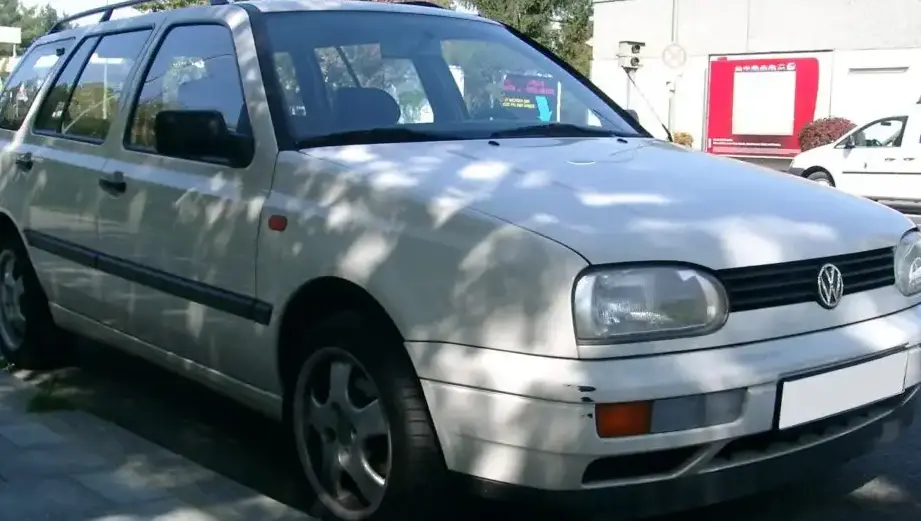
The Volkswagen Golf III Variant 1.8 Syncro (90 hp) was a station wagon (estate) model produced between 1994 and 1999, representing a practical and all-weather capable iteration of the popular Golf Mk3. Positioned as a mid-range offering within the Variant lineup, it combined the versatility of the estate body style with Volkswagen’s renowned Syncro all-wheel-drive system and a fuel-efficient 1.8-liter engine. This model was primarily sold in European markets, where the demand for compact estates with all-wheel drive was significant, offering a blend of practicality, safety, and reasonable running costs. It sat below the more powerful VR6 and TDI variants, targeting buyers who prioritized affordability and fuel economy over outright performance.
Technical Specifications
| Brand | Volkswagen |
| Model | Golf |
| Generation | Golf III Variant |
| Type (Engine) | 1.8 Syncro (90 Hp) |
| Start of production | 1994 |
| End of production | 1999 |
| Powertrain Architecture | Internal Combustion engine |
| Body type | Station wagon (estate) |
| Seats | 5 |
| Doors | 5 |
| Fuel consumption (combined) | 8.8 l/100 km |
| Fuel consumption (US mpg) | 26.7 US mpg |
| Fuel consumption (UK mpg) | 32.1 UK mpg |
| Fuel consumption (km/l) | 11.4 km/l |
| Fuel Type | Petrol (Gasoline) |
| Acceleration 0 – 100 km/h | 14 sec |
| Acceleration 0 – 62 mph | 14 sec |
| Acceleration 0 – 60 mph | 13.3 sec |
| Maximum speed | 172 km/h (106.88 mph) |
| Weight-to-power ratio | 15 kg/Hp, 66.7 Hp/tonne |
| Weight-to-torque ratio | 9.3 kg/Nm, 107.4 Nm/tonne |
| Power | 90 Hp @ 5500 rpm |
| Power per litre | 50.5 Hp/l |
| Torque | 145 Nm @ 2500 rpm (106.95 lb.-ft. @ 2500 rpm) |
| Engine layout | Front, Transverse |
| Engine Model/Code | ABS, ADZ |
| Engine displacement | 1781 cm3 (108.68 cu. in.) |
| Number of cylinders | 4 |
| Engine configuration | Inline |
| Cylinder Bore | 81 mm (3.19 in.) |
| Piston Stroke | 86.4 mm (3.4 in.) |
| Compression ratio | 10:1 |
| Number of valves per cylinder | 2 |
| Fuel injection system | Single-point injection |
| Engine aspiration | Naturally aspirated engine |
| Valvetrain | OHC |
| Engine oil capacity | 3.8 l (4.02 US qt | 3.34 UK qt) |
| Coolant capacity | 5.5 l (5.81 US qt | 4.84 UK qt) |
| Kerb Weight | 1350 kg (2976.24 lbs.) |
| Max. weight | 1775 kg (3913.21 lbs.) |
| Max load | 425 kg (936.96 lbs.) |
| Trunk (boot) space – minimum | 340 l (12.01 cu. ft.) |
| Trunk (boot) space – maximum | 1300 l (45.91 cu. ft.) |
| Fuel tank capacity | 65 l (17.17 US gal | 14.3 UK gal) |
| Length | 4340 mm (170.87 in.) |
| Width | 1695 mm (66.73 in.) |
| Height | 1430 mm (56.3 in.) |
| Wheelbase | 2475 mm (97.44 in.) |
| Front track | 1478 mm (58.19 in.) |
| Rear track | 1460 mm (57.48 in.) |
| Drive wheel | All wheel drive (4×4) |
| Number of gears | 5 gears, manual transmission |
| Front suspension | Wishbone |
| Rear suspension | Suspension with traction connecting levers |
| Front brakes | Disc |
| Rear brakes | Drum |
| Assisting systems | ABS (Anti-lock braking system) |
| Steering type | Steering rack and pinion |
| Power steering | Hydraulic Steering |
| Tires size | 195/60 R14 |
| Wheel rims size | 14 |
INTRODUCTION
The Golf III Variant 1.8 Syncro, produced from 1994 to 1999, was a key model in Volkswagen’s third-generation Golf range. Built on the 1HX0/A3 platform, the Variant (estate) body style offered increased cargo capacity compared to the hatchback, making it a popular choice for families and those requiring more versatile transportation. The addition of Volkswagen’s Syncro all-wheel-drive system further enhanced its appeal, particularly in regions with inclement weather. The 90 hp 1.8-liter engine and manual transmission combination represented an entry point into the Syncro range, offering a balance between affordability, fuel efficiency, and all-weather capability.
Powertrain & Engine Architecture
The heart of the Golf III Variant 1.8 Syncro was the 1.8-liter inline-four cylinder engine, available with either the ABS or ADZ engine code. These engines were naturally aspirated and featured a single-point fuel injection system, a relatively simple setup for the time. The engine produced 90 horsepower at 5500 rpm and 145 Nm (107 lb-ft) of torque at 2500 rpm. The overhead camshaft (OHC) valvetrain operated two valves per cylinder. The Syncro system itself was a viscous coupling-based all-wheel-drive system, automatically distributing power between the front and rear axles as needed. The standard transmission was a five-speed manual, although a four-speed automatic was also available, albeit less common with this engine. The automatic transmission, while offering convenience, did impact acceleration and fuel economy.
Driving Characteristics
The 1.8-liter engine, paired with the manual transmission, provided adequate performance for everyday driving. Acceleration to 60 mph took around 13.3 seconds, and top speed was approximately 107 mph. While not a particularly sporty setup, the engine was responsive enough for typical commuting and highway cruising. The Syncro all-wheel-drive system significantly improved traction, especially on slippery surfaces, providing a more confident driving experience in adverse weather conditions. Compared to the more powerful VR6 or TDI variants, the 1.8 Syncro felt noticeably less potent, but its lighter weight and simpler engine design contributed to better fuel economy. The gear ratios were geared towards fuel efficiency rather than outright acceleration.
Equipment & Trim Levels
The Golf III Variant 1.8 Syncro typically came with a reasonable level of standard equipment. This included power steering, central locking, and an anti-lock braking system (ABS). Interior upholstery was typically cloth, with a functional and durable design. Dashboard configuration was standard for the Mk3 Golf, with a clear instrument cluster and logically arranged controls. Optional extras included power windows, a sunroof, and upgraded audio systems. Higher trim levels offered features like alloy wheels, upgraded interior trim, and climate control. The Syncro badge on the rear and the all-wheel-drive system itself were the defining features of this variant.
Chassis & Braking
The Golf III Variant 1.8 Syncro utilized a front independent suspension with wishbones and a rear suspension with traction connecting levers. The braking system featured disc brakes on the front wheels and drum brakes on the rear. The rear drum brakes were a cost-saving measure common on lower-spec models. The suspension was tuned for comfort and stability, providing a reasonably compliant ride. Stabilizer bars were fitted to both the front and rear axles to reduce body roll during cornering. The Syncro system added some weight to the vehicle, necessitating a slightly firmer suspension setup compared to front-wheel-drive variants.
Market Reception & Comparison
The Golf III Variant 1.8 Syncro was generally well-received by automotive critics as a practical and capable estate car. It was praised for its all-weather capability, spacious interior, and reasonable fuel economy. However, some critics noted that the 90 hp engine felt underpowered, especially when fully loaded. Compared to the VR6 variant, the 1.8 Syncro offered significantly less performance but was considerably more affordable to purchase and operate. The TDI models provided superior fuel economy but were often more expensive initially. The 1.8 Syncro appealed to buyers who prioritized practicality and all-weather safety over outright performance.
Legacy
The Golf III Variant 1.8 Syncro has proven to be a relatively reliable vehicle, with many examples still on the road today. The 1.8-liter engine is known for its durability, although regular maintenance is essential. The Syncro system, while robust, can require occasional servicing. In the used car market, these models are sought after by enthusiasts who appreciate their practicality, all-wheel-drive capability, and classic Volkswagen charm. Parts availability is generally good, making them relatively easy to maintain. The Golf III Variant 1.8 Syncro represents a well-rounded and versatile vehicle that continues to offer a compelling ownership experience.