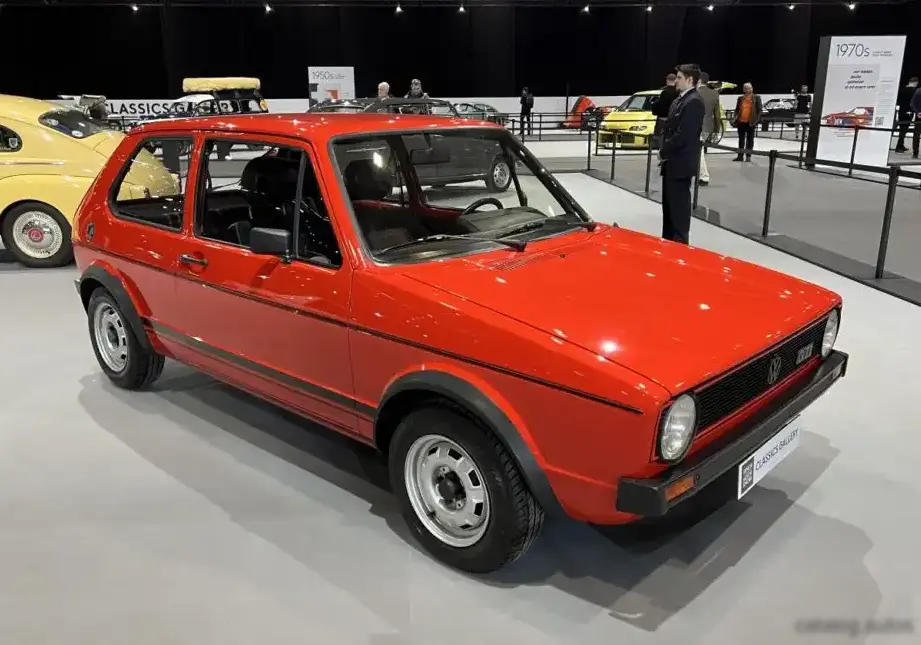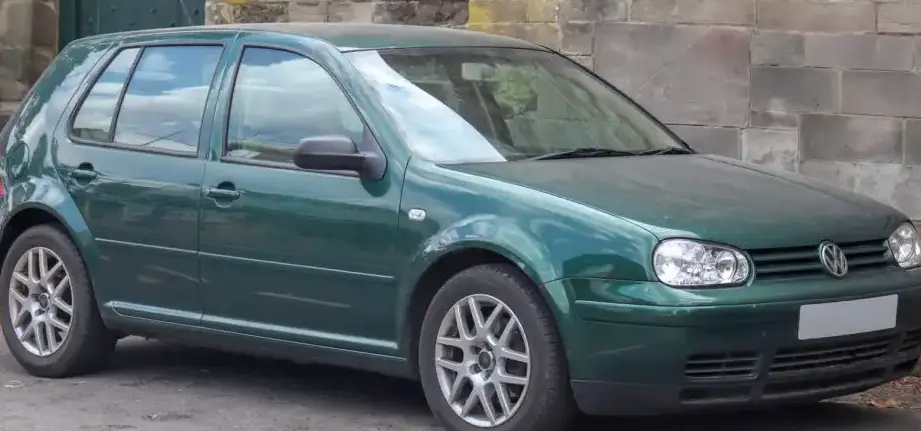
The Volkswagen Golf IV 1.9 TDI, producing 101 horsepower, was a mainstay of the fourth-generation Golf lineup, manufactured primarily between 2002 and 2003. Positioned as a fuel-efficient and practical option, it occupied a middle ground within the Golf IV range, slotting below the more powerful petrol variants like the 1.8T and the higher-output TDI models, but above the base specification 1.4-liter engine. This variant was particularly popular in European markets where diesel engines held a significant share of the automotive landscape, offering a compelling blend of economy and usability for everyday driving. It was available in both 3-door and 5-door hatchback body styles.
Technical Specifications
| Brand | Volkswagen |
| Model | Golf |
| Generation | Golf IV |
| Type (Engine) | 1.9 TDI (101 Hp) |
| Start of production | 2002 |
| End of production | 2003 |
| Powertrain Architecture | Internal Combustion engine |
| Body type | Hatchback |
| Seats | 5 |
| Doors | 3-5 |
| Fuel consumption (urban) | 6.8 l/100 km (34.6 US mpg, 41.5 UK mpg, 14.7 km/l) |
| Fuel consumption (extra urban) | 4.3 l/100 km (54.7 US mpg, 65.7 UK mpg, 23.3 km/l) |
| Fuel consumption (combined) | 5.2 l/100 km (45.2 US mpg, 54.3 UK mpg, 19.2 km/l) |
| Fuel Type | Diesel |
| Acceleration 0 – 100 km/h | 11.3 sec |
| Acceleration 0 – 62 mph | 11.3 sec |
| Acceleration 0 – 60 mph | 10.7 sec |
| Maximum speed | 188 km/h (116.82 mph) |
| Weight-to-power ratio | 11.9 kg/Hp, 83.8 Hp/tonne |
| Weight-to-torque ratio | 5 kg/Nm, 199.2 Nm/tonne |
| Power | 101 Hp @ 4000 rpm |
| Power per litre | 53.3 Hp/l |
| Torque | 240 Nm @ 1800 rpm (177.01 lb.-ft. @ 1800 rpm) |
| Engine layout | Front, Longitudinal |
| Engine Model/Code | ATD, AXR, BEW |
| Engine displacement | 1896 cm3 (115.7 cu. in.) |
| Number of cylinders | 4 |
| Engine configuration | Inline |
| Cylinder Bore | 79.5 mm (3.13 in.) |
| Piston Stroke | 95.5 mm (3.76 in.) |
| Compression ratio | 19:1 |
| Number of valves per cylinder | 2 |
| Fuel injection system | Pump-nozzle (Unit Injector) |
| Engine aspiration | Turbocharger, Intercooler |
| Valvetrain | OHC |
| Engine oil capacity | 4.5 l (4.76 US qt | 3.96 UK qt) |
| Coolant | 6 l (6.34 US qt | 5.28 UK qt) |
| Kerb Weight | 1205 kg (2656.57 lbs.) |
| Max. weight | 1740 kg (3836.04 lbs.) |
| Max load | 535 kg (1179.47 lbs.) |
| Trunk (boot) space – minimum | 330 l (11.65 cu. ft.) |
| Trunk (boot) space – maximum | 1184 l (41.81 cu. ft.) |
| Fuel tank capacity | 55 l (14.53 US gal | 12.1 UK gal) |
| Length | 4149 mm (163.35 in.) |
| Width | 1735 mm (68.31 in.) |
| Height | 1444 mm (56.85 in.) |
| Wheelbase | 2511 mm (98.86 in.) |
| Front track | 1513 mm (59.57 in.) |
| Rear (Back) track | 1494 mm (58.82 in.) |
| Minimum turning circle | 11 m (36.09 ft.) |
| Drivetrain Architecture | Front wheel drive |
| Drive wheel | Front wheel drive |
| Number of gears | 5 gears, manual transmission |
| Front suspension | Wishbone |
| Rear suspension | Coil spring |
| Front brakes | Ventilated discs |
| Rear brakes | Disc |
| Assisting systems | ABS (Anti-lock braking system) |
| Steering type | Steering rack and pinion |
| Power steering | Hydraulic Steering |
| Tires size | 195/65 R15 V |
| Wheel rims size | 15 |
Powertrain & Engine Architecture
The heart of the Golf IV 1.9 TDI (101 Hp) is the 1.9-liter, four-cylinder diesel engine. Common engine codes for this output included ATD, AXR, and BEW, each with minor variations. This engine utilized a pump-nozzle (unit injector) fuel injection system, a technology that allowed for precise fuel delivery and contributed to the engine’s efficiency and relatively low emissions for its time. The engine featured an overhead camshaft (OHC) valvetrain operating two valves per cylinder. A turbocharger with an intercooler was employed to boost power output, providing increased torque and improved responsiveness. The engine’s longitudinal mounting within the engine bay was a characteristic of many Volkswagen Group vehicles of this era. The 5-speed manual transmission was the standard offering, providing a balance between fuel economy and drivability.
Driving Characteristics
The 101 hp 1.9 TDI offered a distinctly different driving experience compared to the higher-performance Golf IV variants. Acceleration was respectable, with a 0-60 mph time of around 10.7 seconds, but it wasn’t designed for outright speed. Instead, the focus was on torque delivery. The 240 Nm (177 lb-ft) of torque, available from a low 1800 rpm, provided ample pulling power for everyday driving and overtaking maneuvers. The gear ratios in the 5-speed manual transmission were well-suited to maximizing fuel efficiency, with a relatively long final drive. Compared to the 1.8T petrol engine, the TDI offered significantly more low-end grunt but lacked the petrol engine’s willingness to rev. The manual transmission provided a more engaging driving experience than the optional 4-speed automatic, which could feel sluggish and detract from the engine’s torque.
Equipment & Trim Levels
The Golf IV 1.9 TDI (101 Hp) typically came with a reasonable level of standard equipment. This generally included central locking, power windows, power steering, and an anti-lock braking system (ABS). Interior upholstery was typically cloth, with a functional, if somewhat basic, dashboard layout. Optional extras included alloy wheels, a sunroof, air conditioning, and a CD stereo system. Trim levels varied depending on the market, but generally followed a progression from base ‘Trendline’ to mid-range ‘Comfortline’ and higher-specification ‘Highline’ models. Higher trims offered features like climate control, upgraded upholstery, and additional safety equipment.
Chassis & Braking
The Golf IV’s chassis was a well-regarded design, providing a good balance between ride comfort and handling. The front suspension utilized a wishbone setup, while the rear employed a coil spring arrangement. Braking was typically handled by ventilated discs on the front wheels and solid discs on the rear. ABS was standard, enhancing braking performance and stability. Stabilizer bars were fitted to both the front and rear axles to reduce body roll during cornering. The suspension setup was tuned to prioritize comfort, making it a suitable vehicle for long journeys.
Market Reception & Comparison
The Golf IV 1.9 TDI (101 Hp) was well-received by critics and consumers alike, particularly in Europe. It was praised for its fuel efficiency, reliability, and practicality. Compared to the 1.8T petrol engine, the TDI offered significantly better fuel economy, making it a more economical choice for high-mileage drivers. However, the 1.8T provided a more refined driving experience and superior performance. The higher-output TDI variants (130 hp and 150 hp) offered more performance but came at a higher price point. The 101 hp TDI struck a good balance between cost, economy, and usability.
Legacy
The 1.9 TDI engine, in various iterations, proved to be exceptionally durable and reliable. The Golf IV 1.9 TDI (101 Hp) continues to be a popular choice in the used car market, prized for its fuel efficiency and relatively low maintenance costs. While age and mileage can necessitate repairs, the engine itself is known for its longevity. Parts availability remains good, and the Golf IV’s simple mechanical design makes it relatively easy to maintain and repair. The 1.9 TDI engine’s reputation for reliability has cemented its place as a benchmark for diesel engine technology in the compact car segment.