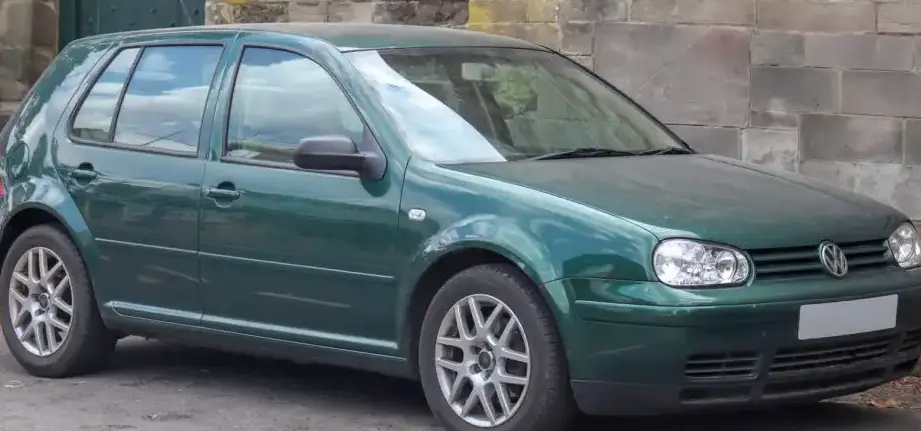
The Volkswagen Golf IV 1.9 TDI (90 hp) was a popular variant of the fourth-generation Golf, produced between 1997 and 2003. Positioned as an entry-level diesel offering within the Golf IV range (chassis code 1HX0/A3), it provided fuel-efficient transportation for a broad customer base, particularly in Europe where diesel engines held a significant market share. This model aimed to balance affordability with the practicality and build quality for which the Golf was renowned. It served as a stepping stone into the Golf lineup, offering a more economical alternative to the petrol (gasoline) engines and the more powerful TDI variants.
Technical Specifications
| Brand | Volkswagen |
| Model | Golf |
| Generation | Golf IV |
| Type (Engine) | 1.9 TDI (90 Hp) |
| Start of production | 1997 |
| End of production | 2003 |
| Powertrain Architecture | Internal Combustion engine |
| Body type | Hatchback |
| Seats | 5 |
| Doors | 3-5 |
| Fuel consumption (urban) | 6.5 l/100 km (36.2 US mpg) |
| Fuel consumption (extra urban) | 4.1 l/100 km (57.4 US mpg) |
| Fuel Type | Diesel |
| Acceleration 0 – 100 km/h | 12 sec |
| Acceleration 0 – 62 mph | 12 sec |
| Acceleration 0 – 60 mph | 11.4 sec |
| Maximum speed | 180 km/h (111.85 mph) |
| Weight-to-power ratio | 13.3 kg/Hp |
| Weight-to-torque ratio | 5.9 kg/Nm |
| Power | 90 Hp @ 4000 rpm |
| Power per litre | 47.5 Hp/l |
| Torque | 202 Nm @ 1900 rpm (148.99 lb.-ft. @ 1900 rpm) |
| Engine layout | Front, Transverse |
| Engine Model/Code | AGR, ALH |
| Engine displacement | 1896 cm3 (115.7 cu. in.) |
| Number of cylinders | 4 |
| Engine configuration | Inline |
| Cylinder Bore | 79.5 mm (3.13 in.) |
| Piston Stroke | 95.5 mm (3.76 in.) |
| Compression ratio | 19.5:1 |
| Number of valves per cylinder | 2 |
| Fuel injection system | Direct injection |
| Engine aspiration | Turbocharger, Intercooler |
| Valvetrain | OHC |
| Engine oil capacity | 4.5 l (4.76 US qt | 3.96 UK qt) |
| Coolant | 6 l (6.34 US qt | 5.28 UK qt) |
| Kerb Weight | 1200 kg (2645.55 lbs.) |
| Max. weight | 1740 kg (3836.04 lbs.) |
| Max load | 540 kg (1190.5 lbs.) |
| Trunk (boot) space – minimum | 330 l (11.65 cu. ft.) |
| Trunk (boot) space – maximum | 1185 l (41.85 cu. ft.) |
| Fuel tank capacity | 55 l (14.53 US gal | 12.1 UK gal) |
| Length | 4149 mm (163.35 in.) |
| Width | 1735 mm (68.31 in.) |
| Height | 1439 mm (56.65 in.) |
| Wheelbase | 2511 mm (98.86 in.) |
| Front track | 1513 mm (59.57 in.) |
| Rear (Back) track | 1494 mm (58.82 in.) |
| Drivetrain Architecture | The Internal combustion engine (ICE) drives the front wheels of the vehicle. |
| Drive wheel | Front wheel drive |
| Number of gears and type of gearbox | 5 gears, manual transmission |
| Front suspension | Wishbone |
| Rear suspension | Coil spring |
| Front brakes | Ventilated discs |
| Rear brakes | Disc |
| Assisting systems | ABS (Anti-lock braking system) |
| Steering type | Steering rack and pinion |
| Power steering | Hydraulic Steering |
| Tires size | 195/65 R15 |
| Wheel rims size | 6J x 15 |
Powertrain & Engine Architecture
The heart of the Golf IV 1.9 TDI (90 hp) was the 1.9-liter, four-cylinder diesel engine, typically identified by engine codes AGR or ALH. These engines were direct injection diesels, utilizing Bosch’s EDC (Electronic Diesel Control) system. This system precisely controlled fuel delivery via electronically controlled injectors, optimizing combustion for both power and efficiency. The engine featured an overhead camshaft (OHC) valvetrain operating two valves per cylinder. A turbocharger with an intercooler was standard, boosting power output and improving torque delivery. The intercooler cooled the compressed air from the turbocharger, increasing its density and further enhancing performance. The 5-speed manual transmission was the most common pairing, although a 4-speed automatic transmission was also available, albeit less frequently chosen due to its impact on fuel economy and performance.
Driving Characteristics
The 90 hp TDI with a manual transmission offered a respectable, if not exhilarating, driving experience. Acceleration from 0-60 mph took around 11.4 seconds, and top speed was approximately 112 mph. The engine’s 202 Nm (149 lb-ft) of torque, available from a low 1900 rpm, provided good responsiveness in everyday driving situations. The automatic transmission version, while offering convenience, noticeably dulled performance. Gear changes were relatively slow, and the transmission tended to hunt for gears, especially under load. The manual transmission allowed for better control and maximized the engine’s potential. Fuel economy was a major strength, with combined cycle figures averaging around 45-50 mpg (UK) or 36-40 mpg (US), making it an exceptionally economical choice for long-distance travel.
Equipment & Trim Levels
The 1.9 TDI (90 hp) typically occupied the lower to mid-range of the Golf IV lineup. Standard equipment generally included central locking, power steering, front airbags, and an adjustable steering column. Higher trim levels, such as ‘Trendline’ or ‘Comfortline’, added features like alloy wheels, air conditioning, electric windows, and a radio/cassette player. Optional extras included a sunroof, upgraded audio systems, and parking sensors. Interior upholstery was typically cloth, with a relatively simple dashboard layout. The overall interior ambiance was functional and durable, reflecting the Golf’s reputation for practicality.
Chassis & Braking
The Golf IV 1.9 TDI (90 hp) utilized a MacPherson strut front suspension and a multi-link rear suspension, providing a comfortable and controlled ride. The suspension was tuned to prioritize comfort over outright sportiness. Braking systems varied depending on the trim level. Lower-spec models often featured disc brakes on the front and drum brakes on the rear, while higher-spec models had disc brakes all around. Anti-lock Braking System (ABS) was standard, enhancing safety and stability during braking. Stabilizer bars were fitted to both the front and rear axles to reduce body roll during cornering.
Market Reception & Comparison
The Golf IV 1.9 TDI (90 hp) was well-received by critics and consumers alike. It was praised for its fuel efficiency, reliability, and practicality. Compared to the higher-output TDI variants (like the 110 hp or 130 hp models), the 90 hp version offered a more affordable entry point into diesel Golf ownership. However, it lacked the performance of its more powerful siblings. Compared to the petrol (gasoline) engines, the TDI offered significantly better fuel economy, but at a slightly higher initial cost. The automatic transmission version was often criticized for its sluggish performance and reduced fuel efficiency.
Legacy
The 1.9 TDI engine, particularly the AGR and ALH codes, gained a reputation for exceptional durability and longevity. Properly maintained examples continue to be seen on the roads today, often with high mileage. The Golf IV 1.9 TDI (90 hp) remains a popular choice in the used car market, particularly for those seeking an economical and reliable vehicle. While not a performance icon, it represents a sweet spot in the Golf IV range, offering a blend of practicality, fuel efficiency, and affordability that continues to appeal to a wide range of buyers. The engine’s robust design and relatively simple mechanicals make it a favorite among DIY mechanics and those seeking a dependable and easily maintained vehicle.