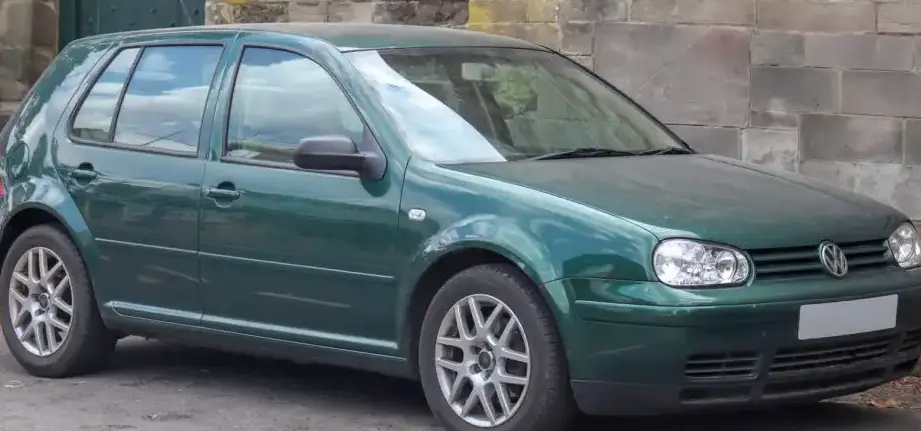
The Volkswagen Golf IV 2.8 V6 4motion, produced between 1999 and 2003, represented a performance-oriented variant within the fourth generation (Mk IV) Golf lineup. Built on the 1HX0/A3 platform, this model aimed to deliver a more engaging driving experience than the standard Golf offerings, combining a potent V6 engine with Volkswagen’s 4motion all-wheel-drive system. It occupied a premium position in the Golf IV range, slotting above the 1.8L and 2.0L models, and offering a direct competitor to other hot hatches of the era. The 2.8 V6 4motion was available in both 3-door and 5-door hatchback body styles.
Technical Specifications
| Brand | Volkswagen |
| Model | Golf |
| Generation | Golf IV |
| Type (Engine) | 2.8 V6 (204 Hp) 4motion |
| Start of production | 1999 |
| End of production | 2003 |
| Powertrain Architecture | Internal Combustion engine |
| Body type | Hatchback |
| Seats | 5 |
| Doors | 3-5 |
| Fuel consumption (urban) | 15.3 l/100 km (15.4 US mpg, 18.5 UK mpg, 6.5 km/l) |
| Fuel consumption (extra urban) | 8.1 l/100 km (29 US mpg, 34.9 UK mpg, 12.3 km/l) |
| Fuel Type | Petrol (Gasoline) |
| Acceleration 0 – 100 km/h | 7.1 sec |
| Acceleration 0 – 62 mph | 7.1 sec |
| Acceleration 0 – 60 mph | 6.7 sec |
| Maximum speed | 235 km/h (146.02 mph) |
| Weight-to-power ratio | 6.9 kg/Hp, 145.7 Hp/tonne |
| Weight-to-torque ratio | 5.2 kg/Nm, 192.9 Nm/tonne |
| Power | 204 Hp @ 6200 rpm |
| Power per litre | 73.1 Hp/l |
| Torque | 270 Nm @ 3200 rpm (199.14 lb.-ft. @ 3200 rpm) |
| Engine layout | Front, Transverse |
| Engine Model/Code | AQP, AUE, BDE |
| Engine displacement | 2792 cm3 (170.38 cu. in.) |
| Number of cylinders | 6 |
| Engine configuration | V-engine |
| Cylinder Bore | 81 mm (3.19 in.) |
| Piston Stroke | 90.3 mm (3.56 in.) |
| Compression ratio | 10:1 |
| Number of valves per cylinder | 4 |
| Fuel injection system | Multi-port manifold injection |
| Engine aspiration | Naturally aspirated engine |
| Valvetrain | DOHC |
| Engine oil capacity | 5.5 l (5.81 US qt, 4.84 UK qt) |
| Coolant | 11 l (11.62 US qt, 9.68 UK qt) |
| Kerb Weight | 1400 kg (3086.47 lbs.) |
| Max. weight | 1910 kg (4210.83 lbs.) |
| Max load | 510 kg (1124.36 lbs.) |
| Trunk (boot) space – minimum | 245 l (8.65 cu. ft.) |
| Trunk (boot) space – maximum | 1185 l (41.85 cu. ft.) |
| Fuel tank capacity | 62 l (16.38 US gal, 13.64 UK gal) |
| Length | 4149 mm (163.35 in.) |
| Width | 1735 mm (68.31 in.) |
| Height | 1439 mm (56.65 in.) |
| Wheelbase | 2518 mm (99.13 in.) |
| Front track | 1513 mm (59.57 in.) |
| Rear (Back) track | 1487 mm (58.54 in.) |
| Drive wheel | All wheel drive (4×4) |
| Number of gears and type of gearbox | 6 gears, manual transmission |
| Front suspension | Wishbone |
| Rear suspension | Coil spring |
| Front brakes | Ventilated discs |
| Rear brakes | Ventilated discs |
| Assisting systems | ABS (Anti-lock braking system) |
| Steering type | Steering rack and pinion |
| Power steering | Hydraulic Steering |
| Tires size | 205/55 R16 |
| Wheel rims size | 6.5J x 16 |
Powertrain & Engine Architecture
The heart of the Golf IV 2.8 V6 4motion is the AQP, AUE, or BDE engine code, a 2.8-liter naturally aspirated V6 engine. This engine featured a 60-degree V-angle, contributing to a relatively compact design for a six-cylinder unit. It employed multi-port fuel injection and a double overhead camshaft (DOHC) valvetrain with four valves per cylinder. The engine’s architecture prioritized smooth power delivery and refinement over outright peak horsepower. The 4motion system, a permanent all-wheel-drive setup utilizing a viscous coupling, distributed power between the front and rear axles, enhancing traction and stability, particularly in adverse weather conditions. The standard transmission was a robust 6-speed manual gearbox, although a 5-speed Tiptronic automatic transmission was also available as an option. The automatic transmission, while offering convenience, slightly impacted acceleration times compared to the manual.
Driving Characteristics
The 2.8 V6 4motion offered a noticeably different driving experience compared to the lower-powered Golf IV variants. The V6 engine provided ample torque throughout the rev range, making it responsive in everyday driving situations. Acceleration to 60 mph took approximately 6.7-7.1 seconds, depending on the transmission. The 4motion system instilled a sense of confidence, particularly on slippery surfaces, and reduced understeer during cornering. The manual transmission offered precise shifts and allowed drivers to fully exploit the engine’s power. The automatic transmission, while smooth, felt less engaging and resulted in a slight performance deficit. The suspension was tuned for a balance between comfort and handling, providing a reasonably compliant ride without sacrificing stability.
Equipment & Trim Levels
The Golf IV 2.8 V6 4motion typically came well-equipped, reflecting its position as a premium trim level. Standard features included air conditioning, power windows and locks, alloy wheels, and an upgraded audio system. Optional extras included leather upholstery, sunroof, heated front seats, and a more sophisticated climate control system. The interior featured a functional and ergonomic design, with a focus on practicality. Trim levels varied slightly depending on the market, but generally offered a range of customization options to suit individual preferences.
Chassis & Braking
The Golf IV 2.8 V6 4motion utilized a MacPherson strut front suspension and a multi-link rear suspension, providing a good balance of ride comfort and handling precision. The braking system consisted of ventilated disc brakes on all four wheels, offering ample stopping power. Anti-lock Braking System (ABS) was standard. Due to the increased weight of the V6 engine and 4motion system, the suspension components were often slightly stiffer compared to the lower-powered Golf models. Stabilizer bars were fitted front and rear to reduce body roll during cornering.
Market Reception & Comparison
The Golf IV 2.8 V6 4motion was generally well-received by automotive critics. It was praised for its smooth engine, all-wheel-drive capability, and overall refinement. However, some reviewers noted that the fuel economy was relatively poor compared to the smaller-engined Golf models. Compared to the 1.8T and 2.0L versions, the V6 offered significantly more power and a more luxurious driving experience, but at a higher price point. The V6 4motion also provided a compelling alternative to rivals such as the Audi A3 and BMW 3 Series Compact.
Legacy
The Golf IV 2.8 V6 4motion has developed a loyal following among enthusiasts. The engine, while not the most fuel-efficient, is known for its durability and smooth operation. The 4motion system remains a valuable asset in regions with inclement weather. Today, well-maintained examples are sought after by collectors and drivers who appreciate a unique and capable hatchback. While maintenance costs can be higher than those of the lower-powered Golf models, the V6 4motion offers a rewarding driving experience that continues to appeal to a dedicated fanbase. The engine’s relatively simple design, compared to later turbocharged engines, contributes to its long-term reliability, making it a viable option for those seeking a classic performance hatchback.