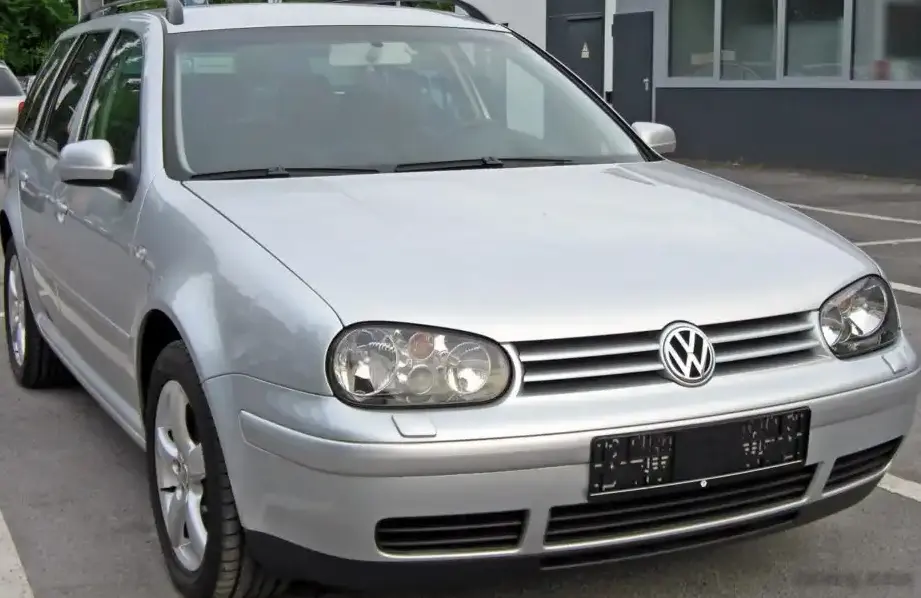
The Volkswagen Golf IV Variant 1.9 TDI, produced from February 2000 to June 2006, represents a practical and fuel-efficient offering within the fourth-generation Golf lineup. Positioned as a station wagon (estate) variant, it catered to buyers needing increased cargo capacity without sacrificing the Golf’s renowned handling and build quality. This particular model, equipped with the 1.9-liter TDI engine producing 101 horsepower, was a popular choice in European markets where diesel fuel was readily available and taxation favored smaller displacement engines. It sat within the Golf IV Variant range as a mid-range option, offering a balance between performance and economy, slotting below the more powerful petrol variants and above the base-level trims.
Technical Specifications
| Brand | Volkswagen |
| Model | Golf |
| Generation | Golf IV Variant |
| Type (Engine) | 1.9 TDI (101 Hp) |
| Start of production | February, 2000 |
| End of production | June, 2006 |
| Powertrain Architecture | Internal Combustion engine |
| Body type | Station wagon (estate) |
| Seats | 5 |
| Doors | 5 |
| Fuel consumption (urban) | 6.6 l/100 km (35.6 US mpg, 42.8 UK mpg, 15.2 km/l) |
| Fuel consumption (extra urban) | 4.3 l/100 km (54.7 US mpg, 65.7 UK mpg, 23.3 km/l) |
| Fuel consumption (combined) | 5.1 l/100 km (46.1 US mpg, 55.4 UK mpg, 19.6 km/l) |
| Fuel Type | Diesel |
| Acceleration 0 – 100 km/h | 12.5 sec |
| Acceleration 0 – 62 mph | 12.5 sec |
| Acceleration 0 – 60 mph | 11.9 sec |
| Maximum speed | 188 km/h (116.82 mph) |
| Weight-to-power ratio | 13.1 kg/Hp, 76.5 Hp/tonne |
| Weight-to-torque ratio | 5.5 kg/Nm, 181.7 Nm/tonne |
| Power | 101 Hp @ 4000 rpm |
| Power per litre | 53.3 Hp/l |
| Torque | 240 Nm @ 1800 rpm (177.01 lb.-ft. @ 1800 rpm) |
| Engine layout | Front, Longitudinal |
| Engine Model/Code | ATD, AXR |
| Engine displacement | 1896 cm3 (115.7 cu. in.) |
| Number of cylinders | 4 |
| Engine configuration | Inline |
| Cylinder Bore | 79.5 mm (3.13 in.) |
| Piston Stroke | 95.5 mm (3.76 in.) |
| Compression ratio | 19:1 |
| Number of valves per cylinder | 2 |
| Fuel injection system | Pump-nozzle (Unit Injector) |
| Engine aspiration | Turbocharger, Intercooler |
| Valvetrain | OHC |
| Engine oil capacity | 4.5 l (4.76 US qt | 3.96 UK qt) |
| Coolant | 6 l (6.34 US qt | 5.28 UK qt) |
| Kerb Weight | 1321 kg (2912.31 lbs.) |
| Max. weight | 1840 kg (4056.51 lbs.) |
| Max load | 519 kg (1144.2 lbs.) |
| Trunk (boot) space – minimum | 460 l (16.24 cu. ft.) |
| Trunk (boot) space – maximum | 1470 l (51.91 cu. ft.) |
| Fuel tank capacity | 55 l (14.53 US gal | 12.1 UK gal) |
| Length | 4397 mm (173.11 in.) |
| Width | 1735 mm (68.31 in.) |
| Height | 1485 mm (58.46 in.) |
| Wheelbase | 2515 mm (99.02 in.) |
| Front track | 1513 mm (59.57 in.) |
| Rear (Back) track | 1494 mm (58.82 in.) |
| Drivetrain Architecture | The Internal combustion engine (ICE) drives the front wheels of the vehicle. |
| Drive wheel | Front wheel drive |
| Number of gears and type of gearbox | 5 gears, manual transmission |
| Front suspension | Spring Strut |
| Rear suspension | Coil spring |
| Front brakes | Ventilated discs |
| Rear brakes | Disc |
| Assisting systems | ABS (Anti-lock braking system) |
| Steering type | Steering rack and pinion |
| Power steering | Hydraulic Steering |
| Tires size | 195/65 R15 V |
| Wheel rims size | 15 |
Powertrain & Engine Architecture
The heart of the Golf IV Variant 1.9 TDI is the 1.9-liter, four-cylinder diesel engine, identifiable by engine codes ATD and AXR depending on the specific production year and market. This engine is a member of Volkswagen’s well-regarded TDI family, known for its durability and fuel efficiency. It utilizes a pump-nozzle (unit injector) fuel injection system, a technology that allowed for precise fuel delivery and contributed to the engine’s relatively high torque output for its size. The engine features an overhead camshaft (OHC) valvetrain with two valves per cylinder. A turbocharger with an intercooler is employed to boost power and improve combustion efficiency. The engine is longitudinally mounted in the front of the vehicle, driving the front wheels. The five-speed manual transmission was the standard offering, providing a balance between fuel economy and drivability.
Driving Characteristics
The 101 hp 1.9 TDI engine, paired with the five-speed manual transmission, delivered respectable, though not exhilarating, performance. Acceleration from 0 to 60 mph took approximately 11.9 seconds, and the top speed was around 116.82 mph. The engine’s strength lay in its strong low-end torque, making it well-suited for everyday driving and hauling loads. Compared to the more powerful petrol versions of the Golf IV Variant, the TDI offered significantly better fuel economy but lacked the same level of outright acceleration. The gear ratios were optimized for fuel efficiency, meaning the engine could feel somewhat strained at higher speeds. The manual transmission provided a more engaging driving experience than the optional four-speed automatic, which further reduced performance and responsiveness.
Equipment & Trim Levels
The Golf IV Variant 1.9 TDI typically came equipped with a reasonable level of standard features. Interior upholstery was usually cloth, with options for upgraded materials available. The dashboard layout was typical of the Golf IV, featuring a functional and straightforward design. Standard equipment included power windows, central locking, and an anti-lock braking system (ABS). Optional extras included air conditioning, alloy wheels, a sunroof, and a radio/CD player. Higher trim levels offered additional features such as upgraded interior trim, automatic climate control, and parking sensors.
Chassis & Braking
The Golf IV Variant’s chassis featured a spring strut front suspension and a coil spring rear suspension. The suspension was tuned for a comfortable ride, but also provided decent handling characteristics. Braking duties were handled by ventilated discs at the front and solid discs at the rear. The ABS system helped to maintain control during hard braking. Stabilizer bars were fitted to both the front and rear axles to reduce body roll during cornering. The weight distribution was fairly balanced, contributing to the car’s predictable handling.
Market Reception & Comparison
The Golf IV Variant 1.9 TDI was well-received by critics and consumers alike, particularly in Europe. It was praised for its fuel efficiency, practicality, and build quality. Compared to other trims in the Golf IV Variant lineup, the 1.9 TDI offered a compelling value proposition for buyers prioritizing economy and low running costs. While the petrol versions offered more power, they were less fuel-efficient and often more expensive to maintain. The 1.9 TDI was also generally considered more reliable than some of the more complex petrol engines.
Legacy
The 1.9 TDI engine has earned a reputation for exceptional durability and longevity. Many examples of the Golf IV Variant 1.9 TDI are still on the road today, testament to the engine’s robust design and construction. The pump-nozzle injection system, while advanced for its time, can require specialized maintenance. However, with proper care and regular servicing, these engines can reliably exceed 200,000 miles. In the used car market, the Golf IV Variant 1.9 TDI remains a popular choice for buyers seeking a practical, fuel-efficient, and affordable station wagon. Its reputation for reliability and low running costs continues to make it a desirable option.