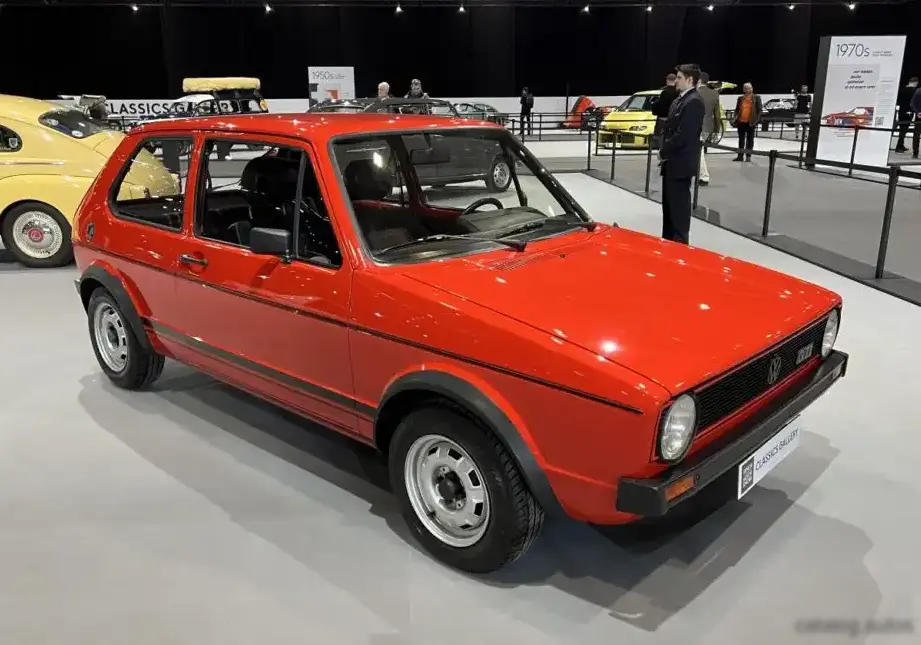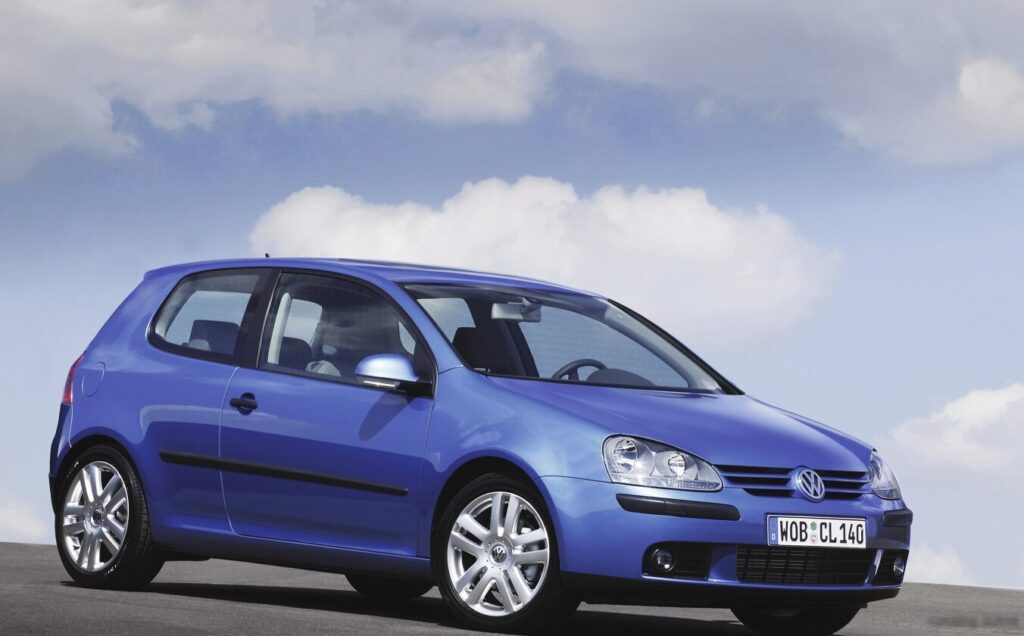
The Volkswagen Golf V, produced from 2003 to 2009, represented a significant evolution for Volkswagen’s iconic hatchback. The three-door variant, introduced as a more sporty and affordable option, was particularly popular in Europe. Within the Golf V range, the 1.4 16V model, producing 80 horsepower, served as the entry-level engine option, primarily marketed towards younger drivers and those seeking economical transportation. Production of this specific configuration ran from 2006 to 2008, and it occupied a key position in the lineup, offering a balance between affordability and the Golf’s renowned practicality.
Technical Specifications
| Brand | Volkswagen |
| Model | Golf |
| Generation | Golf V (3-door) |
| Type (Engine) | 1.4 16V (80 Hp) |
| Start of production | 2006 |
| End of production | 2008 |
| Powertrain Architecture | Internal Combustion engine |
| Body type | Hatchback |
| Seats | 5 |
| Doors | 3 |
| Fuel consumption (urban) | 9.4-9.6 l/100 km (25 – 24.5 US mpg) |
| Fuel consumption (extra urban) | 5.5-5.7 l/100 km (42.8 – 41.3 US mpg) |
| Fuel consumption (combined) | 6.9-7.1 l/100 km (34.1 – 33.1 US mpg) |
| CO2 emissions | 165-170 g/km |
| Fuel Type | Petrol (Gasoline) |
| Acceleration 0 – 100 km/h | 13.9 sec |
| Acceleration 0 – 62 mph | 13.9 sec |
| Acceleration 0 – 60 mph | 13.2 sec |
| Maximum speed | 168 km/h (104.39 mph) |
| Emission standard | Euro 4 |
| Weight-to-power ratio | 14.4 kg/Hp |
| Weight-to-torque ratio | 8.8 kg/Nm |
| Power | 80 Hp @ 5000 rpm |
| Torque | 132 Nm @ 3800 rpm (97.36 lb.-ft. @ 3800 rpm) |
| Engine layout | Front, Transverse |
| Engine Model/Code | BUD |
| Engine displacement | 1390 cm3 (84.82 cu. in.) |
| Number of cylinders | 4 |
| Engine configuration | Inline |
| Cylinder Bore | 76.5 mm (3.01 in.) |
| Piston Stroke | 75.6 mm (2.98 in.) |
| Compression ratio | 10.5:1 |
| Number of valves per cylinder | 4 |
| Fuel injection system | Multi-port manifold injection |
| Engine aspiration | Naturally aspirated |
| Valvetrain | DOHC |
| Engine oil capacity | 3.2 l (3.38 US qt | 2.82 UK qt) |
| Coolant capacity | 5.6 l (5.92 US qt | 4.93 UK qt) |
| Kerb Weight | 1155-1323 kg (2546.34 – 2916.72 lbs.) |
| Max. weight | 1740 kg (3836.04 lbs.) |
| Max load | 417-585 kg (919.33 – 1289.7 lbs.) |
| Trunk (boot) space – minimum | 350 l (12.36 cu. ft.) |
| Trunk (boot) space – maximum | 1305 l (46.09 cu. ft.) |
| Fuel tank capacity | 55 l (14.53 US gal | 12.1 UK gal) |
| Max. roof load | 75 kg (165.35 lbs.) |
| Permitted trailer load (8%) | 1200 kg (2645.55 lbs.) |
| Permitted trailer load (12%) | 1000 kg (2204.62 lbs.) |
| Permitted trailer load (unbraked) | 610 kg (1344.82 lbs.) |
| Permitted towbar download | 75 kg (165.35 lbs.) |
| Length | 4204 mm (165.51 in.) |
| Width | 1759 mm (69.25 in.) |
| Width including mirrors | 2010 mm (79.13 in.) |
| Height | 1485 mm (58.46 in.) |
| Wheelbase | 2578 mm (101.5 in.) |
| Front track | 1539 mm (60.59 in.) |
| Rear track | 1528 mm (60.16 in.) |
| Front overhang | 880 mm (34.65 in.) |
| Rear overhang | 746 mm (29.37 in.) |
| Turning circle | 10.9 m (35.76 ft.) |
| Drivetrain | Front wheel drive |
| Number of gears | 5 |
| Gearbox type | Manual transmission |
| Front suspension | Independent, McPherson with coil spring and anti-roll bar |
| Rear suspension | Independent multi-link with stabilizer |
| Front brakes | Ventilated discs |
| Rear brakes | Disc |
| Assisting systems | ABS |
| Steering type | Steering rack and pinion |
| Power steering | Electric |
| Tires size | 195/65 R15; 205/55 R16; 225/45 R17 |
| Wheel rims size | 6J x 15; 6.5J x 15; 6.5J x 16; 7J x 17 |
Powertrain & Engine Architecture
The 1.4 16V engine, identified by the BUD engine code, was a naturally aspirated, inline-four cylinder petrol engine. It featured a double overhead camshaft (DOHC) valvetrain operating four valves per cylinder. Fuel delivery was managed by a multi-port fuel injection system, a common setup for engines of this era. The engine’s 1390cc displacement produced 80 horsepower at 5000 rpm and 132 Nm (97.36 lb-ft) of torque at 3800 rpm. This engine was paired with a five-speed manual transmission, which was the standard offering. While an automatic transmission was available as an option, it was less common and typically resulted in slightly reduced performance and fuel economy. The engine’s design prioritized fuel efficiency and smooth operation over outright performance.
Driving Characteristics
The 1.4 16V Golf V with the manual transmission offered adequate, though not exhilarating, performance. Acceleration from 0 to 60 mph took around 13.2 seconds, and the top speed was approximately 104 mph. The engine felt relatively strained when pushed hard, particularly when fully loaded or climbing hills. The five-speed gearbox was well-matched to the engine’s characteristics, allowing drivers to keep the engine in its optimal power band. Compared to the more powerful 1.6 or 2.0-liter engines in the Golf V range, the 1.4 felt noticeably slower. However, it provided a more economical and forgiving driving experience, making it suitable for urban commuting and less demanding driving situations.
Equipment & Trim Levels
The 1.4 16V typically came equipped with a basic level of standard features. This included central locking, electric front windows, a basic audio system, and driver and passenger airbags. Higher trim levels, such as Trendline and Comfortline, added features like alloy wheels, air conditioning, a multi-function display, and upgraded interior trim. Optional extras included a sunroof, parking sensors, and a more sophisticated audio system. Interior upholstery was typically cloth, with a relatively simple dashboard layout. The three-door configuration emphasized a sportier aesthetic, though it sacrificed some practicality compared to the five-door model.
Chassis & Braking
The Golf V’s chassis featured independent suspension all around – a McPherson strut setup at the front and a multi-link system at the rear. This provided a comfortable ride and decent handling characteristics. The 1.4 16V models typically used smaller wheels and tires (15 or 16 inch) compared to higher-spec versions. Braking was handled by ventilated discs at the front and solid discs at the rear. Anti-lock Braking System (ABS) was standard, enhancing safety. The suspension was tuned for comfort rather than outright sportiness, prioritizing ride quality over aggressive cornering.
Market Reception & Comparison
The 1.4 16V Golf V was generally well-received as an affordable and practical hatchback. Critics praised its fuel efficiency and comfortable ride, but noted its lack of outright performance. Compared to the 1.6-liter and 2.0-liter models, the 1.4 offered lower running costs but a less engaging driving experience. The 1.9 TDI diesel variant was also a popular alternative, offering superior fuel economy and torque. The 1.4 16V appealed to buyers who prioritized economy and practicality over performance, such as first-time drivers or those primarily using the car for urban commuting.
Legacy
The 1.4 16V engine, while not known for its longevity or high performance, proved to be reasonably reliable in the Golf V. Common issues included occasional oil leaks and sensor failures, but these were generally not major concerns. Today, these models are relatively affordable on the used car market. They represent a good entry point into Golf V ownership, offering a blend of practicality, fuel efficiency, and the Golf’s inherent build quality. However, potential buyers should be aware of the engine’s limitations and ensure that the car has been well-maintained. The BUD engine, while simple, is relatively easy to work on for DIY mechanics, contributing to its continued appeal in the used car market.