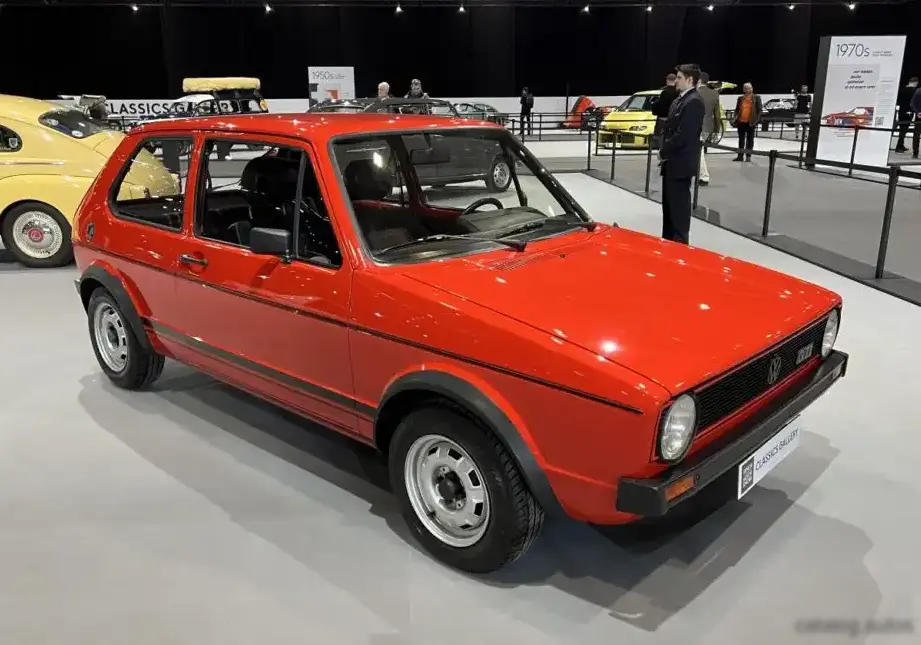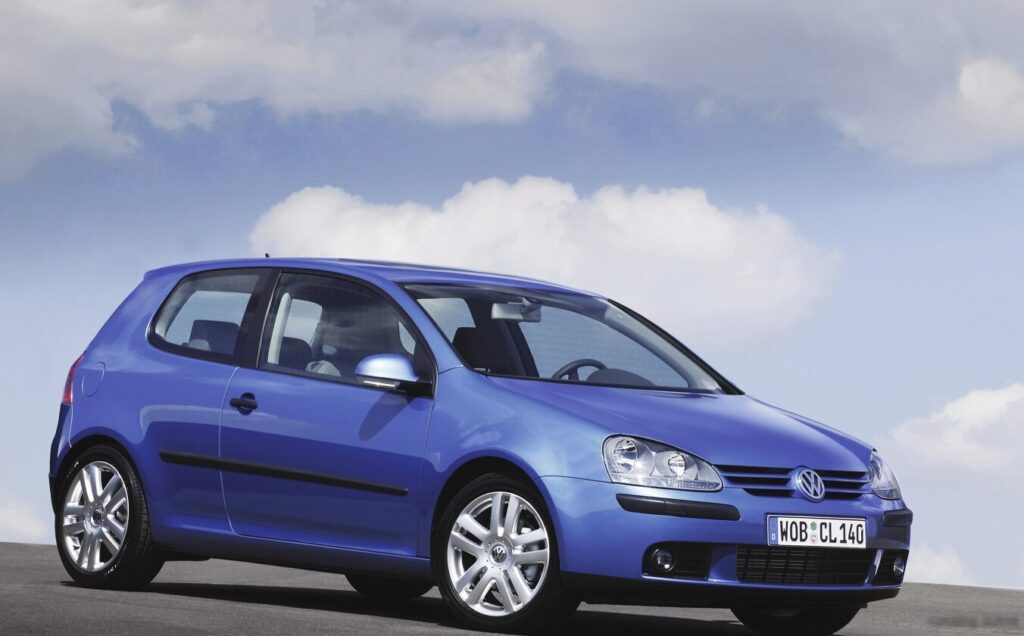
The Volkswagen Golf V, produced from 2003 to 2009, represented a significant evolution for the iconic hatchback. The three-door variant, introduced as a more sporty and youthful option, offered a range of engines and trim levels. Among these, the 1.4 TSI (122 hp) model, available from 2007 to 2008, occupied a key position in the lineup, bridging the gap between the entry-level naturally aspirated engines and the more potent TSI variants. This version aimed to provide a balance of performance, fuel efficiency, and affordability for European buyers.
Technical Specifications
| Brand | Volkswagen |
| Model | Golf |
| Generation | Golf V (3-door) |
| Type (Engine) | 1.4 TSI (122 Hp) |
| Start of production | 2007 |
| End of production | 2008 |
| Powertrain Architecture | Internal Combustion engine |
| Body type | Hatchback |
| Seats | 5 |
| Doors | 3 |
| Fuel consumption (urban) | 8.2 l/100 km (28.7 US mpg, 34.4 UK mpg, 12.2 km/l) |
| Fuel consumption (extra urban) | 5.2 l/100 km (45.2 US mpg, 54.3 UK mpg, 19.2 km/l) |
| Fuel consumption (combined) | 6.3 l/100 km (37.3 US mpg, 44.8 UK mpg, 15.9 km/l) |
| CO2 emissions | 149 g/km |
| Fuel Type | Petrol (Gasoline) |
| Acceleration 0 – 100 km/h | 9.4 sec |
| Acceleration 0 – 62 mph | 9.4 sec |
| Acceleration 0 – 60 mph | 8.9 sec |
| Maximum speed | 197 km/h (122.41 mph) |
| Emission standard | Euro 4 |
| Weight-to-power ratio | 9.9 kg/Hp, 101.2 Hp/tonne |
| Weight-to-torque ratio | 6 kg/Nm, 166 Nm/tonne |
| Power | 122 Hp @ 5000 rpm |
| Power per litre | 87.8 Hp/l |
| Torque | 200 Nm @ 1500-4000 rpm (147.51 lb.-ft. @ 1500-4000 rpm) |
| Engine layout | Front, Transverse |
| Engine Model/Code | EA111 / CAXA |
| Engine displacement | 1390 cm3 (84.82 cu. in.) |
| Number of cylinders | 4 |
| Engine configuration | Inline |
| Cylinder Bore | 76.5 mm (3.01 in.) |
| Piston Stroke | 75.6 mm (2.98 in.) |
| Compression ratio | 9.7:1 |
| Number of valves per cylinder | 4 |
| Fuel injection system | Direct injection |
| Engine aspiration | Turbocharger, Intercooler |
| Valvetrain | DOHC |
| Engine oil capacity | 3.6 l (3.8 US qt | 3.17 UK qt) |
| Coolant | 5.6 l (5.92 US qt | 4.93 UK qt) |
| Kerb Weight | 1205 kg (2656.57 lbs.) |
| Max. weight | 1820 kg (4012.41 lbs.) |
| Max load | 615 kg (1355.84 lbs.) |
| Trunk (boot) space – minimum | 350 l (12.36 cu. ft.) |
| Trunk (boot) space – maximum | 1305 l (46.09 cu. ft.) |
| Fuel tank capacity | 55 l (14.53 US gal | 12.1 UK gal) |
| Max. roof load | 75 kg (165.35 lbs.) |
| Permitted trailer load with brakes (8%) | 1600 kg (3527.4 lbs.) |
| Permitted trailer load with brakes (12%) | 1300 kg (2866.01 lbs.) |
| Permitted trailer load without brakes | 640 kg (1410.96 lbs.) |
| Permitted towbar download | 75 kg (165.35 lbs.) |
| Length | 4204 mm (165.51 in.) |
| Width | 1759 mm (69.25 in.) |
| Width including mirrors | 2010 mm (79.13 in.) |
| Height | 1485 mm (58.46 in.) |
| Wheelbase | 2578 mm (101.5 in.) |
| Front track | 1539 mm (60.59 in.) |
| Rear track | 1528 mm (60.16 in.) |
| Front overhang | 880 mm (34.65 in.) |
| Rear overhang | 746 mm (29.37 in.) |
| Minimum turning circle | 10.9 m (35.76 ft.) |
| Approach angle | 13.9° |
| Departure angle | 14.2° |
| Ramp-over angle | 9.4° |
| Drivetrain Architecture | Front wheel drive |
| Number of gears | 6 |
| Type of gearbox | Manual transmission |
| Front suspension | Independent, type McPherson with coil spring and anti-roll bar |
| Rear suspension | Independent multi-link spring suspension with stabilizer |
| Front brakes | Ventilated discs |
| Rear brakes | Disc |
| Assisting systems | ABS (Anti-lock braking system) |
| Steering type | Steering rack and pinion |
| Power steering | Electric Steering |
| Tires size | 195/65 R15; 205/55 R16; 225/45 R17 |
| Wheel rims size | 6J x 15; 6.5J x 15; 6.5J x 16; 7J x 17 |
INTRODUCTION
The Volkswagen Golf V 1.4 TSI (122 hp) three-door model was introduced in 2007 as part of the mid-cycle refresh of the Mk5 Golf. Built on the A5 (1HX0) platform, this variant aimed to offer a compelling blend of performance and economy. It slotted into the Golf V range as an upgrade from the base 1.4-liter naturally aspirated engine, providing a noticeable boost in power and torque thanks to the addition of a turbocharger and direct fuel injection. The three-door body style further emphasized the car’s sporty intentions, appealing to a younger demographic or those prioritizing a more dynamic driving experience.
Powertrain & Engine Architecture
At the heart of the Golf V 1.4 TSI lies the EA111 engine code, specifically the CAXA variant. This 1.4-liter inline-four engine utilizes direct fuel injection (FSI) and a turbocharger with an intercooler to deliver 122 horsepower at 5000 rpm and 200 Nm (147.51 lb-ft) of torque between 1500 and 4000 rpm. The direct injection system allows for precise fuel delivery, improving combustion efficiency and reducing emissions. The turbocharger provides a significant increase in power output compared to naturally aspirated engines of similar displacement. The engine features a dual overhead camshaft (DOHC) valvetrain with four valves per cylinder, optimizing gas flow for enhanced performance. The engine was typically paired with a six-speed manual transmission, although a seven-speed DSG (Direct-Shift Gearbox) dual-clutch automatic was also available as an option.
Driving Characteristics
The 1.4 TSI engine in the Golf V provided a noticeable improvement in performance over the base 1.4-liter engine. While not as powerful as the GTI or the larger 2.0-liter TSI variants, the 122 hp engine offered sufficient power for everyday driving and comfortable highway cruising. The turbocharger provides a good amount of low-end torque, making it easy to accelerate from a standstill or overtake slower traffic. The six-speed manual transmission allows drivers to keep the engine in its optimal power band, while the optional DSG automatic offers smooth and quick gear changes. Compared to the higher-output TSI engines, the 1.4 TSI felt less eager to rev, but it offered a more relaxed and fuel-efficient driving experience. The three-door configuration contributed to a slightly lighter overall weight, further enhancing the car’s agility.
Equipment & Trim Levels
The Golf V 1.4 TSI typically came equipped with a reasonable level of standard features. These included power windows, central locking, air conditioning, and an audio system. Depending on the specific market and optional packages selected, additional features could include alloy wheels, a multi-function steering wheel, cruise control, and a trip computer. Interior upholstery was typically cloth, with the option of upgrading to leather or partial leather. Trim levels varied by country, but generally, the 1.4 TSI sat in the mid-range of the Golf V lineup, offering a good balance of features and affordability.
Chassis & Braking
The Golf V 1.4 TSI utilized an independent McPherson strut suspension at the front and an independent multi-link suspension at the rear. This setup provided a comfortable ride quality while maintaining good handling characteristics. Stabilizer bars were fitted to both the front and rear axles to reduce body roll during cornering. The braking system consisted of ventilated discs at the front and solid discs at the rear, providing adequate stopping power for the car’s weight and performance. Anti-lock braking system (ABS) was standard equipment.
Market Reception & Comparison
The Golf V 1.4 TSI was generally well-received by automotive critics. It was praised for its fuel efficiency, responsive engine, and comfortable ride. However, some reviewers noted that the engine could feel a bit strained when fully loaded or driving uphill. Compared to the 1.6-liter naturally aspirated engine, the 1.4 TSI offered a significant performance upgrade with only a slight increase in fuel consumption. Compared to the more powerful 2.0-liter TSI, the 1.4 TSI was more affordable and fuel-efficient, but it lacked the same level of outright performance. The 1.9 TDI diesel variant offered even better fuel economy, but at the expense of refinement and performance.
Legacy
The EA111 1.4 TSI engine, as found in the Golf V, proved to be a relatively reliable unit when properly maintained. However, like many turbocharged engines, it was susceptible to issues such as carbon buildup on the intake valves and potential turbocharger failure if not serviced regularly. Today, the Golf V 1.4 TSI represents an affordable and practical entry point into Volkswagen ownership. Well-maintained examples can still provide years of reliable service, offering a good balance of performance, economy, and practicality. The engine’s direct injection technology and turbocharging were precursors to the more advanced TSI engines that would follow, solidifying Volkswagen’s reputation for innovative powertrain technology.