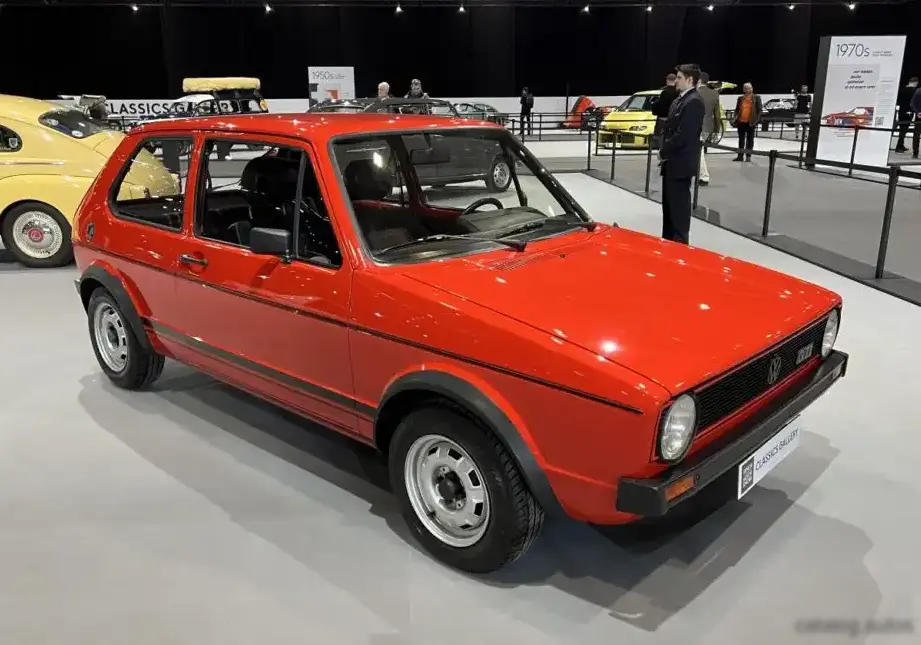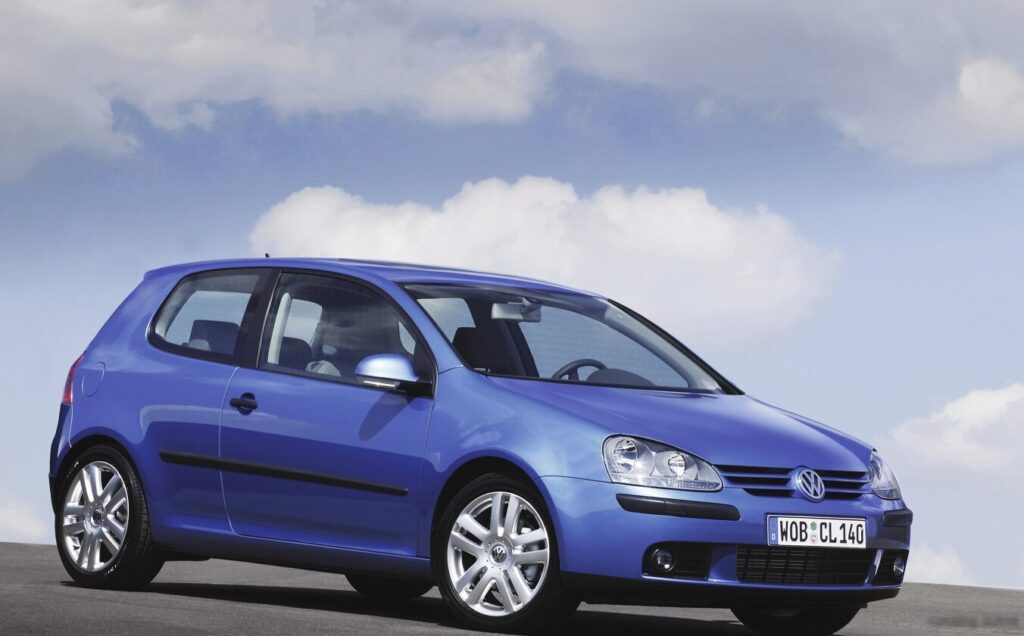
The Volkswagen Golf V, produced from 2003 to 2008, represented a significant evolution in Volkswagen’s iconic hatchback lineage. The three-door 1.6-liter (102 hp) variant occupied an important position in the Golf V range, serving as an accessible entry point into the model line for buyers prioritizing fuel efficiency and affordability. This version was primarily marketed in Europe, where smaller displacement engines and a focus on practicality were highly valued. It was positioned below the more powerful 1.9 TDI diesel and the sporty 2.0 FSI models, offering a balance between cost and usability.
POWERTRAIN & ENGINE ARCHITECTURE
The Golf V 1.6 utilized the Volkswagen Group’s BGU, BSE, or BSF engine code, a 1.6-liter inline four-cylinder gasoline engine. This engine featured a naturally aspirated design with multi-port fuel injection and a single overhead camshaft (SOHC) valvetrain. The 1595 cc engine produced 102 horsepower at 5600 rpm and 148 Nm (109.16 lb-ft) of torque at 3800 rpm. The engine’s relatively modest output was intended to prioritize fuel economy over outright performance. The 1.6L engine was paired with a five-speed automatic transmission, offering convenient operation for urban driving. This transmission was a conventional hydraulic automatic, known for its smooth shifts but not particularly quick response times. The engine’s design emphasized reliability and ease of maintenance, making it a popular choice for drivers seeking a dependable vehicle.
DRIVING CHARACTERISTICS
The 1.6-liter automatic Golf V offered a comfortable, if not particularly exhilarating, driving experience. Acceleration from 0 to 100 km/h (0-62 mph) took approximately 11.4 seconds, and top speed was limited to 184 km/h (114.33 mph). The automatic transmission’s gear ratios were tuned for fuel efficiency, resulting in a noticeable lack of urgency during acceleration. Compared to the manual transmission versions of the 1.6, the automatic suffered a slight performance penalty. The 1.9 TDI and 2.0 FSI models offered significantly quicker acceleration and more responsive driving dynamics. However, the 1.6 automatic excelled in city driving, providing smooth and effortless progress. The power delivery was linear, making it easy to modulate the throttle and maintain control in various traffic conditions.
EQUIPMENT & TRIM LEVELS
The 1.6-liter Golf V typically came equipped with a base level of features, reflecting its position as an entry-level model. Standard equipment generally included power windows, central locking, and an audio system. Interior upholstery was typically cloth, and the dashboard featured a functional, if somewhat basic, design. Optional extras included alloy wheels, air conditioning, and upgraded audio systems. Higher trim levels, such as Trendline or Comfortline, added features like fog lights, cruise control, and more premium interior materials. The three-door configuration emphasized a sportier aesthetic, appealing to younger buyers or those prioritizing a more compact footprint.
CHASSIS & BRAKING
The Golf V 1.6 utilized an independent McPherson strut front suspension and an independent multi-link rear suspension, providing a comfortable and controlled ride. Stabilizer bars were fitted to both axles to reduce body roll during cornering. Braking duties were handled by ventilated discs at the front and solid discs at the rear. Anti-lock Braking System (ABS) was standard, enhancing safety and stability. The suspension setup was tuned for comfort and everyday usability, rather than outright performance. The kerb weight of the vehicle ranged from 1173 to 1348 kg (2586.02 to 2971.83 lbs), depending on the specific equipment and options fitted.
MARKET RECEPTION & COMPARISON
Critics generally viewed the Golf V 1.6 automatic as a sensible and practical choice for buyers seeking a reliable and fuel-efficient hatchback. While it lacked the performance of its more powerful siblings, it offered a comfortable ride and a reasonable level of equipment for its price point. Fuel economy was a key strength, with combined fuel consumption ranging from 7.3 to 7.5 liters per 100 kilometers (32.2 to 31.4 US mpg). Compared to the 1.9 TDI, the 1.6 offered lower purchase price but higher fuel consumption. The 2.0 FSI provided superior performance but at a higher cost. The 1.6 automatic appealed to drivers who prioritized ease of use and affordability over sporty driving dynamics.
LEGACY
The Golf V 1.6 powertrain has proven to be relatively reliable over the long term, with many examples still on the road today. The engine is known for its durability and relatively low maintenance costs. However, like any older vehicle, regular maintenance is essential to ensure continued reliability. In the used car market, the Golf V 1.6 automatic remains an affordable and practical option for buyers seeking a dependable hatchback. Its fuel efficiency and relatively low running costs make it an attractive choice for those on a budget. While it may not offer the excitement of more powerful Golf V variants, it represents a solid and dependable choice in the compact hatchback segment.
| Brand | Volkswagen |
| Model | Golf |
| Generation | Golf V (3-door) |
| Type (Engine) | 1.6 (102 Hp) |
| Start of production | 2003 |
| End of production | 2008 |
| Powertrain Architecture | Internal Combustion engine |
| Body type | Hatchback |
| Seats | 5 |
| Doors | 3 |
| Fuel consumption (urban) | 9.8-10 l/100 km (24 – 23.5 US mpg) |
| Fuel consumption (extra urban) | 5.9-6.1 l/100 km (39.9 – 38.6 US mpg) |
| Fuel consumption (combined) | 7.3-7.5 l/100 km (32.2 – 31.4 US mpg) |
| CO2 emissions | 175-180 g/km |
| Fuel Type | Petrol (Gasoline) |
| Acceleration 0 – 100 km/h | 11.4 sec |
| Acceleration 0 – 62 mph | 11.4 sec |
| Acceleration 0 – 60 mph | 10.8 sec |
| Maximum speed | 184 km/h (114.33 mph) |
| Emission standard | Euro 4 |
| Weight-to-power ratio | 11.5 kg/Hp |
| Power | 102 Hp @ 5600 rpm |
| Torque | 148 Nm @ 3800 rpm (109.16 lb.-ft. @ 3800 rpm) |
| Engine layout | Front, Transverse |
| Engine Model/Code | BGU, BSE, BSF |
| Engine displacement | 1595 cm3 (97.33 cu. in.) |
| Number of cylinders | 4 |
| Engine configuration | Inline |
| Cylinder Bore | 81 mm (3.19 in.) |
| Piston Stroke | 77.4 mm (3.05 in.) |
| Compression ratio | 10.5:1 |
| Number of valves per cylinder | 2 |
| Fuel injection system | Multi-port manifold injection |
| Engine aspiration | Naturally aspirated engine |
| Valvetrain | SOHC |
| Engine oil capacity | 4.5 l (4.76 US qt | 3.96 UK qt) |
| Coolant | 8 l (8.45 US qt | 7.04 UK qt) |
| Kerb Weight | 1173-1348 kg (2586.02 – 2971.83 lbs.) |
| Max. weight | 1760 kg (3880.14 lbs.) |
| Trunk (boot) space – minimum | 350 l (12.36 cu. ft.) |
| Trunk (boot) space – maximum | 1305 l (46.09 cu. ft.) |
| Fuel tank capacity | 55 l (14.53 US gal | 12.1 UK gal) |
| Length | 4204 mm (165.51 in.) |
| Width | 1759 mm (69.25 in.) |
| Height | 1485 mm (58.46 in.) |
| Wheelbase | 2578 mm (101.5 in.) |
| Number of gears and type of gearbox | 5 gears, manual transmission |