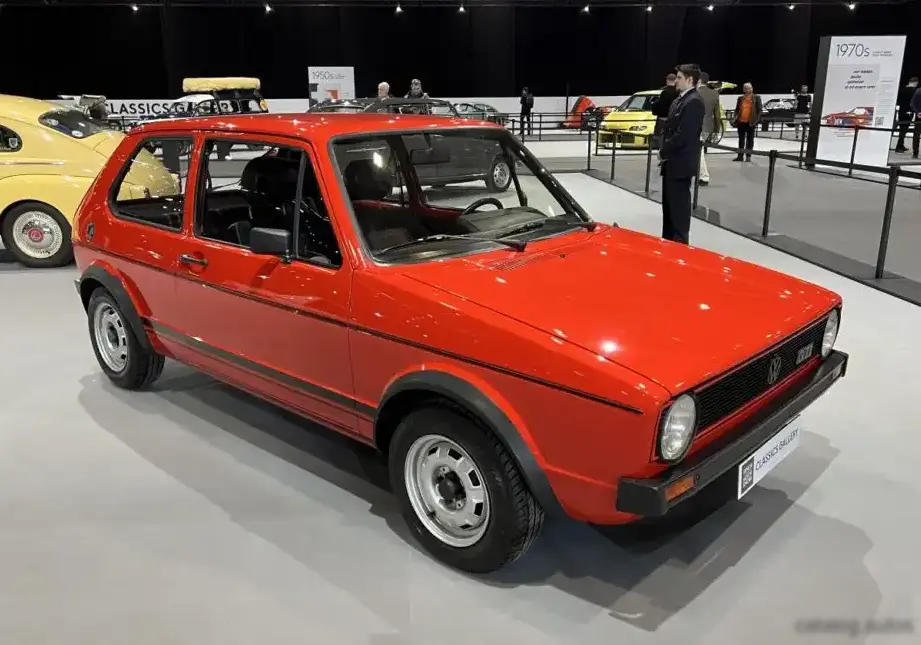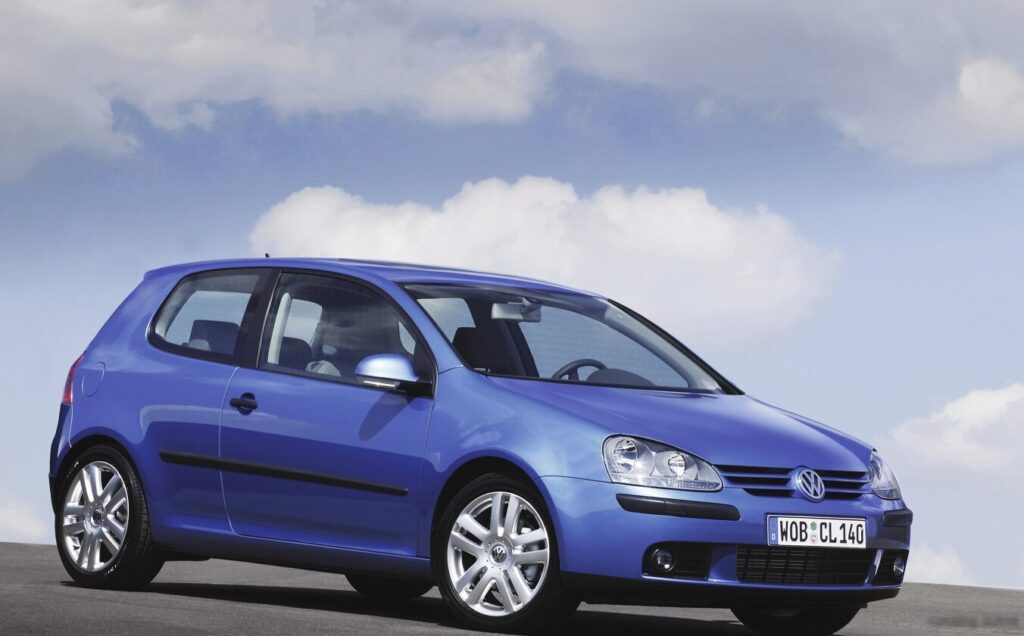
The Volkswagen Golf V, produced from 2003 to 2008, represented the fifth generation of Volkswagen’s iconic hatchback. Within the Golf V range, the 1.6 FSI 115 hp (3-door) model occupied a crucial position as an entry-level offering, aimed at buyers prioritizing fuel efficiency and affordability. Built on the A5 (or 1HX0) platform, this variant provided a balance between practicality and Volkswagen’s renowned build quality. It served as a stepping stone into the Golf lineup, offering a more accessible price point compared to the higher-performance GTI or diesel-powered TDI models.
The heart of the Golf V 1.6 FSI was the BAG, BLF, or BLP engine code 1.6-liter inline-four cylinder gasoline engine. This engine utilized Volkswagen’s Fuel Stratified Injection (FSI) technology, a direct injection system that improved fuel economy and power output compared to traditional multi-point injection. The FSI system injected fuel directly into the combustion chamber, allowing for more precise control of the air-fuel mixture and higher compression ratios (12:1). The engine featured a double overhead camshaft (DOHC) valvetrain with four valves per cylinder, contributing to its relatively efficient operation. While not a high-performance engine, the 1.6 FSI delivered a respectable 115 horsepower at 6000 rpm and 155 Nm (114.32 lb-ft) of torque at 4000 rpm. The engine’s transverse mounting and front-wheel drive configuration were standard for this class of vehicle. The typical transmission paired with this engine was a 6-speed manual, though an optional 6-speed automatic transmission was also available.
In real-world driving, the 1.6 FSI-equipped Golf V offered adequate performance for everyday commuting and general use. Acceleration from 0 to 100 km/h (0-62 mph) took approximately 10.8 seconds, and top speed was rated at 192 km/h (119.3 mph). Compared to the more powerful Golf GTI or the torquey TDI models, the 1.6 FSI felt noticeably less responsive, particularly during overtaking maneuvers. The automatic transmission, while providing convenience, could sometimes feel sluggish, with gear changes not always being as crisp as the manual counterpart. However, the 1.6 FSI excelled in fuel economy, achieving combined fuel consumption figures of 6.7-7.0 l/100 km (35.1-33.6 US mpg), making it an attractive option for budget-conscious drivers.
The 1.6 FSI trim level typically came with a reasonable level of standard equipment. Interior features included cloth upholstery, a basic audio system, power windows, and central locking. Air conditioning was often standard, but could be optional depending on the specific market. The dashboard layout was functional and straightforward, typical of Volkswagen’s design philosophy at the time. Optional extras included alloy wheels, upgraded audio systems, a sunroof, and parking sensors. The 3-door body style emphasized a sportier aesthetic compared to the 5-door version, appealing to a younger demographic.
The Golf V 1.6 FSI utilized an independent McPherson strut suspension setup at the front, providing a comfortable ride and decent handling. The rear suspension employed an independent multi-link system, further enhancing ride quality and stability. Braking duties were handled by ventilated discs at the front and solid discs at the rear. Anti-lock Braking System (ABS) was standard, providing enhanced safety during emergency braking situations. The chassis was tuned to prioritize comfort over outright sportiness, making it well-suited for everyday driving conditions.
Critics generally viewed the 1.6 FSI Golf V as a sensible and practical choice, praising its fuel efficiency and build quality. However, the engine’s lack of outright power was often noted, and some reviewers found the automatic transmission to be less engaging than the manual. Compared to the more expensive Golf GTI, the 1.6 FSI offered a more affordable entry point into the Golf range, but at the expense of performance. In terms of reliability, the 1.6 FSI engine proved to be generally dependable, although issues with the FSI injectors could occasionally arise. Fuel economy was a strong point, consistently outperforming the higher-output variants.
| Brand | Volkswagen |
| Model | Golf |
| Generation | Golf V (3-door) |
| Type (Engine) | 1.6 FSI (115 Hp) |
| Start of production | 2003 |
| End of production | 2008 |
| Fuel consumption (urban) | 8.8-9.2 l/100 km (26.7 – 25.6 US mpg) |
| Fuel consumption (extra urban) | 5.5-5.7 l/100 km (42.8 – 41.3 US mpg) |
| Fuel consumption (combined) | 6.7-7 l/100 km (35.1 – 33.6 US mpg) |
| CO2 emissions | 161-168 g/km |
| Fuel Type | Petrol (Gasoline) |
| Acceleration 0 – 100 km/h | 10.8 sec |
| Acceleration 0 – 62 mph | 10.8 sec |
| Maximum speed | 192 km/h (119.3 mph) |
| Engine Code | BAG, BLF, BLP |
| Engine displacement | 1598 cm3 (97.52 cu. in.) |
| Number of cylinders | 4 |
| Power | 115 Hp @ 6000 rpm |
| Torque | 155 Nm @ 4000 rpm (114.32 lb.-ft. @ 4000 rpm) |
| Kerb Weight | 1184-1359 kg (2610.27 – 2996.08 lbs.) |
| Trunk space (minimum) | 350 l (12.36 cu. ft.) |
| Trunk space (maximum) | 1305 l (46.09 cu. ft.) |
| Fuel tank capacity | 55 l (14.53 US gal) |
| Gears/Transmission | 6 gears, manual/automatic |
Today, the Golf V 1.6 FSI remains a relatively common sight on the used car market. Its reputation for reliability and fuel efficiency continues to make it an appealing option for buyers seeking an affordable and practical hatchback. While not the most exciting Golf variant, the 1.6 FSI offers a solid and dependable driving experience, representing a well-rounded package for everyday transportation. The FSI engine, while requiring occasional maintenance, generally holds up well over time, and parts availability remains good. Its enduring popularity is a testament to Volkswagen’s commitment to building quality vehicles.