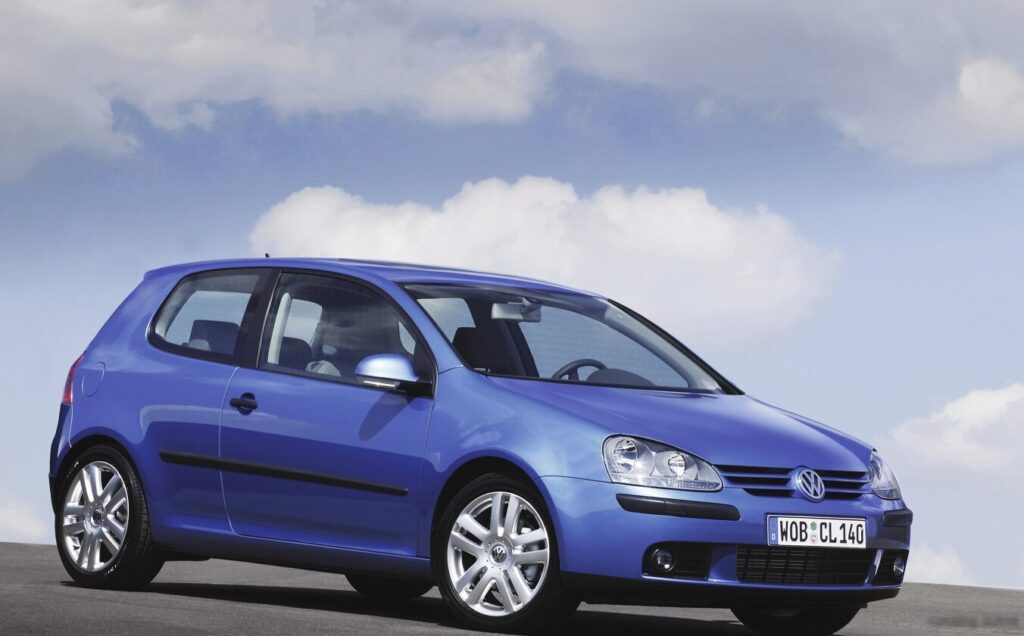
The Volkswagen Golf V, produced from 2003 to 2009, represented a significant evolution for Volkswagen’s iconic hatchback. The 3-door 1.9 TDI (105 hp) 4MOTION variant, manufactured between 2004 and 2008, occupied a unique position within the Golf V lineup. It was positioned as a practical, fuel-efficient, and all-weather capable option, appealing to buyers who prioritized usability and security over outright performance. This model utilized the Volkswagen Group’s A5 (or 1HX0) platform, shared with other vehicles like the Audi A3 and Seat Leon.
The heart of the Golf V 1.9 TDI 4MOTION is the EA188 series 1.9-liter inline-four diesel engine, specifically coded BJB, BKC, or BXE depending on the production year and market. This engine featured a robust cast iron block and an aluminum cylinder head. It employed pump-nozzle (unit injector) technology for direct fuel injection, delivering fuel directly into the combustion chamber at extremely high pressure. This system, while effective, was known for being somewhat noisier than later common-rail diesel systems. The engine utilized a single overhead camshaft (SOHC) operating two valves per cylinder. A turbocharger with an intercooler was standard, boosting power output to 105 horsepower at 4000 rpm and 250 Nm (184 lb-ft) of torque at 1900 rpm. The 4MOTION system is a full-time all-wheel-drive system utilizing a viscous coupling to distribute power between the front and rear axles as needed. The transmission was a standard six-speed manual gearbox.
Driving the 1.9 TDI 4MOTION was characterized by its strong low-end torque and respectable fuel economy. While not a particularly fast car – 0-100 km/h (0-62 mph) took approximately 12.1 seconds – it offered effortless cruising and confident acceleration in most situations. The 4MOTION system provided enhanced traction, particularly in inclement weather, making it a popular choice in regions with snow or rain. Compared to the standard front-wheel-drive 1.9 TDI, the 4MOTION version felt more planted and secure, especially during cornering. It differed significantly from the higher-performance Golf V variants, such as the GTI or R32, which offered substantially more power and a sportier driving experience. The 1.9 TDI 4MOTION prioritized efficiency and practicality over outright speed.
The 1.9 TDI 4MOTION typically came equipped with a reasonably comprehensive set of standard features. Interior upholstery was generally cloth, with options for upgraded materials available. The dashboard layout was functional and straightforward, typical of Volkswagen’s design philosophy at the time. Standard equipment included power windows, central locking, and an integrated stereo system. Optional extras included alloy wheels, climate control, a sunroof, and upgraded audio systems. Trim levels varied by market, but generally offered progressively more features as you moved up the range.
The Golf V 1.9 TDI 4MOTION utilized an independent suspension setup on both the front and rear axles. The front suspension employed McPherson struts with coil springs and an anti-roll bar, while the rear featured a multi-link setup, also with a stabilizer bar. This configuration provided a good balance between ride comfort and handling. Braking duties were handled by ventilated discs on the front wheels and solid discs on the rear. Anti-lock Braking System (ABS) was standard. The weight distribution, influenced by the 4MOTION system, contributed to the car’s stable handling characteristics.
Contemporary reviews of the Golf V 1.9 TDI 4MOTION praised its fuel efficiency, practicality, and all-weather capability. Critics noted the engine’s refinement was not on par with some of its competitors, and the pump-nozzle injection system could be somewhat noisy. However, the car’s overall build quality and reliability were generally well-regarded. Fuel economy figures averaged around 5.8-6.0 liters per 100 kilometers (40.6-39.2 US mpg) on the combined cycle. Compared to the front-wheel-drive 1.9 TDI, the 4MOTION version experienced a slight penalty in fuel economy due to the added weight and drivetrain complexity. However, the added security and traction were often considered a worthwhile trade-off.
| Brand | Volkswagen |
| Model | Golf |
| Generation | Golf V (3-door) |
| Type (Engine) | 1.9 TDI (105 Hp) 4MOTION |
| Start of production | 2004 |
| End of production | 2008 |
| Fuel consumption (urban) | 7.6-7.8 l/100 km (30.9 – 30.2 US mpg) |
| Fuel consumption (extra urban) | 4.8-5 l/100 km (49 – 47 US mpg) |
| Fuel consumption (combined) | 5.8-6 l/100 km (40.6 – 39.2 US mpg) |
| CO2 emissions | 157-162 g/km |
| Fuel Type | Diesel |
| Acceleration 0-100 km/h | 12.1 sec |
| Acceleration 0-62 mph | 12.1 sec |
| Maximum speed | 185 km/h (114.95 mph) |
| Engine Model/Code | EA188 / BJB, BKC, BXE |
| Engine displacement | 1896 cm3 (115.7 cu. in.) |
| Number of cylinders | 4 |
| Power | 105 Hp @ 4000 rpm |
| Torque | 250 Nm @ 1900 rpm (184.39 lb.-ft. @ 1900 rpm) |
| Kerb Weight | 1389-1549 kg (3062.22 – 3414.96 lbs.) |
| Trunk space (minimum) | 275 l (9.71 cu. ft.) |
| Trunk space (maximum) | 1230 l (43.44 cu. ft.) |
| Fuel tank capacity | 60 l (15.85 US gal) |
| Number of gears | 6 |
| Gearbox type | Manual |
Today, the Golf V 1.9 TDI 4MOTION remains a relatively common sight on used car markets. The 1.9 TDI engine, while aging, is known for its durability and relatively straightforward maintenance. However, potential buyers should be aware of the potential for wear and tear on the turbocharger and pump-nozzle injectors. The 4MOTION system itself is generally reliable, but regular maintenance of the drivetrain is essential. Overall, the Golf V 1.9 TDI 4MOTION represents a solid and practical choice for those seeking a fuel-efficient, all-weather capable hatchback with a reputation for reliability.