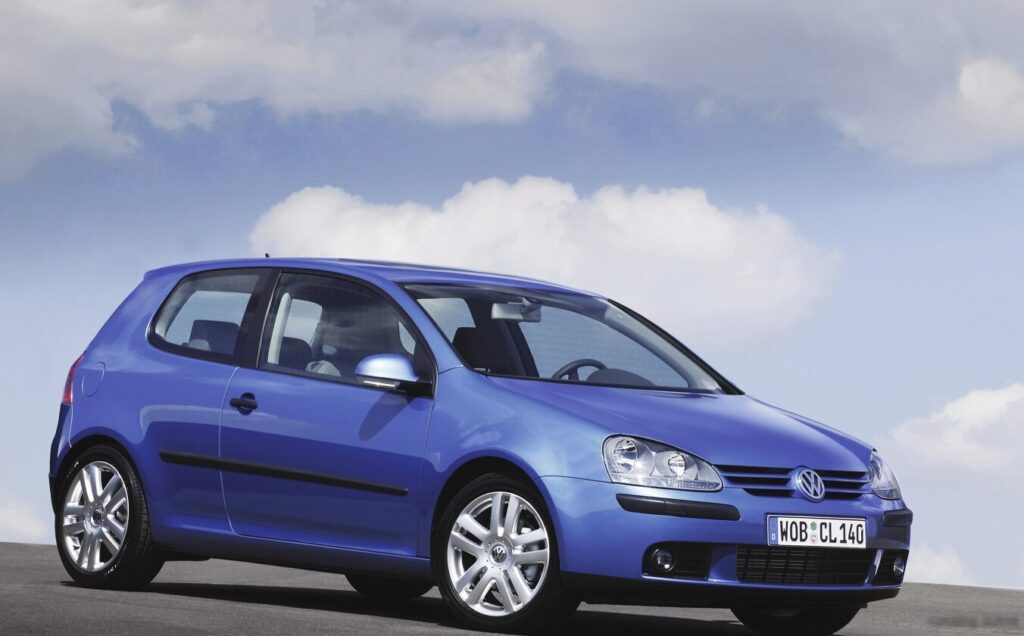
The Volkswagen Golf Mk5, produced from 2003 to 2009, represented a significant leap forward for Volkswagen’s iconic hatchback. The 3-door 1.9 TDI (105 hp) 4MOTION DSG variant, manufactured between 2005 and 2008, occupied a unique position within the Mk5 lineup. It catered to buyers seeking the practicality and refinement of the Golf, combined with the security of all-wheel drive and the convenience of an automatic transmission, while prioritizing fuel efficiency. This model was positioned as a mid-range offering, bridging the gap between the more basic petrol-engined models and the higher-performance GTI or diesel variants like the 2.0 TDI.
At the heart of the Golf 1.9 TDI 4MOTION DSG lies the EA188 series engine, specifically the BXE code. This 1.9-liter inline-four cylinder diesel engine utilizes a pump-nozzle (unit injector) fuel injection system, a technology known for its precise fuel delivery and efficiency. The engine features a single overhead camshaft operating two valves per cylinder. A turbocharger with an intercooler is employed to boost power output, resulting in 105 horsepower at 4000 rpm and 250 Nm (184.39 lb-ft) of torque at 1900 rpm. The engine’s transverse mounting and compact design contribute to the Golf’s balanced handling. The “DSG” designation refers to Volkswagen’s Direct-Shift Gearbox, a six-speed dual-clutch automatic transmission. This transmission offers both fully automatic operation and the ability to manually shift gears via the selector or steering wheel-mounted paddles, providing a more engaging driving experience than a traditional automatic.
The 1.9 TDI 4MOTION DSG offered a blend of usability and capability. While not a sports car, the 105 hp and 250 Nm of torque provided adequate performance for everyday driving. Acceleration from 0 to 100 km/h (0-62 mph) took approximately 11.3 seconds, with a top speed of 187 km/h (116.2 mph). The DSG transmission contributed to smooth gear changes and responsive acceleration. The 4MOTION all-wheel-drive system provided enhanced traction, particularly in inclement weather conditions, making it a popular choice in regions with harsh winters. Compared to the standard front-wheel-drive 1.9 TDI, the 4MOTION version offered noticeably improved grip and stability. However, it didn’t deliver the outright performance of the Golf GTI or the more powerful 2.0 TDI models.
Trim levels for the 1.9 TDI 4MOTION DSG varied depending on the market, but generally included features such as air conditioning, power windows, central locking, and an integrated audio system. Interior upholstery typically consisted of cloth seats, although leather options were available. The dashboard layout was functional and ergonomically designed, with a clear instrument cluster and intuitive controls. Optional extras included alloy wheels, a sunroof, parking sensors, and upgraded audio systems. Safety features such as ABS (Anti-lock Braking System) and front airbags were standard equipment.
The Golf Mk5 1.9 TDI 4MOTION DSG utilized a MacPherson strut front suspension and a multi-link coil spring rear suspension. This setup provided a comfortable ride while maintaining good handling characteristics. Ventilated disc brakes were fitted to the front wheels, while solid discs were used at the rear. The electric power steering offered precise control and reduced driver fatigue. The 4MOTION system added to the vehicle’s weight, but the suspension was tuned to accommodate the increased mass and maintain stability.
Contemporary reviews of the Golf 1.9 TDI 4MOTION DSG praised its fuel efficiency, comfortable ride, and the added security of all-wheel drive. Critics noted that the engine, while capable, wasn’t particularly powerful, and the DSG transmission could occasionally feel hesitant at low speeds. Fuel economy was a strong point, with combined cycle figures around 6.4 l/100 km (36.8 US mpg). Compared to the front-wheel-drive 1.9 TDI, the 4MOTION version offered slightly lower fuel economy due to the added weight and drivetrain complexity. Reliability was generally good, although some owners reported issues with the DSG transmission, particularly early units.
| Brand | Volkswagen |
| Model | Golf |
| Generation | Golf V (3-door) |
| Type (Engine) | 1.9 TDI (105 Hp) 4MOTION DSG |
| Start of production | 2005 |
| End of production | 2008 |
| Fuel consumption (urban) | 6.4 l/100 km (36.8 US mpg) |
| Fuel consumption (extra urban) | 4.6 l/100 km (51.1 US mpg) |
| Fuel Type | Diesel |
| Acceleration 0-100 km/h | 11.3 sec |
| Acceleration 0-62 mph | 11.3 sec |
| Maximum speed | 187 km/h (116.2 mph) |
| Kerb Weight | 1425 kg (3141.59 lbs) |
| Max. weight | 1960 kg (4321.06 lbs) |
| Engine Displacement | 1896 cm3 (115.7 cu. in.) |
| Power | 105 Hp @ 4000 rpm |
| Torque | 250 Nm @ 1900 rpm (184.39 lb.-ft. @ 1900 rpm) |
| Engine Code | BXE |
| Number of cylinders | 4 |
| Gears/Transmission | 6 gears, automatic (DSG) |
| Fuel tank capacity | 60 l (15.85 US gal) |
| Trunk space (min/max) | 350 – 1305 l (12.36 – 46.09 cu. ft.) |
Today, the Golf Mk5 1.9 TDI 4MOTION DSG remains a popular choice in the used car market. The BXE engine is known for its durability, and well-maintained examples can still provide reliable service. However, potential buyers should be aware of the potential for DSG transmission issues and ensure that the vehicle has been properly serviced. The combination of fuel efficiency, practicality, and all-wheel-drive capability continues to make this Golf variant an appealing option for those seeking a versatile and economical hatchback.