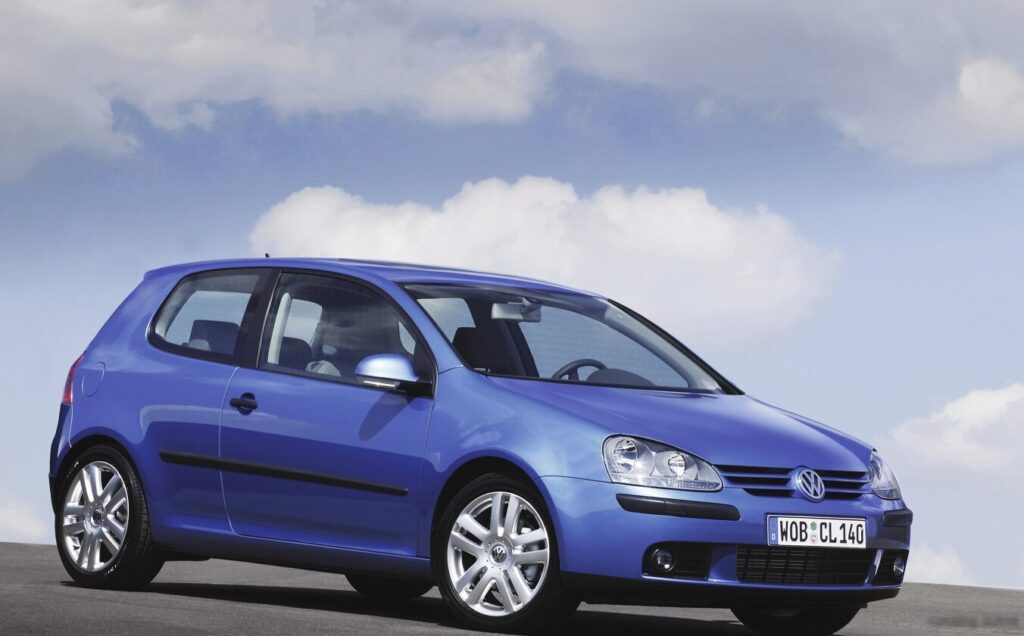
The Volkswagen Golf V, produced from 2003 to 2009, represented a significant evolution for Volkswagen’s iconic hatchback. The 3-door variant, introduced as a more sporty and youthful alternative to the 5-door model, offered a range of engine and trim options. Among these, the 2.0 FSI (150 hp) model, available between 2004 and 2008, occupied a mid-range position in the Golf V lineup, bridging the gap between the more economical base engines and the performance-oriented GTI and R32 models. This variant aimed to provide a balance of performance, fuel efficiency, and modern features for the discerning driver.
Volkswagen Golf V 3-Door 2.0 FSI: An Overview
The Golf V, internally designated the 1K chassis, was a pivotal model for Volkswagen, incorporating advancements in build quality, technology, and driving dynamics. The 2.0 FSI 3-door was positioned as a step up from the 1.6 and 1.4 liter gasoline engines, offering a noticeable increase in power and torque. It catered to buyers who desired a more engaging driving experience without the higher price tag and running costs associated with the GTI. The FSI designation indicated the use of Volkswagen’s Fuel Stratified Injection system, a direct injection technology designed to improve fuel economy and performance.
Powertrain & Engine Architecture
At the heart of the Golf V 2.0 FSI lay the AXW, BLR, BLX, BLY, BVX, BVY, or BVZ engine code, a 1984cc (121.07 cu. in.) inline-four cylinder gasoline engine. This engine was a key component of Volkswagen’s New Engine Family (NEF), known for its modular design and advanced technologies. The 2.0 FSI utilized direct fuel injection, where fuel is injected directly into the combustion chamber, allowing for more precise fuel control and higher compression ratios. This resulted in improved thermal efficiency and increased power output. The engine featured a double overhead camshaft (DOHC) valvetrain with four valves per cylinder, optimizing airflow for enhanced performance.
The engine produced 150 hp (112 kW) at 6000 rpm and 200 Nm (147.51 lb-ft) of torque at 3500 rpm. The FSI system, combined with a compression ratio of 11.5:1, contributed to a power-to-liter ratio of 75.6 hp/l. While a six-speed manual transmission was standard, a six-speed automatic transmission was also offered, providing convenience for drivers prioritizing ease of use. The automatic transmission, typically the 6F24A, was a conventional torque converter automatic, known for its smooth shifting characteristics but not offering the same level of efficiency as more modern dual-clutch transmissions.
Driving Characteristics
The 2.0 FSI engine delivered a noticeable improvement in performance compared to the lower-displacement engines available in the Golf V range. Acceleration from 0 to 100 km/h (0-62 mph) took approximately 8.8 seconds, and top speed was electronically limited to 209 km/h (129.87 mph). The direct injection system provided a responsive throttle response and a relatively flat torque curve, making the engine feel lively across a wide range of engine speeds.
The automatic transmission, while offering smooth gear changes, did slightly diminish the overall performance compared to the manual version. Gear ratios were optimized for a balance of acceleration and fuel economy. In real-world driving, the 2.0 FSI automatic provided ample power for everyday commuting and highway cruising. However, drivers seeking a more engaging and sporty driving experience often preferred the six-speed manual transmission, which allowed for greater control over gear selection and engine speed.
Equipment & Trim Levels
The Golf V 2.0 FSI 3-door was typically offered in several trim levels, varying depending on the market. Standard equipment generally included air conditioning, power windows, power mirrors, a CD stereo system, and alloy wheels. Higher trim levels added features such as automatic climate control, a multi-function steering wheel, rain-sensing wipers, and upgraded upholstery. Optional extras included a sunroof, navigation system, and parking sensors. Interior upholstery typically consisted of cloth seats, with leather options available as an upgrade. The dashboard layout was modern and functional, with a clear instrument cluster and logically arranged controls.
Chassis & Braking
The Golf V utilized an independent suspension system on both the front and rear axles. The front suspension employed a McPherson strut design with coil springs and an anti-roll bar, while the rear suspension featured a multi-link setup, also with a stabilizer bar. This configuration provided a good balance of ride comfort and handling precision. The 3-door model, being slightly lighter than the 5-door version, offered a marginally more agile driving experience.
Braking duties were handled by ventilated disc brakes on the front wheels and solid disc brakes on the rear wheels. Anti-lock Braking System (ABS) was standard, enhancing braking performance and stability, particularly in adverse conditions. The steering system was a rack and pinion type with electric power steering, providing precise and responsive steering feel.
Market Reception & Comparison
The Golf V 2.0 FSI 3-door received generally positive reviews from automotive critics. It was praised for its refined engine, comfortable ride, and well-appointed interior. However, some critics noted that the automatic transmission could feel slightly sluggish compared to the manual version. Fuel economy was considered respectable, with combined fuel consumption ranging from 7.6 to 8.0 l/100 km (30.9 to 29.4 US mpg).
Compared to other trims in the Golf V lineup, the 2.0 FSI offered a compelling balance of performance and economy. The base 1.4 and 1.6 liter engines were more affordable but lacked the power and responsiveness of the 2.0 FSI. The GTI, while offering significantly more performance, came at a higher price point and with increased running costs. The 2.0 TDI diesel variant provided comparable torque but with a different driving character and fuel economy profile.
Technical Specifications
| Brand | Volkswagen |
| Model | Golf |
| Generation | Golf V (3-door) |
| Engine Type | 2.0 FSI (150 Hp) |
| Production Years | 2004-2008 |
| Engine Code | AXW, BLR, BLX, BLY, BVX, BVY, BVZ |
| Engine Displacement | 1984 cm3 (121.07 cu. in.) |
| Number of Cylinders | 4 |
| Engine Configuration | Inline |
| Power | 150 hp @ 6000 rpm |
| Torque | 200 Nm (147.51 lb-ft) @ 3500 rpm |
| Fuel Injection | Direct Injection |
| Valvetrain | DOHC |
| Compression Ratio | 11.5:1 |
| Transmission | 6-speed manual or 6-speed automatic |
| Drive Wheels | Front Wheel Drive |
| Kerb Weight | 1242-1392 kg (2738.14 – 3068.83 lbs.) |
| Fuel Consumption (Combined) | 7.6-8.0 l/100 km (30.9 – 29.4 US mpg) |
| CO2 Emissions | 182-192 g/km |
| Acceleration 0-100 km/h | 8.8 sec |
| Maximum Speed | 209 km/h (129.87 mph) |
Legacy
The Golf V 2.0 FSI, while not the most iconic version of the Golf, remains a popular choice in the used car market. The 2.0 FSI engine, when properly maintained, is generally considered reliable. However, like many direct injection engines, it can be susceptible to carbon buildup on the intake valves, which can affect performance over time. Regular servicing and the use of quality fuel are essential to prevent this issue. The automatic transmission, while smooth, may require more frequent servicing than the manual version. Overall, the Golf V 2.0 FSI 3-door offers a compelling combination of practicality, performance, and refinement, making it a worthwhile consideration for buyers seeking a well-rounded and enjoyable hatchback.