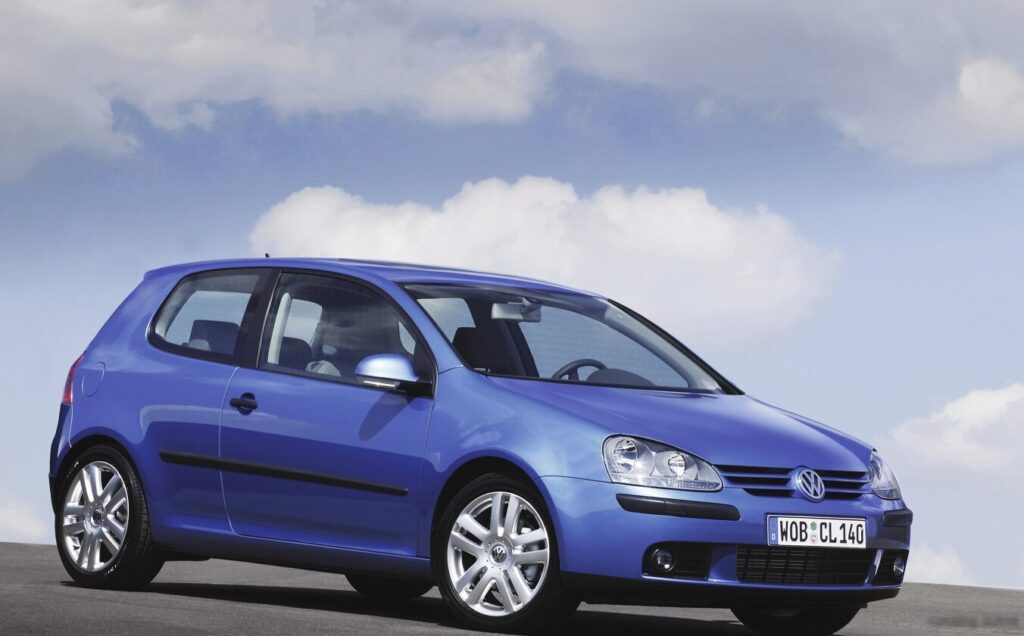
The Volkswagen Golf V, produced from 2003 to 2008, represented the fifth generation of Volkswagen’s iconic hatchback. Available in both three- and five-door configurations, the Golf V (internally designated the 1K1 chassis code) was a significant evolution of the Golf lineage, built upon the A5 platform. Among the various engine and trim options offered, the 2.0 SDI (75 hp) 3-door model occupied a specific niche as an entry-level, fuel-efficient offering aimed at buyers prioritizing economy over outright performance. This variant was particularly popular in European markets where diesel engines held a strong preference.
Volkswagen Golf V 3-Door 2.0 SDI (75 hp): An Overview
The 2.0 SDI variant of the Golf V 3-door was positioned as the base model in many markets. It provided a practical and affordable entry point into the Golf range, appealing to first-time car buyers, urban commuters, and those seeking a reliable and economical vehicle. While not offering the sporty appeal of the GTI or the refined power of the higher-spec petrol engines, the 2.0 SDI focused on delivering low running costs and adequate, if uninspiring, performance. It served as a direct alternative to gasoline-powered Golfs, offering significantly improved fuel economy.
Powertrain & Engine Architecture
At the heart of the Golf V 2.0 SDI was the EA188 series 1.968-liter inline four-cylinder diesel engine, specifically the BDK engine code. This engine utilized a pump-nozzle (unit injector) fuel injection system, a technology known for its efficiency and durability. The engine featured a single overhead camshaft (SOHC) valvetrain operating two valves per cylinder. The 2.0 SDI engine produced 75 horsepower (hp) at 4200 rpm and 140 Newton-meters (103.26 lb-ft) of torque between 2200 and 2400 rpm. The compression ratio was relatively high at 19:1, typical for a diesel engine, contributing to its thermal efficiency.
The engine was transversely mounted in the front of the vehicle, driving the front wheels. While a five-speed manual transmission was the most common pairing, a six-speed automatic transmission was also available, though less frequently chosen due to its impact on fuel economy and performance. The automatic transmission was a conventional torque converter type, offering smooth but less direct shifts compared to a manual gearbox. The gear ratios were optimized for fuel efficiency rather than acceleration, with a relatively tall final drive.
Driving Characteristics
The driving experience in the Golf V 2.0 SDI 3-door was characterized by its practicality and ease of use. Acceleration was modest, taking approximately 16.7 seconds to reach 100 km/h (62 mph) and 15.9 seconds to reach 60 mph. The engine lacked the responsiveness of turbocharged alternatives, requiring drivers to downshift frequently to maintain momentum, especially when overtaking or climbing hills. The automatic transmission, while convenient, further dulled the driving experience, with noticeable delays between gear changes. However, the engine’s torque delivery was relatively flat, making it suitable for everyday driving conditions. The focus was clearly on fuel efficiency and relaxed cruising rather than spirited performance.
Equipment & Trim Levels
The 2.0 SDI 3-door typically came with a fairly basic level of equipment, reflecting its entry-level positioning. Standard features generally included power steering, central locking, electric front windows, and an adjustable steering column. Air conditioning was often an optional extra. Interior upholstery was typically cloth, with a simple dashboard layout. Higher trim levels, such as Trendline or Comfortline, added features like alloy wheels, a CD stereo, and more comprehensive interior trim. Optional extras included a sunroof, parking sensors, and upgraded audio systems. Safety features included ABS (Anti-lock Braking System) and driver and passenger airbags.
Chassis & Braking
The Golf V 2.0 SDI 3-door utilized an independent suspension system. The front suspension featured a McPherson strut setup with coil springs and an anti-roll bar, while the rear suspension employed a multi-link configuration, also with a stabilizer bar. This suspension setup provided a comfortable ride quality, absorbing bumps and imperfections in the road surface effectively. The braking system consisted of ventilated discs on the front wheels and solid discs on the rear wheels. The hydraulic power steering provided light and precise steering feel. Tire sizes typically ranged from 195/65 R15 to 205/55 R16, depending on the trim level.
Market Reception & Comparison
The Golf V 2.0 SDI 3-door received generally positive reviews for its fuel efficiency and practicality. Critics acknowledged its modest performance but praised its low running costs and reliability. Compared to the higher-spec Golf models, such as the 1.4 TSI or the GTI, the 2.0 SDI offered significantly lower purchase price and running costs, but at the expense of performance and refinement. Compared to other diesel Golf variants, like the 1.9 TDI, the 2.0 SDI offered slightly less power and torque, but was often more affordable. Fuel economy figures were impressive, averaging around 5.3-5.4 liters per 100 kilometers (44.4-43.6 US mpg), making it an attractive option for budget-conscious buyers.
Technical Specifications
| Brand | Volkswagen |
| Model | Golf |
| Generation | Golf V (3-door) |
| Type (Engine) | 2.0 SDI (75 Hp) |
| Start of production | 2003 |
| End of production | 2008 |
| Engine Displacement | 1968 cm3 (120.09 cu. in.) |
| Number of Cylinders | 4 |
| Engine Configuration | Inline |
| Power | 75 Hp @ 4200 rpm |
| Torque | 140 Nm @ 2200-2400 rpm (103.26 lb.-ft.) |
| Fuel Type | Diesel |
| Fuel Consumption (Urban) | 6.7-6.8 l/100 km (35.1 – 34.6 US mpg) |
| Fuel Consumption (Extra Urban) | 4.6-4.7 l/100 km (51.1 – 50 US mpg) |
| Fuel Consumption (Combined) | 5.3-5.4 l/100 km (44.4 – 43.6 US mpg) |
| CO2 Emissions | 143-146 g/km |
| Acceleration 0-100 km/h | 16.7 sec |
| Maximum Speed | 163 km/h (101.28 mph) |
| Kerb Weight | 1217-1387 kg (2683.03 – 3057.81 lbs.) |
| Fuel Tank Capacity | 55 l (14.53 US gal) |
Legacy
The Golf V 2.0 SDI 3-door has proven to be a relatively reliable vehicle, with the BDK engine known for its durability. While not as sought-after as the more powerful Golf variants, it remains a popular choice in the used car market, particularly for buyers seeking an affordable and economical hatchback. Common issues include wear and tear on suspension components and potential problems with the fuel injection pump, but these are generally manageable with regular maintenance. The 2.0 SDI engine, while lacking the performance of modern diesel engines, continues to provide dependable service in many vehicles today, demonstrating its robust design and longevity.