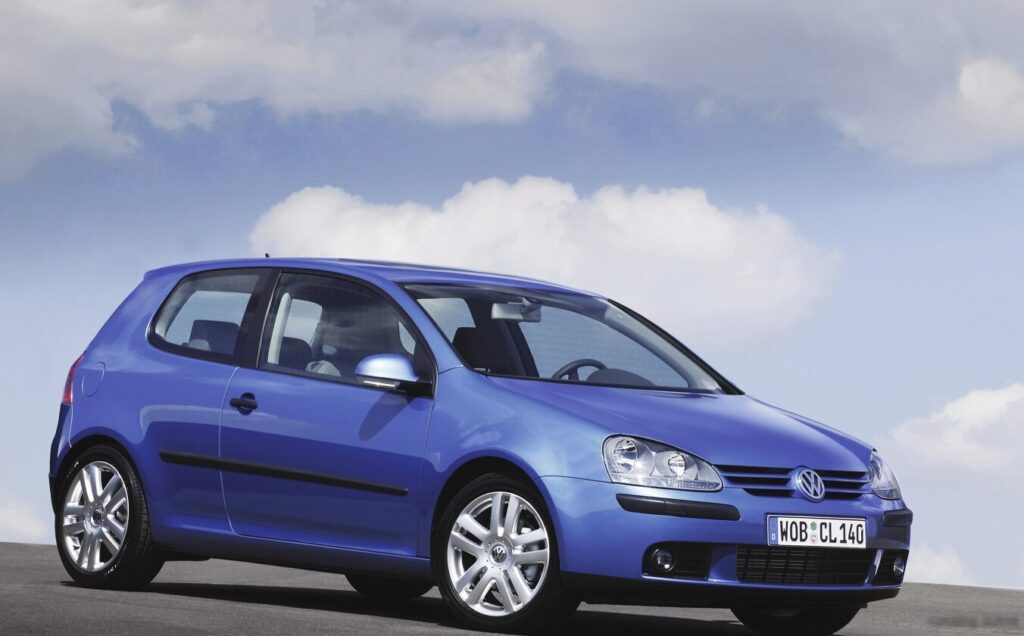
The Volkswagen Golf V, produced from 2003 to 2008, represented a significant evolution in Volkswagen’s iconic hatchback lineage. Within the Golf V range, the 3-door 2.0 TDI 16V model, generating 140 horsepower, occupied a middle ground, offering a balance between performance, fuel efficiency, and practicality. This variant was positioned as a more refined and economical alternative to the petrol-powered models, while providing more performance than the lower-powered diesel options. It was built on the A5 (or 1HX0) platform, shared with other Volkswagen Group vehicles like the Audi A3 and Seat Leon.
Powertrain & Engine Architecture
The heart of the Golf V 2.0 TDI 16V is the EA188 series engine, specifically the BKD code. This 1968cc (120.09 cubic inches) inline four-cylinder diesel engine utilizes a pump-nozzle (unit injector) fuel injection system, a technology known for its precise fuel delivery and efficiency. The engine features a single overhead camshaft (DOHC) operating four valves per cylinder, contributing to its improved breathing and power output. A turbocharger with an intercooler is employed to boost performance, delivering 320 Nm (236.02 lb-ft) of torque between 1750 and 2500 rpm. The compression ratio is a relatively high 18.5:1, typical for diesel engines, maximizing combustion efficiency.
The 2.0 TDI was typically paired with a 6-speed manual transmission, although a Direct-Shift Gearbox (DSG) was also available as an option. The manual gearbox provided precise control and a more engaging driving experience, while the DSG offered the convenience of automatic operation with quicker shifts and improved fuel economy. The engine oil capacity is 3.8 liters (4.02 US quarts / 3.34 UK quarts), and the coolant capacity is 8 liters (8.45 US quarts / 7.04 UK quarts). The engine’s transverse mounting within the front-wheel-drive configuration contributes to its compact footprint and efficient packaging.
Fuel Injection and Turbocharging
The pump-nozzle injection system, while effective, was later superseded by common-rail technology in subsequent Golf generations. The turbocharger, a key component in boosting power, utilizes exhaust gases to spin a turbine, forcing more air into the engine. The intercooler cools the compressed air, increasing its density and further enhancing performance. These features combined to deliver a responsive and efficient diesel engine suitable for both urban and highway driving.
Driving Characteristics
The Golf V 2.0 TDI 16V offered a noticeable step up in performance compared to the lower-powered diesel variants. Acceleration from 0 to 100 km/h (0-62 mph) took approximately 9.3 seconds, and 0-60 mph was achieved in around 8.8 seconds. The maximum speed was electronically limited to 205 km/h (127.38 mph). The engine’s strong low-end torque made it particularly well-suited for everyday driving, providing effortless acceleration in urban environments and confident overtaking capabilities on the highway.
Compared to the petrol-powered Golf V models, the 2.0 TDI offered superior fuel economy and a more relaxed driving experience. While the petrol engines provided a more spirited and rev-happy character, the TDI prioritized efficiency and torque. The 6-speed manual transmission allowed drivers to keep the engine within its optimal power band, maximizing performance and minimizing fuel consumption. The DSG transmission, when equipped, provided seamless gear changes and further enhanced the driving experience.
Equipment & Trim Levels
The Golf V 2.0 TDI 16V was available in various trim levels, typically including Trendline, Comfortline, and Highline. The Trendline served as the entry-level trim, offering standard features such as air conditioning, power windows, and central locking. The Comfortline added features like alloy wheels, a multi-function steering wheel, and upgraded interior trim. The Highline represented the premium trim level, boasting features such as automatic climate control, a premium audio system, and leather upholstery (optional).
Optional extras included a sunroof, parking sensors, and a navigation system. Interior upholstery typically consisted of cloth, with leather options available on higher trim levels. The dashboard layout was functional and well-designed, with clear instrumentation and intuitive controls. Safety features included ABS (Anti-lock Braking System) and front airbags as standard equipment.
Chassis & Braking
The Golf V 2.0 TDI 16V utilized an independent suspension system on both the front and rear axles. The front suspension employed a McPherson strut design with a coil spring and anti-roll bar, while the rear suspension featured a multi-link setup with a stabilizer bar. This configuration provided a comfortable ride and responsive handling. The front brakes consisted of ventilated discs, while the rear brakes were typically solid discs, although some models featured rear drums depending on the trim level and market. The steering system was a rack and pinion type with electric power steering, offering precise control and ease of maneuverability.
Tire sizes varied depending on the trim level, ranging from 195/65 R15 to 225/40 R18. Wheel rim sizes ranged from 6J x 15 to 7.5J x 18. The chassis was designed to provide a stable and balanced platform, contributing to the Golf V’s reputation for handling and safety.
Market Reception & Comparison
The Golf V 2.0 TDI 16V was generally well-received by automotive critics, praised for its fuel efficiency, strong torque, and comfortable ride. It was considered a practical and versatile hatchback suitable for a wide range of drivers. Compared to the petrol-powered Golf V models, the TDI offered significantly better fuel economy, making it an attractive option for those who prioritized running costs. However, some critics noted that the diesel engine was slightly noisier and less refined than its petrol counterparts.
In terms of reliability, the EA188 engine proved to be generally robust, although some issues were reported with the pump-nozzle injection system and the dual-mass flywheel. Fuel economy figures ranged from 5.4 to 5.7 l/100 km (43.6 to 41.3 US mpg / 52.3 to 49.6 UK mpg), and CO2 emissions ranged from 146 to 154 g/km. The 2.0 TDI offered a compelling alternative to other diesel hatchbacks on the market, such as the Ford Focus TDCi and the Opel/Vauxhall Astra CDTi.
Technical Specifications
| Brand | Volkswagen |
| Model | Golf |
| Generation | Golf V (3-door) |
| Type (Engine) | 2.0 TDI 16V (140 Hp) |
| Start of production | 2003 |
| End of production | 2008 |
| Powertrain Architecture | Internal Combustion engine |
| Body type | Hatchback |
| Seats | 5 |
| Doors | 3 |
| Fuel consumption (urban) | 6.8-7.1 l/100 km (34.6 – 33.1 US mpg) |
| Fuel consumption (extra urban) | 4.6-4.8 l/100 km (51.1 – 49 US mpg) |
| Fuel consumption (combined) | 5.4-5.7 l/100 km (43.6 – 41.3 US mpg) |
| CO2 emissions | 146-154 g/km |
| Fuel Type | Diesel |
| Acceleration 0 – 100 km/h | 9.3 sec |
| Maximum speed | 205 km/h (127.38 mph) |
| Emission standard | Euro 4 |
| Power | 140 Hp @ 4000 rpm |
| Torque | 320 Nm @ 1750-2500 rpm (236.02 lb.-ft.) |
| Engine layout | Front, Transverse |
| Engine Model/Code | EA188 / BKD |
| Engine displacement | 1968 cm3 (120.09 cu. in.) |
| Number of cylinders | 4 |
| Cylinder Bore | 81 mm (3.19 in.) |
| Piston Stroke | 95.5 mm (3.76 in.) |
| Compression ratio | 18.5:1 |
| Engine oil capacity | 3.8 l (4.02 US qt | 3.34 UK qt) |
| Coolant capacity | 8 l (8.45 US qt | 7.04 UK qt) |
| Kerb Weight | 1281-1451 kg (2824.12 – 3198.91 lbs.) |
| Trunk (boot) space (minimum) | 350 l (12.36 cu. ft.) |
| Trunk (boot) space (maximum) | 1305 l (46.09 cu. ft.) |
| Fuel tank capacity | 55 l (14.53 US gal | 12.1 UK gal) |
Legacy
The Golf V 2.0 TDI 16V remains a popular choice in the used car market, appreciated for its fuel efficiency, reliability, and practicality. While the pump-nozzle injection system can require maintenance, the engine is generally durable and capable of high mileage. The Golf V’s reputation for build quality and handling has ensured its continued desirability among car enthusiasts and everyday drivers alike. The 2.0 TDI engine, in its various iterations, continued to be a mainstay in the Volkswagen lineup for many years, demonstrating its effectiveness and versatility. Today, well-maintained examples of the Golf V 2.0 TDI 16V can still provide reliable and economical transportation.