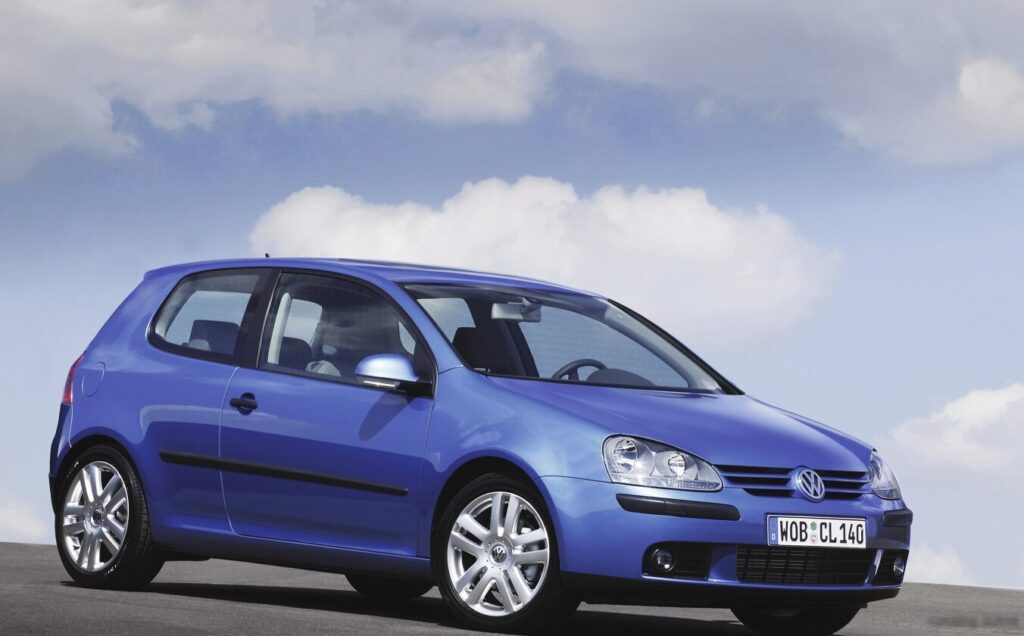
The Volkswagen Golf V, produced from 2003 to 2009, represented a significant evolution for Volkswagen’s iconic hatchback. Within the Golf V range, the 3-door 2.0 TDI 16V (140 hp) 4MOTION variant, manufactured between 2004 and 2008, occupied a position as a premium offering, blending diesel efficiency with all-wheel-drive capability. This model was part of the 1HX0/A3 platform generation, known for its improved refinement and build quality compared to its predecessor.
Volkswagen Golf V 3-Door 2.0 TDI 16V 4MOTION: An Overview
The 2.0 TDI 4MOTION was designed to appeal to drivers seeking a practical, economical, and capable hatchback, particularly those living in regions with inclement weather or desiring enhanced traction. It bridged the gap between the more basic petrol-powered Golfs and the higher-performance GTI or R32 models. The inclusion of Volkswagen’s 4MOTION all-wheel-drive system distinguished it from the majority of Golf V models, which were front-wheel drive. This variant offered a compelling package for those prioritizing all-weather performance and stability.
Powertrain & Engine Architecture
At the heart of the Golf V 2.0 TDI 4MOTION lies the EA188 series 2.0-liter inline-four diesel engine, specifically the BKD engine code. This engine is a turbocharged, common rail direct injection diesel, producing 140 horsepower (hp) at 4000 rpm and 320 Newton-meters (236 lb-ft) of torque between 1750 and 2500 rpm. The engine features a 18.5:1 compression ratio and a double overhead camshaft (DOHC) valvetrain with four valves per cylinder. The turbocharger, coupled with an intercooler, significantly boosts power output and improves efficiency.
The fuel injection system utilizes pump-nozzle (unit injector) technology, known for its precision and ability to deliver high injection pressures. This contributes to efficient combustion and reduced emissions. The engine’s transverse mounting and front-wheel-drive bias (with power distributed to the rear via the 4MOTION system) are typical of Volkswagen’s compact car architecture.
The 4MOTION system employed in the Golf V is a Haldex system, a multi-plate clutch system that proactively distributes torque between the front and rear axles. Under normal driving conditions, the system operates primarily in front-wheel drive, but can seamlessly transfer up to 50% of the engine’s torque to the rear wheels when traction is lost. This provides enhanced stability and grip, particularly on slippery surfaces.
Driving Characteristics
The 2.0 TDI 4MOTION offered a noticeable step up in performance compared to the lower-powered petrol engines available in the Golf V range. While not a sports car, the 140 hp and 236 lb-ft of torque provided ample power for everyday driving and confident overtaking. The broad torque curve meant that strong acceleration was available from relatively low engine speeds. The 0-62 mph (0-100 km/h) acceleration time of 9.5 seconds was respectable for a diesel hatchback of this era.
The 4MOTION system significantly enhanced handling and stability, particularly in adverse weather conditions. The all-wheel-drive system minimized wheelspin and provided a more secure feeling on wet or snowy roads. Compared to the front-wheel-drive Golfs, the 2.0 TDI 4MOTION exhibited reduced understeer and improved cornering grip. The standard six-speed manual transmission provided precise gear changes and allowed drivers to fully utilize the engine’s power band.
Equipment & Trim Levels
The 2.0 TDI 4MOTION trim level typically included a generous level of standard equipment. This often included features such as air conditioning, power windows, power mirrors, a CD stereo system, and alloy wheels. Safety features such as ABS (Anti-lock Braking System) and front airbags were standard. Interior upholstery was typically cloth, although leather options were available. Dashboard configuration was consistent with other Golf V models, featuring a functional and ergonomic design.
Optional extras included features such as a sunroof, automatic climate control, a premium sound system, parking sensors, and upgraded alloy wheels. The availability of specific options varied depending on the market and year of manufacture.
Chassis & Braking
The Golf V 2.0 TDI 4MOTION utilized an independent suspension system on both the front and rear axles. The front suspension employed a McPherson strut design with coil springs and an anti-roll bar, while the rear suspension featured a multi-link setup, also with a stabilizer bar. This configuration provided a good balance between ride comfort and handling precision.
Braking duties were handled by ventilated discs on the front wheels and solid discs on the rear. The ABS system ensured optimal braking performance in a variety of conditions. The chassis was reinforced to accommodate the additional weight and stresses associated with the 4MOTION system.
Market Reception & Comparison
The Golf V 2.0 TDI 4MOTION was generally well-received by automotive critics. It was praised for its fuel efficiency, strong performance, and all-weather capability. Fuel economy figures were typically in the range of 39.9-38.6 US mpg (combined), making it an economical choice for long-distance driving. Compared to the petrol-powered Golfs, the 2.0 TDI 4MOTION offered significantly better fuel economy and more torque. However, it was more expensive to purchase than the base models.
Compared to other diesel hatchbacks of the time, such as the Ford Focus TDCi, the Golf V 2.0 TDI 4MOTION offered a more refined driving experience and a higher level of perceived quality. The 4MOTION system provided a distinct advantage in terms of traction and stability, making it a particularly appealing option for drivers in colder climates.
Technical Specifications
| Brand | Volkswagen |
| Model | Golf |
| Generation | Golf V (3-door) |
| Type (Engine) | 2.0 TDI 16V (140 Hp) 4MOTION |
| Start of production | 2004 |
| End of production | 2008 |
| Fuel consumption (urban) | 7.7-7.9 l/100 km (30.5 – 29.8 US mpg) |
| Fuel consumption (extra urban) | 4.9-5.1 l/100 km (48 – 46.1 US mpg) |
| Fuel consumption (combined) | 5.9-6.1 l/100 km (39.9 – 38.6 US mpg) |
| CO2 emissions | 159-165 g/km |
| Fuel Type | Diesel |
| Acceleration 0 – 100 km/h | 9.5 sec |
| Maximum speed | 203 km/h (126.14 mph) |
| Engine Model/Code | EA188 / BKD |
| Engine displacement | 1968 cm3 (120.09 cu. in.) |
| Number of cylinders | 4 |
| Power | 140 Hp @ 4000 rpm |
| Torque | 320 Nm @ 1750-2500 rpm (236.02 lb.-ft.) |
| Kerb Weight | 1416-1576 kg (3121.75 – 3474.49 lbs.) |
| Trunk (boot) space (minimum) | 350 l (12.36 cu. ft.) |
| Trunk (boot) space (maximum) | 1305 l (46.09 cu. ft.) |
| Fuel tank capacity | 60 l (15.85 US gal) |
Legacy
The Golf V 2.0 TDI 4MOTION powertrain has proven to be relatively reliable, although, like all diesel engines, it is susceptible to issues related to the fuel injection system and turbocharger. Regular maintenance, including oil changes and filter replacements, is crucial for ensuring long-term reliability. The EA188 engine is known for its robustness, but potential issues with the pump-nozzle injectors and the turbocharger’s variable geometry vanes should be monitored.
On the used car market, the Golf V 2.0 TDI 4MOTION commands a premium over the front-wheel-drive models. Its combination of fuel efficiency, performance, and all-weather capability makes it a desirable option for buyers seeking a practical and capable hatchback. Well-maintained examples continue to be sought after by enthusiasts and everyday drivers alike.