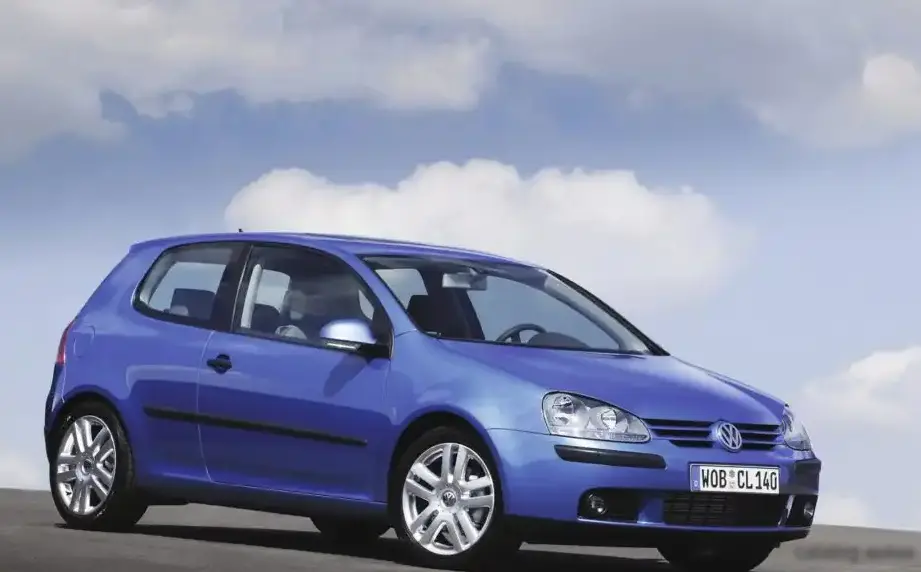
The Volkswagen Golf Mk5, produced from 2003 to 2009, represented a significant leap forward for the iconic hatchback. The 3-door variant, introduced as a more sporty and youthful option, offered a compelling package for European drivers. Among the engine options available, the 2.0 TDI with 170 horsepower and a Direct-Shift Gearbox (DSG) proved particularly popular. This configuration, available from 2005 to 2008, occupied a mid-to-high range position within the Mk5 Golf lineup, appealing to those seeking a balance of performance, fuel efficiency, and modern technology. It was positioned above the lower-powered diesel options and the base petrol engines, but below the range-topping GTI and R32 models.
Technical Specifications
| Brand | Volkswagen |
| Model | Golf |
| Generation | Golf V (3-door) |
| Type (Engine) | 2.0 TDI (170 Hp) DPF DSG |
| Start of production | 2005 |
| End of production | 2008 |
| Powertrain Architecture | Internal Combustion engine |
| Body type | Hatchback |
| Seats | 5 |
| Doors | 3 |
| Fuel consumption (urban) | 8.1-8.2 l/100 km (29 – 28.7 US mpg) |
| Fuel consumption (extra urban) | 5.4-5.5 l/100 km (43.6 – 42.8 US mpg) |
| Fuel consumption (combined) | 6.4-6.5 l/100 km (36.8 – 36.2 US mpg) |
| CO2 emissions | 173-176 g/km |
| Fuel Type | Diesel |
| Acceleration 0 – 100 km/h | 8.2 sec |
| Acceleration 0 – 62 mph | 8.2 sec |
| Acceleration 0 – 60 mph | 7.8 sec |
| Maximum speed | 218 km/h (135.46 mph) |
| Emission standard | Euro 4 |
| Weight-to-power ratio | 7.8 kg/Hp |
| Weight-to-torque ratio | 3.8 kg/Nm |
| Power | 170 Hp @ 4200 rpm |
| Torque | 350 Nm @ 1750-2500 rpm (258.15 lb.-ft. @ 1750-2500 rpm) |
| Engine layout | Front, Transverse |
| Engine Model/Code | EA188 / BMN |
| Engine displacement | 1968 cm3 (120.09 cu. in.) |
| Number of cylinders | 4 |
| Engine configuration | Inline |
| Cylinder Bore | 81 mm (3.19 in.) |
| Piston Stroke | 95.5 mm (3.76 in.) |
| Compression ratio | 18:1 |
| Number of valves per cylinder | 4 |
| Fuel injection system | Pump-nozzle (Unit Injector) |
| Engine aspiration | Turbocharger, Intercooler |
| Valvetrain | DOHC |
| Engine oil capacity | 4.3 l (4.54 US qt | 3.78 UK qt) |
| Coolant capacity | 8 l (8.45 US qt | 7.04 UK qt) |
| Kerb Weight | 1328-1480 kg (2927.74 – 3262.84 lbs.) |
| Max. weight | 1900 kg (4188.78 lbs.) |
| Max load | 420-572 kg (925.94 – 1261.04 lbs.) |
| Trunk (boot) space – minimum | 350 l (12.36 cu. ft.) |
| Trunk (boot) space – maximum | 1305 l (46.09 cu. ft.) |
| Fuel tank capacity | 55 l (14.53 US gal | 12.1 UK gal) |
| Max. roof load | 75 kg (165.35 lbs.) |
| Permitted trailer load with brakes (8%) | 1700 kg (3747.86 lbs.) |
| Permitted trailer load with brakes (12%) | 1500 kg (3306.93 lbs.) |
| Permitted trailer load without brakes | 700 kg (1543.24 lbs.) |
| Permitted towbar download | 75 kg (165.35 lbs.) |
| Length | 4204 mm (165.51 in.) |
| Width | 1759 mm (69.25 in.) |
| Width including mirrors | 2010 mm (79.13 in.) |
| Height | 1485 mm (58.46 in.) |
| Wheelbase | 2578 mm (101.5 in.) |
| Front track | 1539 mm (60.59 in.) |
| Rear track | 1528 mm (60.16 in.) |
| Front overhang | 880 mm (34.65 in.) |
| Rear overhang | 746 mm (29.37 in.) |
| Minimum turning circle | 10.9 m (35.76 ft.) |
| Front suspension | Independent, McPherson with coil spring and anti-roll bar |
| Rear suspension | Independent multi-link spring suspension with stabilizer |
| Front brakes | Ventilated discs |
| Rear brakes | Disc |
| Gearbox | 6 gears, automatic transmission DSG |
INTRODUCTION
The Volkswagen Golf Mk5 3-door 2.0 TDI (170 Hp) DPF DSG, launched in 2005, was a key variant within the fifth-generation Golf range. Built on the 1HX0/A3 platform, it aimed to provide a more engaging driving experience than its 5-door counterpart while offering the efficiency and refinement of a modern diesel engine. The inclusion of a Diesel Particulate Filter (DPF) demonstrated Volkswagen’s commitment to reducing emissions, while the DSG transmission offered quick, seamless gear changes. This model was primarily targeted at the European market, where diesel engines held a significant market share and fuel economy was a major purchasing consideration.
Powertrain & Engine Architecture
At the heart of this Golf variant lies the EA188 series 2.0-liter inline-four diesel engine, specifically the BMN code. This engine utilizes a pump-nozzle (unit injector) fuel injection system, known for its high injection pressures and precise fuel delivery, contributing to both power and efficiency. The engine features a turbocharger with an intercooler, boosting power output to 170 horsepower at 4200 rpm and 350 Nm (258 lb-ft) of torque between 1750 and 2500 rpm. The engine’s DOHC valvetrain, with four valves per cylinder, further enhances its breathing and performance. The engine is transversely mounted in the front of the vehicle.
The DSG (Direct-Shift Gearbox) is a six-speed dual-clutch transmission. It operates similarly to two manual gearboxes in one, allowing for incredibly fast and smooth gear changes. This transmission significantly enhances the driving experience, providing quicker acceleration and improved fuel economy compared to a traditional automatic transmission. The DSG’s programming is tuned to balance performance and efficiency, offering both automatic and manual shift modes.
Driving Characteristics
The 2.0 TDI DSG offered a compelling driving experience. While not as overtly sporty as the GTI, it provided ample power for everyday driving and confident overtaking. The 350 Nm of torque, available from relatively low engine speeds, meant strong acceleration in most situations. The DSG transmission contributed to this, providing quick and precise gear changes. Compared to the 1.9 TDI models, the 2.0 TDI offered a noticeable increase in power and refinement. The manual transmission versions of the 2.0 TDI felt more engaging, but the DSG offered a level of convenience and smoothness that appealed to many drivers. The gear ratios were optimized for both fuel efficiency and performance, allowing for relaxed cruising on the highway and responsive acceleration when needed.
Equipment & Trim Levels
The Golf Mk5 2.0 TDI DSG typically came equipped with a reasonable level of standard features. These included air conditioning, power windows, central locking, and an integrated audio system. Higher trim levels offered options such as alloy wheels, a multi-function steering wheel, automatic climate control, and upgraded upholstery. Interior trim generally consisted of cloth seats, although leather options were available. The dashboard layout was functional and well-designed, with clear instrumentation and intuitive controls. Optional extras included a sunroof, parking sensors, and a navigation system.
Chassis & Braking
The Golf Mk5 featured an independent suspension setup, with a McPherson strut front suspension and a multi-link rear suspension. This configuration provided a good balance of ride comfort and handling. Stabilizer bars were fitted to both the front and rear axles to reduce body roll during cornering. The braking system consisted of ventilated discs on the front wheels and solid discs on the rear. Anti-lock Braking System (ABS) was standard, enhancing safety and control. The chassis was designed to handle the increased power and torque of the 2.0 TDI engine, providing a stable and predictable driving experience.
Market Reception & Comparison
The Golf Mk5 2.0 TDI DSG was generally well-received by automotive critics. It was praised for its refined engine, smooth-shifting DSG transmission, and comfortable ride. Fuel economy was also a major selling point, with the 2.0 TDI achieving combined fuel consumption figures of around 6.4-6.5 l/100 km (36.8-36.2 US mpg). Compared to the lower-powered diesel models, the 2.0 TDI offered a significant performance upgrade, while remaining more affordable than the GTI. Reliability was generally good, although some owners reported issues with the DPF system, particularly on vehicles that primarily covered short distances.
Legacy
The Volkswagen Golf Mk5 2.0 TDI DSG remains a popular choice in the used car market today. The EA188 engine is known for its durability and tunability, making it a favorite among enthusiasts. While the DPF system can be a potential source of problems, regular maintenance and proper driving habits can help to mitigate these issues. The DSG transmission, while generally reliable, requires regular fluid changes to ensure optimal performance. Overall, this Golf variant represents a well-rounded and capable hatchback that continues to offer a compelling blend of performance, efficiency, and practicality.