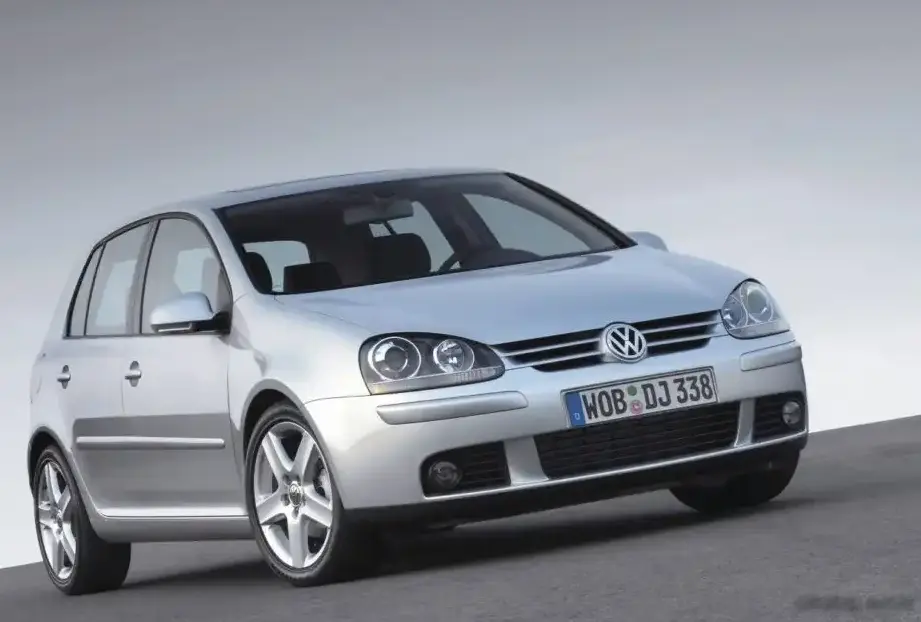
The Volkswagen Golf V, produced from 2003 to 2009, represented a significant leap forward for the iconic hatchback. Introduced as the fifth generation of the Golf, it was based on the A5 (or 1HX) platform, shared with other Volkswagen Group vehicles like the Audi A3 and SEAT León. Within the Golf V range, the 2.0 FSI 150 hp 4MOTION variant occupied a mid-to-upper position, offering a blend of performance, practicality, and all-weather capability. Production of this specific configuration ran from 2004 to 2008, primarily targeting European markets where demand for both performance and all-wheel drive was strong. This model aimed to bridge the gap between the more economical base models and the high-performance GTI.
Technical Specifications
| Brand | Volkswagen |
| Model | Golf |
| Generation | Golf V (5-door) |
| Type (Engine) | 2.0 FSI (150 Hp) 4MOTION |
| Start of production | 2004 |
| End of production | 2008 |
| Powertrain Architecture | Internal Combustion engine |
| Body type | Hatchback |
| Seats | 5 |
| Doors | 5 |
| Fuel consumption (urban) | 11.6-11.8 l/100 km (20.3 – 19.9 US mpg) |
| Fuel consumption (extra urban) | 6.6-6.8 l/100 km (35.6 – 34.6 US mpg) |
| Fuel consumption (combined) | 8.4-8.6 l/100 km (28 – 27.4 US mpg) |
| CO2 emissions | 202-206 g/km |
| Fuel Type | Petrol (Gasoline) |
| Acceleration 0 – 100 km/h | 9.2 sec |
| Acceleration 0 – 62 mph | 9.2 sec |
| Acceleration 0 – 60 mph | 8.7 sec |
| Maximum speed | 207 km/h (128.62 mph) |
| Emission standard | Euro 4 |
| Weight-to-power ratio | 9.3 kg/Hp |
| Weight-to-torque ratio | 7 kg/Nm |
| Power | 150 Hp @ 6000 rpm |
| Torque | 200 Nm @ 3500 rpm (147.51 lb.-ft. @ 3500 rpm) |
| Engine layout | Front, Transverse |
| Engine Model/Code | BLX, BVX |
| Engine displacement | 1984 cm3 (121.07 cu. in.) |
| Number of cylinders | 4 |
| Engine configuration | Inline |
| Cylinder Bore | 82.5 mm (3.25 in.) |
| Piston Stroke | 92.8 mm (3.65 in.) |
| Compression ratio | 11.5:1 |
| Number of valves per cylinder | 4 |
| Fuel injection system | Direct injection |
| Engine aspiration | Naturally aspirated |
| Valvetrain | DOHC |
| Engine oil capacity | 4.6 l (4.86 US qt | 4.05 UK qt) |
| Coolant capacity | 8 l (8.45 US qt | 7.04 UK qt) |
| Kerb Weight | 1400 kg (3086.47 lbs.) |
| Max. weight | 1920 kg (4232.88 lbs.) |
| Max load | 520 kg (1146.4 lbs.) |
| Trunk (boot) space – minimum | 275 l (9.71 cu. ft.) |
| Trunk (boot) space – maximum | 1230 l (43.44 cu. ft.) |
| Fuel tank capacity | 60 l (15.85 US gal | 13.2 UK gal) |
| Max. roof load | 75 kg (165.35 lbs.) |
| Permitted trailer load with brakes (8%) | 1800 kg (3968.32 lbs.) |
| Permitted trailer load with brakes (12%) | 1500 kg (3306.93 lbs.) |
| Permitted trailer load without brakes | 720 kg (1587.33 lbs.) |
| Permitted towbar download | 75 kg (165.35 lbs.) |
| Length | 4204 mm (165.51 in.) |
| Width | 1759 mm (69.25 in.) |
| Width including mirrors | 2010 mm (79.13 in.) |
| Height | 1485 mm (58.46 in.) |
| Wheelbase | 2578 mm (101.5 in.) |
| Front track | 1539 mm (60.59 in.) |
| Rear track | 1528 mm (60.16 in.) |
| Front overhang | 880 mm (34.65 in.) |
| Rear overhang | 746 mm (29.37 in.) |
| Minimum turning circle | 10.9 m (35.76 ft.) |
| Drivetrain Architecture | All wheel drive (4×4) |
| Number of gears | 6 |
| Type of gearbox | Manual transmission |
Powertrain & Engine Architecture
The heart of the Golf V 2.0 FSI 4MOTION is the BLX or BVX engine code, a 1984cc inline-four cylinder gasoline engine. “FSI” stands for Fuel Stratified Injection, a direct injection system developed by Volkswagen. This system injected fuel directly into the combustion chamber, allowing for more precise fuel control, higher compression ratios, and improved efficiency compared to traditional port fuel injection. The engine featured a double overhead camshaft (DOHC) valvetrain with four valves per cylinder, contributing to its respectable power output. The 2.0 FSI produced 150 horsepower at 6000 rpm and 200 Nm (147.51 lb-ft) of torque at 3500 rpm. The 4MOTION system is a permanent all-wheel drive system utilizing a viscous coupling to distribute power between the front and rear axles. This system provides enhanced traction, particularly in adverse weather conditions. The standard transmission for this variant was a 6-speed manual, although a 6-speed automatic transmission was also available, albeit less common.
Driving Characteristics
The 2.0 FSI 4MOTION Golf V offered a balanced driving experience. While not as overtly sporty as the GTI, it provided ample power for everyday driving and confident handling thanks to the all-wheel drive system. Acceleration from 0-100 km/h (0-62 mph) took around 9.2 seconds. The direct injection system contributed to a responsive throttle and a relatively flat torque curve, making it easy to drive in various situations. The 6-speed manual transmission allowed for precise gear selection, while the optional automatic provided convenience, though at the expense of some responsiveness. Compared to the 1.6L base models, the 2.0 FSI offered a noticeable performance upgrade. It also felt more refined than the diesel options, like the 1.9 TDI, though the TDI offered superior fuel economy.
Equipment & Trim Levels
The 2.0 FSI 4MOTION typically came equipped with a reasonably comprehensive list of standard features. These included air conditioning, power windows, central locking, and an integrated audio system. Higher trim levels, such as the ‘Sport’ or ‘Highline’ offered additional features like alloy wheels, sport seats, a multi-function steering wheel, and upgraded interior trim. Optional extras included a sunroof, navigation system, and parking sensors. Interior upholstery was typically cloth, with leather options available on higher-spec models. The dashboard layout was functional and well-designed, typical of Volkswagen interiors of the period.
Chassis & Braking
The Golf V utilized an independent suspension setup, with a McPherson strut front suspension and a multi-link rear suspension. This configuration provided a comfortable ride and good handling characteristics. Stabilizer bars were fitted to both the front and rear axles to reduce body roll. Braking was handled by ventilated discs on the front wheels and discs on the rear, providing adequate stopping power. Anti-lock Braking System (ABS) was standard. The 4MOTION system added to the vehicle’s stability, particularly during braking on slippery surfaces.
Market Reception & Comparison
The Golf V 2.0 FSI 4MOTION was generally well-received by automotive critics. It was praised for its refined engine, comfortable ride, and all-weather capability. However, some critics noted that the engine lacked the outright excitement of the GTI. Fuel economy was considered reasonable for a gasoline engine of this size, but it was not as efficient as the diesel alternatives. Reliability was generally good, although some owners reported issues with the FSI fuel injectors over the long term. Compared to competitors like the Ford Focus and Opel Astra, the Golf V offered a more premium feel and a more sophisticated all-wheel drive system.
Legacy
The Golf V 2.0 FSI 4MOTION remains a popular choice in the used car market. Its combination of practicality, performance, and all-wheel drive capability makes it a versatile vehicle. While the FSI engine requires regular maintenance, particularly regarding the fuel injectors, it is generally a reliable unit. The 4MOTION system continues to be highly valued by drivers in regions with harsh winters or challenging road conditions. The Golf V, and this variant in particular, solidified the Golf’s reputation as a well-rounded and dependable hatchback, continuing a legacy that spans decades.