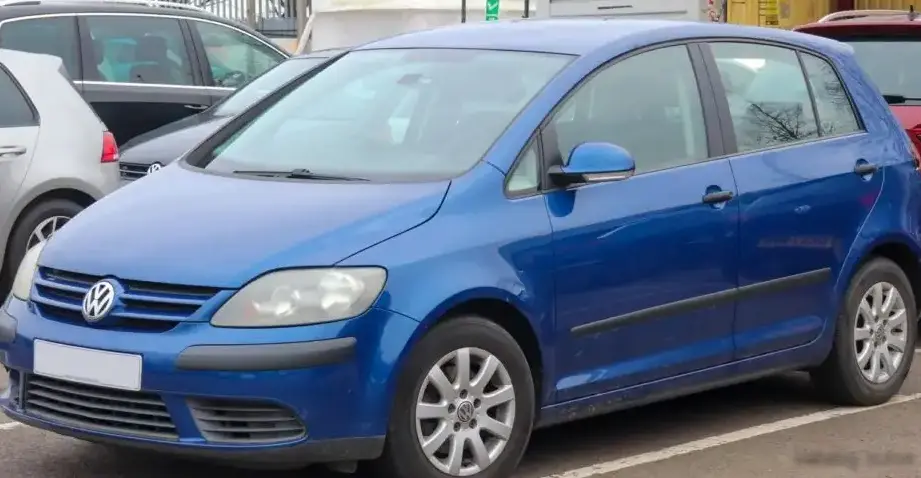
The Volkswagen Golf V Plus 1.4 TSI (160 hp) DSG represents a specific configuration within the broader Golf V Plus range, produced between April 2008 and November 2008. Positioned as a mid-range offering, this variant combined a turbocharged direct-injection petrol engine with Volkswagen’s dual-clutch gearbox (DSG) technology, aiming to deliver a balance of performance and fuel efficiency in a practical, five-door minivan body style. The Golf V Plus itself was a derivative of the fifth-generation Golf (Mk5), offering increased interior space and versatility compared to the standard hatchback, primarily targeted at families and those requiring a more flexible vehicle. It sat within the 1HX0/A3 platform family.
Technical Specifications
| Brand | Volkswagen |
| Model | Golf |
| Generation | Golf V Plus |
| Type (Engine) | 1.4 TSI (160 Hp) DSG |
| Start of production | April, 2008 |
| End of production | November, 2008 |
| Powertrain Architecture | Internal Combustion engine |
| Body type | Minivan |
| Seats | 5 |
| Doors | 5 |
| Fuel consumption (urban) | 7.9 l/100 km (29.8 US mpg, 35.8 UK mpg, 12.7 km/l) |
| Fuel consumption (extra urban) | 5.4 l/100 km (43.6 US mpg, 52.3 UK mpg, 18.5 km/l) |
| Fuel consumption (combined) | 6.3 l/100 km (37.3 US mpg, 44.8 UK mpg, 15.9 km/l) |
| Fuel Type | Petrol (Gasoline) |
| Acceleration 0 – 100 km/h | 8.5 sec |
| Acceleration 0 – 62 mph | 8.5 sec |
| Acceleration 0 – 60 mph | 8.1 sec |
| Maximum speed | 214 km/h (132.97 mph) |
| Emission standard | Euro 5 |
| Weight-to-power ratio | 8.9 kg/Hp, 112.4 Hp/tonne |
| Power | 160 Hp @ 5800 rpm |
| Power per litre | 115.1 Hp/l |
| Engine layout | Front, Transverse |
| Engine Model/Code | CAVD, CTHD |
| Engine displacement | 1390 cm3 (84.82 cu. in.) |
| Number of cylinders | 4 |
| Engine configuration | Inline |
| Number of valves per cylinder | 4 |
| Fuel injection system | Direct injection |
| Engine aspiration | Turbocharger, Intercooler |
| Engine oil capacity | 3.6 l (3.8 US qt | 3.17 UK qt) |
| Kerb Weight | 1424 kg (3139.38 lbs.) |
| Max. weight | 2010 kg (4431.29 lbs.) |
| Max load | 586 kg (1291.91 lbs.) |
| Trunk (boot) space – minimum | 305 l (10.77 cu. ft.) |
| Trunk (boot) space – maximum | 1360 l (48.03 cu. ft.) |
| Fuel tank capacity | 55 l (14.53 US gal | 12.1 UK gal) |
| Length | 4204 mm (165.51 in.) |
| Width | 1759 mm (69.25 in.) |
| Height | 1592 mm (62.68 in.) |
| Wheelbase | 2578 mm (101.5 in.) |
| Front track | 1541 mm (60.67 in.) |
| Rear (Back) track | 1517 mm (59.72 in.) |
| Minimum turning circle | 10.8 m (35.43 ft.) |
| Drivetrain Architecture | The Internal combustion engine (ICE) drives the front wheels of the vehicle. |
| Drive wheel | Front wheel drive |
| Number of gears and type of gearbox | 7 gears, automatic transmission |
| Front suspension | Independent, type McPherson with coil spring and anti-roll bar |
| Rear suspension | Independent multi-link spring suspension with stabilizer |
| Front brakes | Ventilated discs |
| Rear brakes | Disc |
| Assisting systems | ABS (Anti-lock braking system) |
| Steering type | Steering rack and pinion |
| Power steering | Electric Steering |
| Wheel rims size | 6J x 15; 6.5J x 16; 7J x 17 |
Powertrain & Engine Architecture
At the heart of the Golf V Plus 1.4 TSI DSG lies the 1.4-liter, four-cylinder petrol engine, specifically utilizing either the CAVD or CTHD engine code. This engine is a member of Volkswagen’s TSI (Turbocharged Stratified Injection) family, representing a significant advancement in petrol engine technology. It features direct fuel injection, delivering fuel directly into the combustion chamber for improved efficiency and reduced emissions. A turbocharger with an intercooler is employed to boost power output, overcoming the limitations typically associated with smaller displacement engines. The engine’s valvetrain utilizes four valves per cylinder, enhancing breathing and contributing to its overall performance. The 160 hp output is achieved through careful calibration of the engine management system, balancing power delivery with fuel economy. The engine is transversely mounted in the front of the vehicle.
The ‘DSG’ portion of the name refers to Volkswagen’s 7-speed dual-clutch transmission. This transmission operates similarly to two manual gearboxes in one, with one clutch controlling the odd gears and the other controlling the even gears. This allows for incredibly fast and smooth gear changes, enhancing both acceleration and driving comfort. The DSG transmission is electronically controlled, adapting shift points based on driving conditions and driver input. It offers both fully automatic and manual shift modes, providing the driver with a degree of control over gear selection.
Driving Characteristics
The 1.4 TSI DSG equipped Golf V Plus offered a noticeable step up in performance compared to lower-powered variants, such as those with the 1.6-liter engine. While not a sports car, the 160 hp output and the quick-shifting DSG transmission provided brisk acceleration, with a 0-60 mph time of around 8.1 seconds. The turbocharger provides a noticeable boost in power during acceleration, offering a responsive driving experience. The DSG transmission contributes to smooth and seamless gear changes, minimizing interruptions in power delivery. Compared to a manual transmission, the DSG offers convenience, particularly in urban driving, but some enthusiasts might find it less engaging. The gear ratios are tuned for a balance between acceleration and fuel efficiency, making it suitable for both city and highway driving.
Equipment & Trim Levels
The Golf V Plus 1.4 TSI DSG typically came equipped with a reasonable level of standard features. These included air conditioning, power windows, central locking, and an audio system. Interior upholstery was generally cloth, although leather options were available as upgrades. Dashboard configuration was typical of the Mk5 Golf, with a functional and straightforward design. Optional extras included alloy wheels, a sunroof, parking sensors, and a more advanced audio system with navigation. The specific trim level (Trendline, Comfortline, or Highline) dictated the level of standard equipment, with higher trims offering more luxurious features.
Chassis & Braking
The Golf V Plus 1.4 TSI DSG utilized an independent suspension system on both the front and rear axles. The front suspension employed a McPherson strut design with coil springs and an anti-roll bar, while the rear suspension featured a multi-link setup, also with coil springs and a stabilizer bar. This suspension configuration provided a comfortable ride quality while maintaining reasonable handling characteristics. Braking duties were handled by ventilated discs on the front wheels and solid discs on the rear. An Anti-lock Braking System (ABS) was standard, enhancing braking performance and safety. The steering system was a rack and pinion type with electric power assistance.
Market Reception & Comparison
The Golf V Plus 1.4 TSI DSG was generally well-received by automotive critics. It was praised for its combination of performance, fuel efficiency, and practicality. The DSG transmission was a particular highlight, lauded for its smooth and quick gear changes. Compared to the lower-powered 1.6-liter variants, the 1.4 TSI offered a significant improvement in performance, making it a more enjoyable driving experience. However, it was more expensive than the base models. Compared to the higher-performance Golf GTI, the 1.4 TSI offered a more economical and practical alternative, albeit with less outright performance. Fuel economy was a strong point, with combined figures around 37.3 US mpg.
Legacy
The 1.4 TSI engine and DSG transmission combination proved to be relatively reliable, although, like any complex system, they are not without potential issues. Common concerns include potential problems with the turbocharger, DSG mechatronic unit, and carbon buildup on the intake valves (a common issue with direct-injection engines). Regular maintenance, including oil changes and DSG fluid changes, is crucial for ensuring long-term reliability. Today, the Golf V Plus 1.4 TSI DSG can be found on the used car market at relatively affordable prices. It remains a practical and versatile vehicle, offering a good balance of performance, fuel efficiency, and comfort. Its continued presence in the used car market is a testament to the Golf’s enduring popularity and the quality of its engineering.