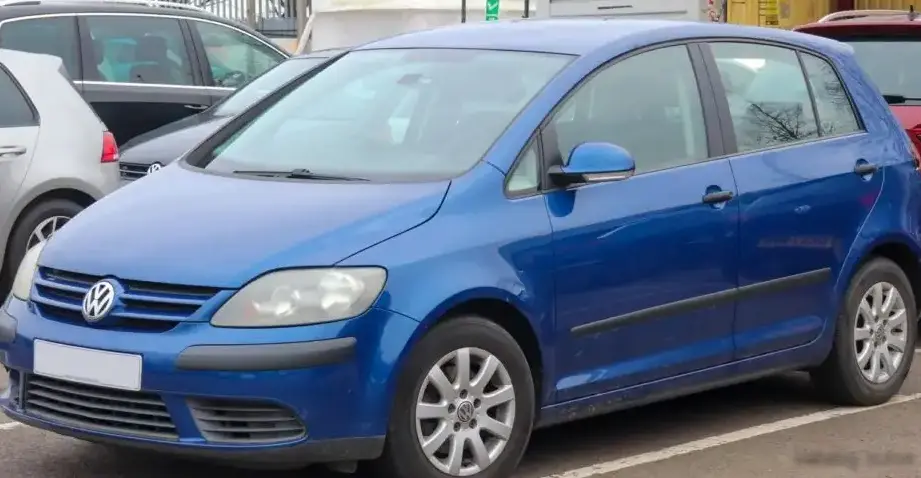
The Volkswagen Golf V Plus 1.9 TDI (105 hp) was a popular variant of the Golf V Plus, a compact multi-purpose vehicle (MPV) produced by Volkswagen from December 2004 to November 2008. Positioned as a practical and fuel-efficient option within the Golf V Plus range, it catered to buyers seeking a versatile vehicle for family use or light commercial applications. The Golf V Plus itself was based on the Golf V (Mk5) platform (1HX0/A3) but featured an extended wheelbase and a taller roofline, offering increased interior space and cargo capacity compared to the standard Golf hatchback. This 1.9 TDI model represented a core offering, balancing performance with economy, and was a mainstay in many European markets.
Technical Specifications
| Brand | Volkswagen |
| Model | Golf |
| Generation | Golf V Plus |
| Type (Engine) | 1.9 TDI (105 Hp) |
| Start of production | December, 2004 |
| End of production | November, 2008 |
| Powertrain Architecture | Internal Combustion engine |
| Body type | Minivan |
| Seats | 5 |
| Doors | 5 |
| Fuel consumption (urban) | 6.9 l/100 km (34.1 US mpg, 40.9 UK mpg, 14.5 km/l) |
| Fuel consumption (extra urban) | 4.6 l/100 km (51.1 US mpg, 61.4 UK mpg, 21.7 km/l) |
| Fuel consumption (combined) | 5.4 l/100 km (43.6 US mpg, 52.3 UK mpg, 18.5 km/l) |
| Fuel Type | Diesel |
| Acceleration 0 – 100 km/h | 11.9 sec |
| Acceleration 0 – 62 mph | 11.9 sec |
| Acceleration 0 – 60 mph | 11.3 sec |
| Maximum speed | 183 km/h (113.71 mph) |
| Weight-to-power ratio | 13.3 kg/Hp, 75.3 Hp/tonne |
| Weight-to-torque ratio | 5.6 kg/Nm, 179.2 Nm/tonne |
| Power | 105 Hp @ 4000 rpm |
| Power per litre | 55.4 Hp/l |
| Torque | 250 Nm @ 1900 rpm (184.39 lb.-ft. @ 1900 rpm) |
| Engine layout | Front, Transverse |
| Engine Model/Code | EA188 / BXE |
| Engine displacement | 1896 cm3 (115.7 cu. in.) |
| Number of cylinders | 4 |
| Engine configuration | Inline |
| Cylinder Bore | 79.5 mm (3.13 in.) |
| Piston Stroke | 95.5 mm (3.76 in.) |
| Compression ratio | 19:1 |
| Number of valves per cylinder | 2 |
| Fuel injection system | Pump-nozzle (Unit Injector) |
| Engine aspiration | Turbocharger, Intercooler |
| Engine oil capacity | 3.8 l (4.02 US qt | 3.34 UK qt) |
| Coolant | 8 l (8.45 US qt | 7.04 UK qt) |
| Kerb Weight | 1395 kg (3075.45 lbs.) |
| Trunk (boot) space – minimum | 395 l (13.95 cu. ft.) |
| Trunk (boot) space – maximum | 1450 l (51.21 cu. ft.) |
| Fuel tank capacity | 55 l (14.53 US gal | 12.1 UK gal) |
| Length | 4206 mm (165.59 in.) |
| Width | 1759 mm (69.25 in.) |
| Height | 1580 mm (62.2 in.) |
| Wheelbase | 2578 mm (101.5 in.) |
| Front track | 1539 mm (60.59 in.) |
| Rear (Back) track | 1528 mm (60.16 in.) |
| Drivetrain Architecture | The Internal combustion engine (ICE) drives the front wheels of the vehicle. |
| Drive wheel | Front wheel drive |
| Number of gears and type of gearbox | 5 gears, manual transmission |
| Front suspension | Spring Strut |
| Rear suspension | Coil spring |
| Front brakes | Ventilated discs |
| Rear brakes | Disc |
| Assisting systems | ABS (Anti-lock braking system) |
| Steering type | Steering rack and pinion |
| Tires size | 195/65 R15H |
| Wheel rims size | 6J x 15 |
Powertrain & Engine Architecture
The heart of the Golf V Plus 1.9 TDI was the EA188 series 1.9-liter inline-four diesel engine, specifically the BXE code. This engine was a workhorse for the Volkswagen Group, known for its durability and fuel efficiency. It featured a cast iron block and an aluminum cylinder head with two valves per cylinder. The BXE engine utilized a pump-nozzle (unit injector) fuel injection system, a technology that allowed for precise fuel delivery and contributed to the engine’s relatively high torque output at low engine speeds. A turbocharger with an intercooler was employed to boost power and improve combustion efficiency. The 5-speed manual transmission was the standard offering, providing a balance between fuel economy and drivability. The engine’s layout was front-transverse, a common configuration for front-wheel-drive vehicles.
Driving Characteristics
The 105 hp 1.9 TDI engine in the Golf V Plus delivered adequate performance for everyday driving. Acceleration from 0-60 mph took around 11.3 seconds, and the top speed was approximately 113.71 mph. While not particularly sporty, the engine’s 250 Nm (184 lb-ft) of torque, available from just 1900 rpm, provided good pulling power for overtaking and navigating hills. Compared to the more powerful 2.0 TDI variants, the 1.9 TDI felt less strained at higher speeds and offered a more relaxed driving experience. The 5-speed manual transmission was well-matched to the engine’s characteristics, with gear ratios optimized for fuel efficiency and usability. The Golf V Plus, being heavier than the standard Golf, felt slightly less nimble, but the suspension provided a comfortable ride.
Equipment & Trim Levels
The Golf V Plus 1.9 TDI typically came with a reasonable level of standard equipment. This included central locking, electric front windows, power steering, and an ABS anti-lock braking system. Interior upholstery was usually cloth, with a functional and durable design. Optional extras included alloy wheels, air conditioning, a CD stereo system, and parking sensors. Higher trim levels, such as the ‘Trendline’ or ‘Comfortline’, added features like climate control, upgraded upholstery, and additional safety equipment. The Golf V Plus was designed with practicality in mind, offering a versatile interior with numerous storage compartments and a configurable rear seating arrangement.
Chassis & Braking
The Golf V Plus 1.9 TDI utilized a MacPherson strut front suspension and a coil spring rear suspension. This setup provided a good balance between ride comfort and handling. The front brakes were ventilated discs, offering good stopping power, while the rear brakes were solid discs. The ABS system helped to prevent wheel lock-up during hard braking, enhancing safety. The Golf V Plus’s chassis was reinforced to accommodate the increased weight and dimensions compared to the standard Golf. Stabilizer bars were fitted to both the front and rear axles to reduce body roll during cornering.
Market Reception & Comparison
The Golf V Plus 1.9 TDI was well-received in the European market as a practical and economical MPV. Critics praised its spacious interior, fuel efficiency, and comfortable ride. However, some noted that the 1.9 TDI engine lacked the outright performance of the more powerful diesel options. Compared to the 2.0 TDI variants, the 1.9 TDI offered better fuel economy and lower running costs, making it an attractive option for budget-conscious buyers. It also proved to be more reliable than some of the more complex engine options in the range. The Golf V Plus competed with other compact MPVs such as the Opel/Vauxhall Zafira and the Renault Scenic.
Legacy
The 1.9 TDI engine, in general, has a reputation for being robust and reliable, and the BXE code is no exception. Properly maintained examples of the Golf V Plus 1.9 TDI continue to be relatively common on the used car market. While age and mileage can affect reliability, these vehicles generally offer good value for money. Common issues include wear and tear on suspension components and potential problems with the turbocharger. However, the engine itself is known for its longevity, and many examples have exceeded 200,000 miles with regular servicing. The Golf V Plus 1.9 TDI remains a popular choice for those seeking a practical, fuel-efficient, and affordable MPV.