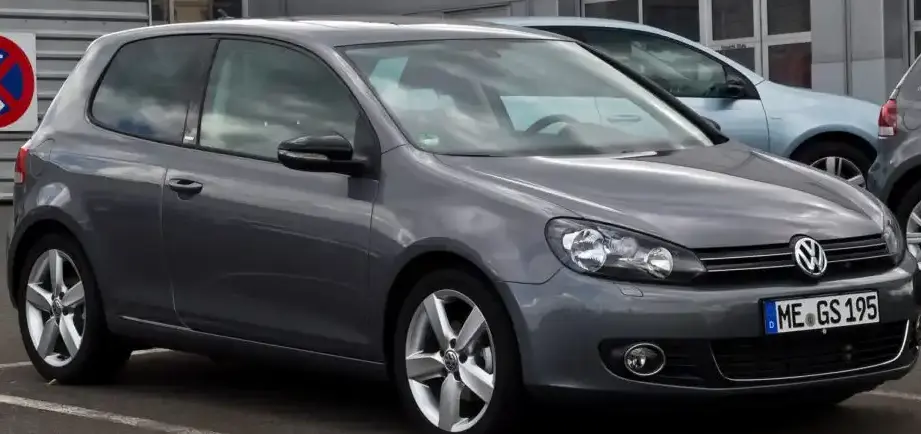
The Volkswagen Golf VI 1.2 TSI (105 hp) DSG, produced from 2009 to 2012, represented an entry point into the sixth generation of Volkswagen’s iconic hatchback. Positioned as a fuel-efficient and accessible option within the Golf VI range, this variant catered to buyers prioritizing economy and ease of use over outright performance. It was primarily sold in Europe, where smaller displacement engines and automatic transmissions were increasingly popular, offering a balance between practicality and modern technology. This 3-door hatchback occupied a crucial space in the lineup, bridging the gap between base models and the more powerful, performance-oriented trims.
Technical Specifications
| Brand | Volkswagen |
| Model | Golf |
| Generation | Golf VI (3-door) |
| Type (Engine) | 1.2 TSI (105 Hp) DSG |
| Start of production | 2009 |
| End of production | 2012 |
| Powertrain Architecture | Internal Combustion engine |
| Body type | Hatchback |
| Seats | 5 |
| Doors | 3 |
| Fuel consumption (urban) | 7.3 l/100 km (32.2 US mpg, 38.7 UK mpg, 13.7 km/l) |
| Fuel consumption (extra urban) | 4.9 l/100 km (48 US mpg, 57.6 UK mpg, 20.4 km/l) |
| Fuel consumption (combined) | 5.8 l/100 km (40.6 US mpg, 48.7 UK mpg, 17.2 km/l) |
| CO2 emissions | 134 g/km |
| Fuel Type | Petrol (Gasoline) |
| Acceleration 0 – 100 km/h | 10.6 sec |
| Acceleration 0 – 62 mph | 10.6 sec |
| Acceleration 0 – 60 mph | 10.1 sec |
| Maximum speed | 190 km/h (118.06 mph) |
| Emission standard | Euro 5 |
| Weight-to-power ratio | 11.3 kg/Hp, 88.3 Hp/tonne |
| Weight-to-torque ratio | 6.8 kg/Nm, 147.2 Nm/tonne |
| Power | 105 Hp @ 5000 rpm |
| Power per litre | 87.7 Hp/l |
| Torque | 175 Nm @ 1550-4100 rpm (129.07 lb.-ft. @ 1550-4100 rpm) |
| Engine layout | Front, Transverse |
| Engine Model/Code | CBZB |
| Engine displacement | 1197 cm3 (73.05 cu. in.) |
| Number of cylinders | 4 |
| Engine configuration | Inline |
| Number of valves per cylinder | 2 |
| Fuel injection system | Direct injection |
| Engine aspiration | Turbocharger, Intercooler |
| Valvetrain | SOHC |
| Engine oil capacity | 3.6 l (3.8 US qt | 3.17 UK qt) |
| Kerb Weight | 1189 kg (2621.3 lbs.) |
| Max. weight | 1820 kg (4012.41 lbs.) |
| Max load | 631 kg (1391.12 lbs.) |
| Trunk (boot) space – minimum | 350 l (12.36 cu. ft.) |
| Trunk (boot) space – maximum | 1305 l (46.09 cu. ft.) |
| Fuel tank capacity | 55 l (14.53 US gal | 12.1 UK gal) |
| Max. roof load | 75 kg (165.35 lbs.) |
| Permitted trailer load with brakes (8%) | 1500 kg (3306.93 lbs.) |
| Permitted trailer load with brakes (12%) | 1200 kg (2645.55 lbs.) |
| Permitted trailer load without brakes | 630 kg (1388.91 lbs.) |
| Permitted towbar download | 75 kg (165.35 lbs.) |
| Length | 4199 mm (165.31 in.) |
| Width | 1779 mm (70.04 in.) |
| Width including mirrors | 2048 mm (80.63 in.) |
| Height | 1480 mm (58.27 in.) |
| Wheelbase | 2578 mm (101.5 in.) |
| Front track | 1541 mm (60.67 in.) |
| Rear track | 1514 mm (59.61 in.) |
| Ride height (ground clearance) | 150 mm (5.91 in.) |
| Minimum turning circle | 10.9 m (35.76 ft.) |
| Front suspension | Independent type McPherson, Transverse stabilizer |
| Rear suspension | Independent multi-link suspension, Transverse stabilizer |
| Front brakes | Ventilated discs |
| Rear brakes | Disc |
| Assisting systems | ABS (Anti-lock braking system) |
| Steering type | Steering rack and pinion |
| Power steering | Electric Steering |
| Tires size | 195/65 R 15 |
| Wheel rims size | 6 J x 15 |
| Number of gears and type of gearbox | 7 gears, automatic transmission DSG |
INTRODUCTION
The Golf VI, launched in 2008, continued Volkswagen’s tradition of a refined and practical compact hatchback. The 1.2 TSI with the 7-speed DSG dual-clutch transmission, introduced in 2009, was a key variant aimed at maximizing fuel efficiency and offering a comfortable driving experience. Built on the A5 platform (internally designated 1HX0 for the 3-door), this model benefited from improvements in build quality and interior design compared to its predecessor. The 1.2 TSI engine was a relatively new addition to the VW lineup, representing a downsized, turbocharged approach to petrol engine design.
Powertrain & Engine Architecture
The heart of this Golf variant is the 1.2-liter TSI (Turbocharged Stratified Injection) engine, specifically the CBZB engine code. This engine is a four-cylinder, inline configuration with two valves per cylinder, operated by a single overhead camshaft (SOHC). The key to its efficiency and performance lies in its direct injection system and turbocharging. Direct injection allows for precise fuel delivery, optimizing combustion and reducing emissions. The turbocharger, coupled with an intercooler, forces more air into the engine, boosting power output despite the small displacement. The 1.2 TSI produces 105 horsepower at 5000 rpm and 175 Nm (129 lb-ft) of torque between 1550 and 4100 rpm. This torque curve provides good low-end responsiveness, making it suitable for everyday driving. Paired with the engine is the 7-speed DSG (Direct-Shift Gearbox), a dual-clutch transmission known for its quick and smooth gear changes. The DSG automatically selects the optimal gear for the driving conditions, further enhancing fuel economy and performance.
Driving Characteristics
The 1.2 TSI DSG Golf VI offers a comfortable and refined driving experience. While not a performance-oriented model, the turbocharger provides adequate acceleration for most situations. The 0-60 mph time of around 10.1 seconds is respectable for a car in this class. The DSG transmission contributes to smooth gear changes, and the wide gear ratio spread helps to keep the engine in its optimal power band. Compared to the manual transmission versions, the DSG offers greater convenience, especially in urban traffic. However, it doesn’t provide the same level of driver engagement. Compared to higher-output Golf VI variants, such as the 1.4 TSI or the GTI, the 1.2 TSI feels less powerful, particularly when fully loaded or tackling steep hills. The suspension is tuned for comfort, providing a relatively smooth ride, but it may not be as sporty as some competitors.
Equipment & Trim Levels
The 1.2 TSI DSG typically came with a reasonable level of standard equipment. This included air conditioning, electric front windows, central locking, and a basic audio system. Safety features such as ABS, airbags, and stability control were also standard. Interior upholstery was typically cloth, with a functional and durable design. Optional extras included alloy wheels, a more advanced audio system, parking sensors, and climate control. Trim levels varied depending on the market, but generally, the 1.2 TSI DSG sat in the lower to mid-range of the Golf VI lineup. It was positioned above the base models but below the more luxurious and performance-focused trims.
Chassis & Braking
The Golf VI 1.2 TSI DSG utilizes an independent suspension system on both the front and rear axles. The front suspension employs a McPherson strut design with a transverse stabilizer bar, while the rear features a multi-link setup, also with a stabilizer bar. This configuration provides a good balance between ride comfort and handling. Braking duties are handled by ventilated discs on the front wheels and solid discs on the rear. ABS (Anti-lock Braking System) is standard, enhancing braking performance and safety. The chassis is designed to be relatively lightweight, contributing to the car’s fuel efficiency and agility.
Market Reception & Comparison
The Golf VI 1.2 TSI DSG was generally well-received by critics for its fuel efficiency and comfortable driving experience. It was praised for its refined engine and smooth-shifting DSG transmission. However, some reviewers noted that the engine could feel strained when pushed hard, and the overall performance was not as exciting as some of its rivals. Compared to other trims in the Golf VI lineup, the 1.2 TSI DSG offered the best fuel economy, making it an attractive option for drivers prioritizing running costs. The 1.4 TSI offered more power and performance, while the diesel variants (like the 1.6 TDI or 2.0 TDI) provided even greater fuel efficiency but with a different driving character. Reliability was generally good, although some owners reported minor issues with the DSG transmission.
Legacy
The 1.2 TSI engine, and the Golf VI variant featuring it, proved to be a popular choice for buyers seeking a fuel-efficient and practical hatchback. The engine’s combination of turbocharging and direct injection set a new standard for small-displacement petrol engines. In the used car market, the Golf VI 1.2 TSI DSG remains a relatively affordable and reliable option. However, potential buyers should be aware of the potential for DSG transmission issues and ensure that the car has been properly maintained. The Golf VI, as a whole, is regarded as a well-built and durable car, and the 1.2 TSI DSG variant continues to offer a compelling blend of economy, comfort, and practicality.