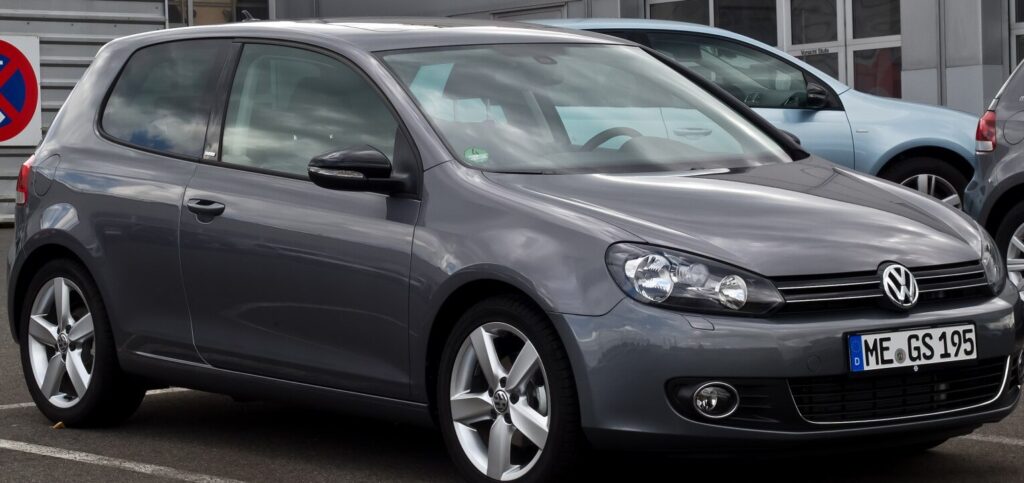
The Volkswagen Golf VI 1.6, produced from October 2008 to April 2013, represented an entry-level offering within the sixth generation (Mk6) Golf lineup. Positioned as a more affordable and fuel-efficient option, this 3-door hatchback aimed at buyers prioritizing practicality and economy over outright performance. It was a key variant in the 1HX0/A3 platform, offering a balance between cost and the Golf’s renowned build quality and refinement. The 1.6-liter engine, producing 102 horsepower, was paired exclusively with a 5-speed manual transmission in most markets, though an optional 6-speed automatic was available in some regions. This configuration served as a gateway into the Golf range, appealing to first-time buyers, city commuters, and those seeking a sensible and reliable vehicle.
Powertrain & Engine Architecture
The heart of the Golf VI 1.6 is the BSE, BSF, or CCSA engine code 1.6-liter inline four-cylinder gasoline engine. This engine is a naturally aspirated unit, meaning it relies solely on atmospheric pressure to draw air into the cylinders, rather than forced induction like a turbocharger. It features a multi-port fuel injection system, delivering fuel directly into the intake manifold just before the intake valves. The valvetrain utilizes an overhead camshaft (OHC) design, operating two valves per cylinder (two intake, two exhaust). This configuration is relatively simple and contributes to the engine’s reliability and ease of maintenance.
The 1.6-liter engine boasts a compression ratio of 10.5:1, a bore of 81mm, and a stroke of 77.4mm, resulting in a displacement of 1595 cm³ (97.33 cubic inches). Engine oil capacity is 4.5 liters (4.76 US quarts or 3.96 UK quarts), and the recommended oil specification should be consulted in the vehicle’s owner’s manual. The 5-speed manual transmission used in conjunction with this engine is a standard front-wheel-drive configuration. Gear ratios are tuned for fuel efficiency and everyday drivability, prioritizing smooth acceleration and comfortable cruising rather than sporty performance. The optional 6-speed automatic transmission, while less common, offered a more relaxed driving experience, particularly in urban environments.
Engine Codes & Variations
The BSE, BSF, and CCSA engine codes represent minor variations within the 1.6-liter family. These differences typically relate to emissions control equipment and software calibrations to meet varying regional regulations. The BSF code, for example, was often found in vehicles destined for markets with stricter emissions standards. Mechanically, the core engine components remained largely consistent across these variants.
Driving Characteristics
The Golf VI 1.6 with the 5-speed manual transmission delivers a modest but adequate driving experience. Acceleration from 0-100 km/h (0-62 mph) takes approximately 11.3 seconds, and 0-60 mph is achieved in around 10.7 seconds. The maximum speed is rated at 188 km/h (116.82 mph). While not a performance-oriented vehicle, the 1.6-liter engine provides sufficient power for everyday driving situations, including city commuting and highway cruising. The engine’s torque output of 148 Nm (109.16 lb-ft) at 3800 rpm is sufficient for overtaking maneuvers, although drivers may need to downshift to access optimal power.
Compared to the more powerful Golf variants, such as the 1.4 TSI or the GTI, the 1.6-liter model feels noticeably slower. However, it offers a more forgiving and accessible driving experience, particularly for less experienced drivers. The manual transmission provides a direct connection to the engine, allowing for precise gear selection and control. The optional automatic transmission, while convenient, can feel somewhat sluggish and may result in slightly reduced fuel economy.
Equipment & Trim Levels
The Golf VI 1.6 typically came equipped with a reasonable level of standard features, reflecting its position as an entry-level model. Standard equipment generally included power windows, central locking, air conditioning, and an audio system with CD player. Safety features such as ABS (Anti-lock Braking System) and front airbags were also standard. Interior upholstery was typically cloth, with a relatively simple dashboard layout.
Optional extras varied depending on the market and year of production, but commonly included alloy wheels, upgraded audio systems, parking sensors, and climate control. Higher trim levels, often denoted by additional badging, offered more luxurious interior appointments, such as upgraded upholstery and trim materials. The 3-door configuration prioritized a sportier aesthetic and slightly reduced weight compared to the 5-door model.
Chassis & Braking
The Golf VI 1.6 utilizes an independent suspension system, featuring McPherson struts at the front and a multi-link setup at the rear. This configuration provides a good balance between ride comfort and handling. A stabilizer bar is included at both the front and rear to reduce body roll during cornering. The braking system consists of ventilated discs at the front and discs at the rear, providing adequate stopping power for the vehicle’s weight and performance. The electric power steering system offers light and precise steering feel, making it easy to maneuver in tight spaces.
The kerb weight of the Golf VI 1.6 is approximately 1157 kg (2550.75 lbs), contributing to its relatively nimble handling. Tire sizes typically ranged from 195/65 R15 to 205/55 R16, depending on the trim level and optional equipment.
Market Reception & Comparison
The Golf VI 1.6 was generally well-received by automotive critics as a sensible and practical choice. It was praised for its fuel efficiency, comfortable ride, and solid build quality. However, it was also criticized for its relatively modest performance and lack of excitement. Compared to other trims in the Golf lineup, such as the 1.4 TSI or the GTI, the 1.6-liter model offered a more affordable entry point but lacked the performance and refinement of its more expensive siblings.
Fuel economy figures are rated at 7.1 l/100 km (33.1 US mpg or 39.8 UK mpg), making it a relatively economical vehicle to operate. Reliability is generally good, with the 1.6-liter engine proving to be a durable and long-lasting unit. However, like all vehicles, regular maintenance is essential to ensure optimal performance and longevity.
Technical Specifications
| Brand | Volkswagen |
| Model | Golf |
| Generation | Golf VI (3-door) |
| Type (Engine) | 1.6 (102 Hp) |
| Start of production | October, 2008 |
| End of production | April, 2013 |
| Powertrain Architecture | Internal Combustion engine |
| Body type | Hatchback |
| Seats | 5 |
| Doors | 3 |
| Fuel consumption (urban) | 9.7 l/100 km (24.2 US mpg) |
| Fuel consumption (extra urban) | 5.6 l/100 km (42 US mpg) |
| Fuel consumption (combined) | 7.1 l/100 km (33.1 US mpg) |
| Fuel Type | Petrol (Gasoline) |
| Acceleration 0 – 100 km/h | 11.3 sec |
| Acceleration 0 – 62 mph | 11.3 sec |
| Acceleration 0 – 60 mph | 10.7 sec |
| Maximum speed | 188 km/h (116.82 mph) |
| Emission standard | Euro 5 |
| Weight-to-power ratio | 11.3 kg/Hp |
| Power | 102 Hp @ 5600 rpm |
| Torque | 148 Nm @ 3800 rpm (109.16 lb.-ft. @ 3800 rpm) |
| Engine layout | Front, Transverse |
| Engine Model/Code | BSE, BSF, CCSA |
| Engine displacement | 1595 cm3 (97.33 cu. in.) |
| Number of cylinders | 4 |
| Engine configuration | Inline |
| Cylinder Bore | 81 mm (3.19 in.) |
| Piston Stroke | 77.4 mm (3.05 in.) |
| Compression ratio | 10.5:1 |
| Number of valves per cylinder | 2 |
| Fuel injection system | Multi-port manifold injection |
| Engine aspiration | Naturally aspirated engine |
| Valvetrain | OHC |
| Engine oil capacity | 4.5 l (4.76 US qt | 3.96 UK qt) |
| Kerb Weight | 1157 kg (2550.75 lbs.) |
| Max. weight | 1780 kg (3924.23 lbs.) |
| Trunk (boot) space – minimum | 350 l (12.36 cu. ft.) |
| Trunk (boot) space – maximum | 1305 l (46.09 cu. ft.) |
| Fuel tank capacity | 55 l (14.53 US gal | 12.1 UK gal) |
| Length | 4199 mm (165.31 in.) |
| Width | 1779-1786 mm (70.04 – 70.31 in.) |
| Height | 1512 mm (59.53 in.) |
| Wheelbase | 2575 mm (101.38 in.) |
Legacy
The Golf VI 1.6, while not the most exciting variant in the lineup, has proven to be a reliable and affordable option in the used car market. The 1.6-liter engine is known for its durability and relatively low maintenance costs. Parts availability is generally good, and the simple engine design makes it relatively easy to repair. Today, these models represent a good value for buyers seeking a practical and economical hatchback. However, potential buyers should be aware of the age-related wear and tear common to all vehicles of this era, and a thorough inspection is recommended before purchase. The Golf VI 1.6 continues to be a popular choice for those seeking a dependable and fuel-efficient vehicle, cementing its place as a sensible and enduring member of the Golf family.