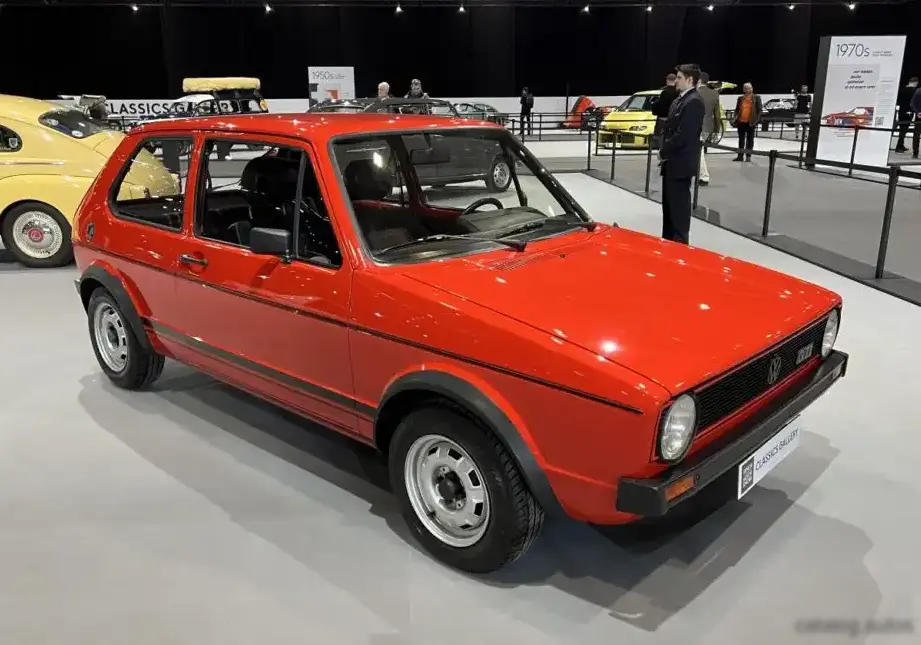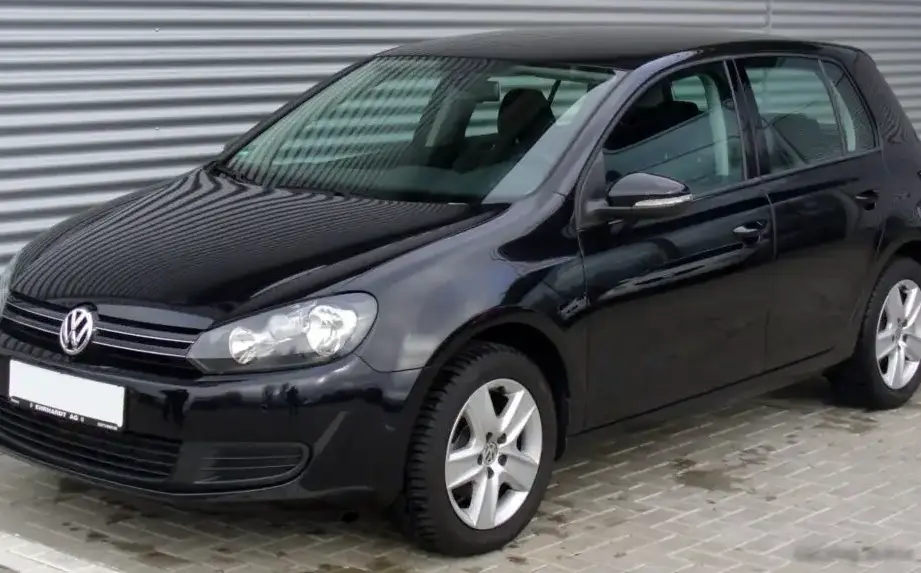
The Volkswagen Golf VI 1.6 (102/98 hp) BiFuel, produced from 2009 to 2012, represents a significant offering in the sixth generation of Volkswagen’s iconic Golf. This five-door hatchback was specifically tailored for European markets seeking a flexible-fuel vehicle, capable of running on both gasoline and Liquefied Petroleum Gas (LPG). Positioned as an entry-level to mid-range option within the Golf VI lineup, it aimed to provide economical transportation with a reduced environmental impact, particularly appealing to drivers concerned with fuel costs and emissions. The Golf VI itself, built on the A6 platform (also known as the 1HX0/A3 platform), continued the Golf’s tradition of practicality, build quality, and a comfortable driving experience.
Technical Specifications
| Brand | Volkswagen |
| Model | Golf |
| Generation | Golf VI (5-door) |
| Type (Engine) | 1.6 (102/98 Hp) BiFuel |
| Start of production | 2009 |
| End of production | 2012 |
| Powertrain Architecture | Internal Combustion engine |
| Body type | Hatchback |
| Seats | 5 |
| Doors | 5 |
| Fuel consumption (economy) – urban (NEDC) | 9.6 l/100 km (24.5 US mpg, 29.4 UK mpg, 10.4 km/l) |
| Fuel consumption (economy) – urban (LPG) (NEDC) | 12.5 l/100 km |
| Fuel consumption (economy) – extra urban (NEDC) | 5.7 l/100 km (41.3 US mpg, 49.6 UK mpg, 17.5 km/l) |
| Fuel consumption (economy) – extra urban (LPG) (NEDC) | 7.3 l/100 km |
| Fuel consumption (economy) – combined (NEDC) | 7.1 l/100 km (33.1 US mpg, 39.8 UK mpg, 14.1 km/l) |
| Fuel consumption (economy) – combined (LPG) (NEDC) | 9.2 l/100 km |
| CO2 emissions (NEDC) | 166 g/km |
| CO2 emissions (LPG) (NEDC) | 149 g/km |
| Fuel Type | Petrol / LPG |
| Acceleration 0 – 100 km/h | 11.9 sec |
| Acceleration 0 – 62 mph | 11.9 sec |
| Acceleration 0 – 100 km/h (LPG) | 12.1 sec |
| Acceleration 0 – 60 mph (Calculated) | 11.3 sec |
| Maximum speed | 188 km/h (116.82 mph) |
| Maximum speed (LPG) | 185 km/h |
| Emission standard | Euro 5 |
| Weight-to-power ratio | 12.2 kg/Hp, 81.8 Hp/tonne |
| Weight-to-torque ratio | 8.4 kg/Nm, 118.7 Nm/tonne |
| Power | 102 Hp @ 5600 rpm |
| Power per litre | 63.9 Hp/l |
| Power (LPG) | 98 Hp @ 5600 rpm |
| Power per litre (LPG) | 61.4 Hp/l |
| Torque | 148 Nm @ 3800 rpm (109.16 lb.-ft. @ 3800 rpm) |
| Torque (LPG) | 144 Nm @ 3800 rpm |
| Engine layout | Front, Transverse |
| Engine Model/Code | CHGA |
| Engine displacement | 1595 cm3 (97.33 cu. in.) |
| Number of cylinders | 4 |
| Engine configuration | Inline |
| Number of valves per cylinder | 2 |
| Fuel injection system | Multi-port manifold injection |
| Engine aspiration | Naturally aspirated |
| Valvetrain | SOHC |
| Engine oil capacity | 4.5 l (4.76 US qt | 3.96 UK qt) |
| Kerb Weight | 1247 kg (2749.16 lbs) |
| Max. weight | 1830 kg (4034.46 lbs) |
| Max load | 583 kg (1285.29 lbs) |
| Trunk (boot) space – minimum | 350 l (12.36 cu. ft) |
| Trunk (boot) space – maximum | 1305 l (46.09 cu. ft) |
| Fuel tank capacity | 55 l (14.53 US gal | 12.1 UK gal) |
| Fuel tank capacity (LPG) | 38 l |
| Max. roof load | 75 kg (165.35 lbs) |
| Permitted trailer load with brakes (12%) | 1200 kg (2645.55 lbs) |
| Permitted trailer load without brakes | 660 kg (1455.05 lbs) |
| Permitted towbar download | 75 kg (165.35 lbs) |
| Length | 4199 mm (165.31 in) |
| Width | 1786 mm (70.31 in) |
| Width including mirrors | 2048 mm (80.63 in) |
| Height | 1480 mm (58.27 in) |
| Wheelbase | 2578 mm (101.5 in) |
| Front track | 1541 mm (60.67 in) |
| Rear track | 1514 mm (59.61 in) |
| Ride height (ground clearance) | 150 mm (5.91 in) |
| Minimum turning circle | 10.9 m (35.76 ft) |
| Front suspension | Independent type McPherson, Transverse stabilizer |
| Rear suspension | Independent multi-link suspension, Transverse stabilizer |
| Front brakes | Ventilated discs |
| Rear brakes | Disc |
| Assisting systems | ABS (Anti-lock braking system) |
| Steering type | Steering rack and pinion |
| Power steering | Electric |
| Tires size | 195/65 R 15 |
| Wheel rims size | 6 J x 15 |
Powertrain & Engine Architecture
The Golf VI 1.6 BiFuel utilizes the CHGA engine code, a 1.6-liter inline-four cylinder engine. This engine is a naturally aspirated unit featuring a single overhead camshaft (SOHC) valvetrain with two valves per cylinder. Fuel delivery is managed by a multi-port fuel injection system. The key feature, of course, is its bi-fuel capability, allowing it to run on either gasoline or LPG. When operating on LPG, the engine management system adjusts parameters to optimize combustion for the alternative fuel, resulting in a slight reduction in horsepower (from 102 hp on gasoline to 98 hp on LPG). The engine’s design prioritizes fuel efficiency and reduced emissions, making it a popular choice for drivers seeking lower running costs. The engine is transversely mounted at the front of the vehicle. The transmission is a 5-speed automatic gearbox, designed to provide smooth and comfortable shifts. This automatic transmission was a common choice for drivers prioritizing convenience over outright performance.
Driving Characteristics
The 1.6-liter engine paired with the 5-speed automatic transmission delivers a comfortable, but not particularly sporty, driving experience. Acceleration from 0-60 mph takes around 11.3 seconds, and the top speed is approximately 116.82 mph. Compared to higher-performance Golf VI variants like the GTI or those equipped with the 2.0 TDI engine, the 1.6 BiFuel feels noticeably less powerful. The automatic transmission’s gear ratios are tuned for fuel economy rather than rapid acceleration. On LPG, the slight power reduction is noticeable, particularly during overtaking maneuvers. However, the lower fuel costs associated with LPG often offset this performance difference for many drivers. The suspension provides a comfortable ride, absorbing bumps and imperfections in the road well. Steering is light and precise, making it easy to maneuver in urban environments.
Equipment & Trim Levels
The 1.6 BiFuel trim typically included standard features such as air conditioning, power windows, central locking, and an audio system with CD player. Safety features included ABS, front and side airbags, and seatbelt pretensioners. Higher trim levels offered optional extras like alloy wheels, a multi-function steering wheel, and a more advanced audio system. Interior upholstery was typically cloth, with a functional and durable design. The dashboard layout was typical of the Golf VI, with a clear and easy-to-read instrument cluster.
Chassis & Braking
The Golf VI 1.6 BiFuel utilizes an independent McPherson strut suspension setup at the front and an independent multi-link suspension at the rear. This configuration provides a good balance between ride comfort and handling. Front brakes are ventilated discs, while rear brakes are solid discs. The braking system is assisted by ABS (Anti-lock Braking System) to enhance safety and control during emergency braking. The vehicle’s weight, around 1247 kg (2749.16 lbs), is relatively low, contributing to its decent handling characteristics.
Market Reception & Comparison
The Golf VI 1.6 BiFuel was generally well-received in markets where LPG was readily available and incentivized. Critics praised its fuel economy and reduced emissions, particularly when running on LPG. Compared to the gasoline-only 1.6-liter Golf VI, the BiFuel version offered a compelling value proposition for drivers willing to utilize LPG. However, it was often criticized for its relatively modest performance compared to other Golf VI variants, such as the 1.4 TSI or 2.0 TDI. The 1.4 TSI offered a significant performance boost with comparable fuel economy, while the 2.0 TDI provided excellent fuel efficiency and strong torque.
Legacy
The Volkswagen Golf VI 1.6 BiFuel remains a relatively common sight on European roads today. The CHGA engine is generally considered reliable, although regular maintenance is crucial to ensure longevity. The LPG system requires periodic inspection and servicing to maintain optimal performance and safety. In the used car market, these models are often sought after by drivers looking for an economical and environmentally friendly vehicle. The availability of LPG infrastructure remains a key factor in their desirability. While not a performance icon, the Golf VI 1.6 BiFuel represents a practical and sensible choice for those prioritizing fuel efficiency and reduced running costs.